Food Safety Training Records Missing or Incomplete? What to Do Next
Find out what to do when food safety training records are missing or incomplete, how to check staff competence and what evidence to keep in a small kitchen.

Food safety training records missing? Start with the work being done
You open the staff folder before a busy weekend. One cook’s certificate is there, but the new starter’s induction sheet is blank. Someone says they showed them the cleaning routine last week. Nobody can explain what was covered or whether their understanding was checked.
The first job is to establish whether staff can carry out their current duties safely. Put suitable supervision in place, address any gaps in instruction and make an honest record of what you check now. Then recover reliable evidence of earlier training where possible.
Missing food safety training records are a food safety management concern, but they don’t automatically prove that someone hasn’t been trained. Equally, a completed form or certificate doesn’t prove that a person can apply your kitchen’s procedures.
What does UK food safety law require?
The core duty is to ensure food handlers are supervised and instructed and/or trained in food hygiene matters appropriate to their work. People responsible for developing and maintaining HACCP-based procedures, or operating relevant guides, need adequate training in applying HACCP principles.
These duties appear in Regulation (EC) No 852/2004, Annex II, Chapter XII. HACCP means identifying food safety hazards and setting up controls to manage them. The knowledge needed to manage that system differs from the instruction needed for a particular kitchen task.
There isn’t a general requirement for every food handler to hold a food hygiene certificate. GOV.UK’s staff training guidance recognises learning through work, self-study, courses and relevant experience. It also advises keeping training records so you can show them during an inspection.
The legal duty concerns suitable training, instruction and supervision. Keeping a clear training record is recommended practice that helps demonstrate how you meet it. Don’t confuse a particular certificate, template or renewal interval with a universal legal requirement.
Food Standards Scotland’s CookSafe training guidance also explains that external courses aren’t compulsory and training should reflect the person’s work. Use the guidance relevant to your business and ask your local environmental health team if you’re unsure what’s suitable.
What can go wrong when the record is weak?
A signature beside “food hygiene” tells you very little. It may not show whether the person was taught your cleaning method, where to find allergen information or what to do when a check fails.
Weak records also make handovers harder. A supervisor might assume someone has been trained because they’ve worked several shifts. Another might repeat a general briefing while missing the specific task the employee still finds difficult.
For a small takeaway, that could mean a new team member copying an unsafe preparation routine. In a café, a server might guess an allergen answer because they don’t know the escalation procedure. Training should give people a safe method and a clear route for asking for help.
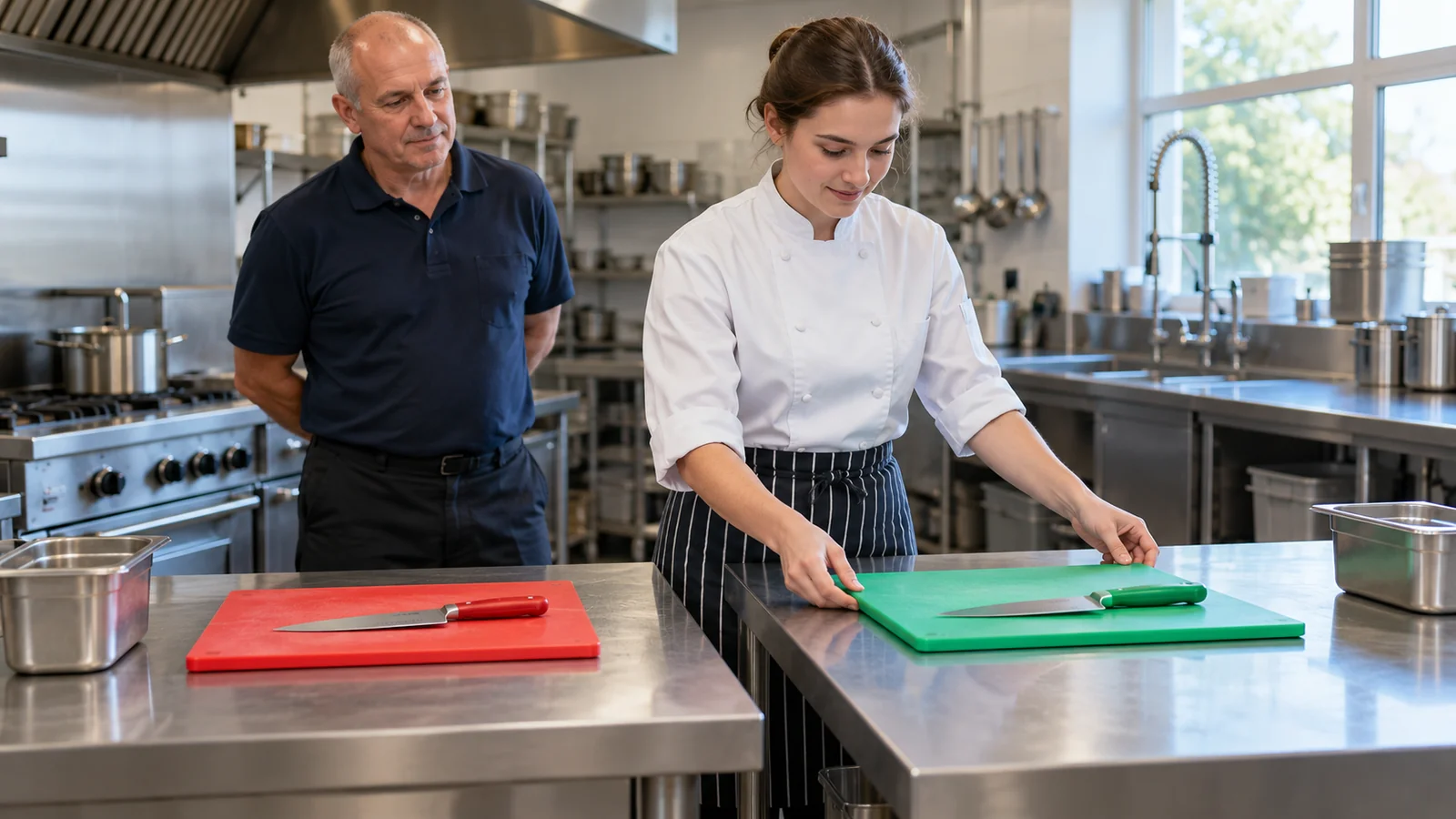
Our guide to preventing cross-contamination between raw meat and ready-to-eat food provides one practical subject to include in role-specific instruction.
A practical response to missing or incomplete records
1. Identify who does what
List the people currently working and the tasks they carry out. Include temporary staff, working owners and people covering unfamiliar duties.
Compare those tasks with the evidence you have. Someone taking orders needs different instruction from someone preparing raw chicken. A team member taking on supervisory responsibilities needs more than a copy of their old induction sheet.
A simple list of staff, relevant tasks and training status is often enough to reveal the gaps. Mark uncertain information as uncertain rather than assuming it’s complete.
2. Check understanding and observe the task
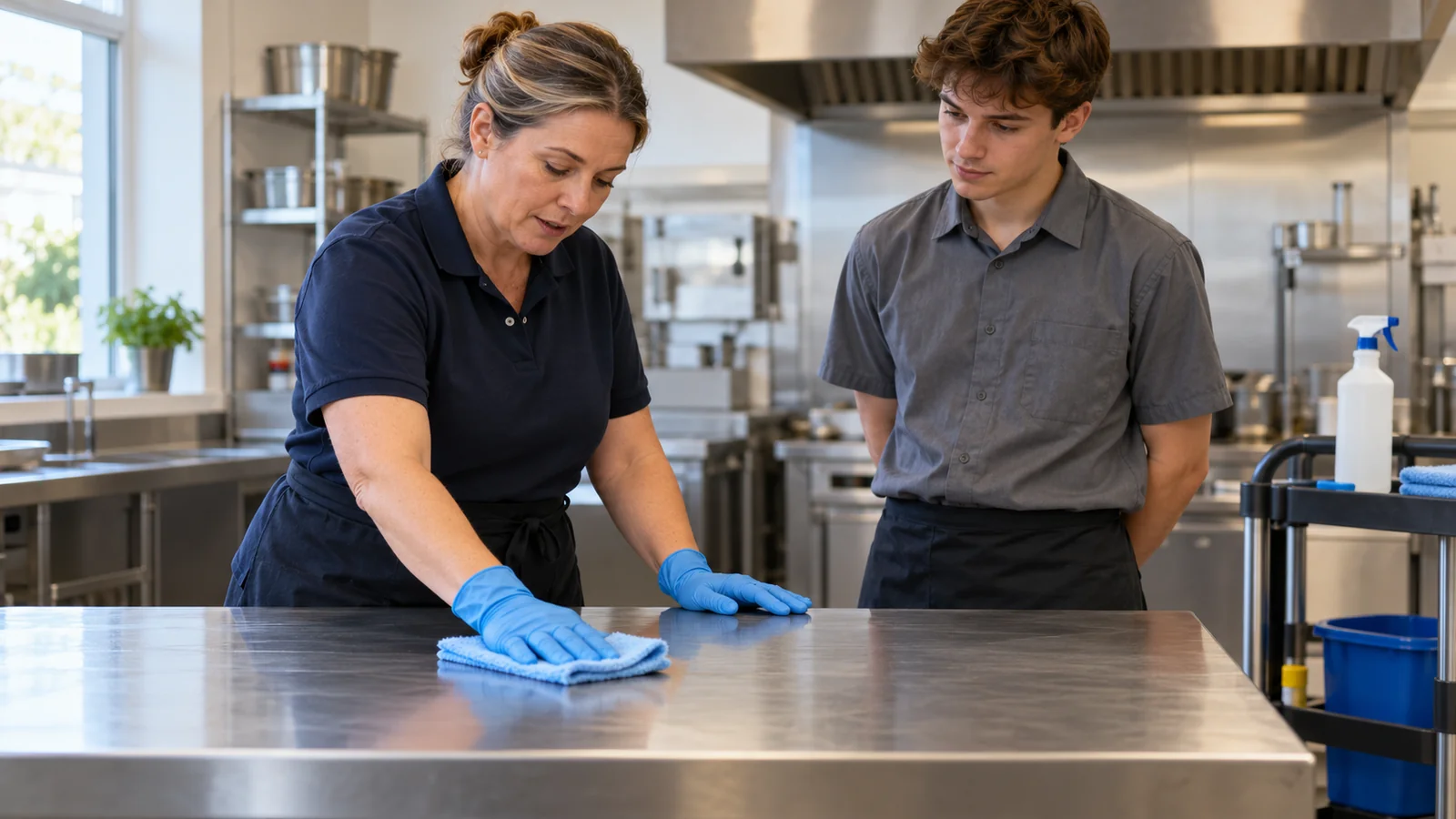
Ask the person to explain the method, then watch them carry it out where it’s safe to do so. For example:
- Can they find the correct procedure and explain when to use it?
- Can they demonstrate the check or cleaning task correctly?
- Do they know what an unsatisfactory result means?
- Can they explain who to tell and what action to take?
Use clear language, demonstrations or suitable translated material where helpful. A signed English-language sheet isn’t useful evidence of understanding if the employee couldn’t follow it.
Don’t wait until the end of a busy service to address an unsafe method. Stop the task, deal with any affected food or equipment and provide the instruction or supervision needed before it continues.
3. Separate missing paperwork from missing skills
If the person demonstrates a sound method, record the assessment and look for supporting evidence of earlier training. That might include a replacement certificate, a provider’s attendance confirmation or a dated induction record held elsewhere.
If you can’t verify an earlier date, say so. You can record that competence was checked today without claiming training took place on a date nobody can confirm.
Where knowledge or practical skills are missing, provide appropriate training now. Decide whether closer supervision or temporary changes to duties are needed until the person can work safely.
4. Check that the improvement lasts
Agree a follow-up observation appropriate to the task and risk. Check performance during ordinary work, when the employee has to apply the method rather than simply repeat a demonstration.
If the same error returns, investigate why. The instruction might be unclear, the equipment unsuitable or the workload making the method difficult to follow. Repeating the same briefing won’t necessarily fix the cause.
Use short toolbox talk video lessons
The Food-Safety.app YouTube channel is a resource for short food safety video lessons you can use in toolbox talks. Choose a lesson relevant to the team's work and use it to start a focused discussion before a shift or during a planned training session.
After watching, ask staff to explain how the subject applies in your kitchen. Demonstrate your own procedure where needed, then check that they can follow it. Watching a video alone doesn't show that someone can carry out a task safely.
Record the video title or link, the date, who took part, the workplace method discussed and how you checked understanding. Note any further instruction or supervised practice needed. This gives the session a useful place in your training records rather than simply recording that a video was played.
What should food safety training records contain?
Keep records specific enough to be useful without creating unnecessary paperwork. The FSA’s HACCP record-keeping guidance says documentation should fit the nature and size of the operation and includes training undertaken among its examples of records.
As recommended practice, record:
| Detail | Useful evidence |
|---|---|
| Person and role | Who received the instruction and which duties it supports |
| Date and subject | When it happened and the specific method covered |
| Training method | Demonstration, coached practice, self-study or course |
| Trainer or supervisor | Who provided the instruction or assessed the task |
| Understanding check | Questions asked, practical observation and outcome |
| Further action | Extra training, supervision or restrictions needed |
| Follow-up | Who will check progress and the result when completed |
A signature can acknowledge participation, but it shouldn’t replace evidence of understanding. Keep formal course certificates alongside relevant workplace instruction and checks.
For example, a useful entry could describe a new starter demonstrating the cleaning procedure, explaining the product instructions and identifying when to tell the supervisor about a problem. Record what actually happened rather than copying a standard “competent” statement into every entry.
Our guide to food safety records to have ready for an inspection explains how to keep supporting evidence organised.
What should you record when training or supervision fails?
Record the observed problem, the immediate response and the follow-up. Describe the task and facts without turning the record into a personal criticism.
An illustrative corrective-action entry might read: “Cleaning method not followed during preparation-area check. Task stopped and affected area cleaned under supervision. Method demonstrated again. Employee completed the task correctly. Shift supervisor to observe next use.”
If food may have been affected, record the food assessment and disposal or other action separately and clearly. Retraining the employee doesn’t resolve the safety of food already prepared.
The FSA’s Safe Catering training and supervision guidance recommends recording staff instruction and reviewing refresher training as necessary. There’s no single refresher timetable in this article that can replace an assessment of your staff, activities and changes.
Common mistakes to avoid
- Collecting certificates without checking kitchen practice. Include your own procedures and practical observation.
- Writing “all staff trained”. Identify the people, subjects and checks involved.
- Backdating missing forms. Recover reliable evidence or record a current assessment honestly.
- Leaving new starters unsupervised because a course is booked. Put safe arrangements in place for their duties now.
- Treating every mistake as a training problem. Check the method, equipment and working conditions too.
- Forgetting changed duties. Review instruction when someone takes on unfamiliar work or a procedure changes.
How digital food safety records can help
Paper induction sheets, kitchen diaries and separate folders can make previous checks difficult to find. Digital food safety records can help you record relevant checks, keep them with other food safety records and retrieve earlier entries.
The app supports digital record entry, centralised record storage and historical record retrieval. Use these features for relevant checks and actions without assuming the app issues certificates, delivers courses or verifies staff competence for you.
Keep entries focused on the work: what was checked, what needed correcting, who was responsible and what happened next. Keep confidential personnel matters in suitably restricted records.
For a practical comparison, read about paper food safety records and the work they create. To see how digital food safety records can simplify this part of your routine, start your free demo.
Food safety training records checklist
- Match each employee’s instruction and supervision to their actual duties.
- Check practical understanding where records are missing or unclear.
- Correct unsafe work and assess any affected food immediately.
- Recover reliable evidence without inventing dates or signatures.
- Record instruction, assessment outcomes and further action.
- Follow up to confirm the safe method is being used.
- Keep the records organised and review them when work changes.