Food Delivery Checks: A Practical Guide for Small Food Businesses
Learn what to check when food deliveries arrive, when to reject stock and how to keep useful delivery records in a small UK food business.
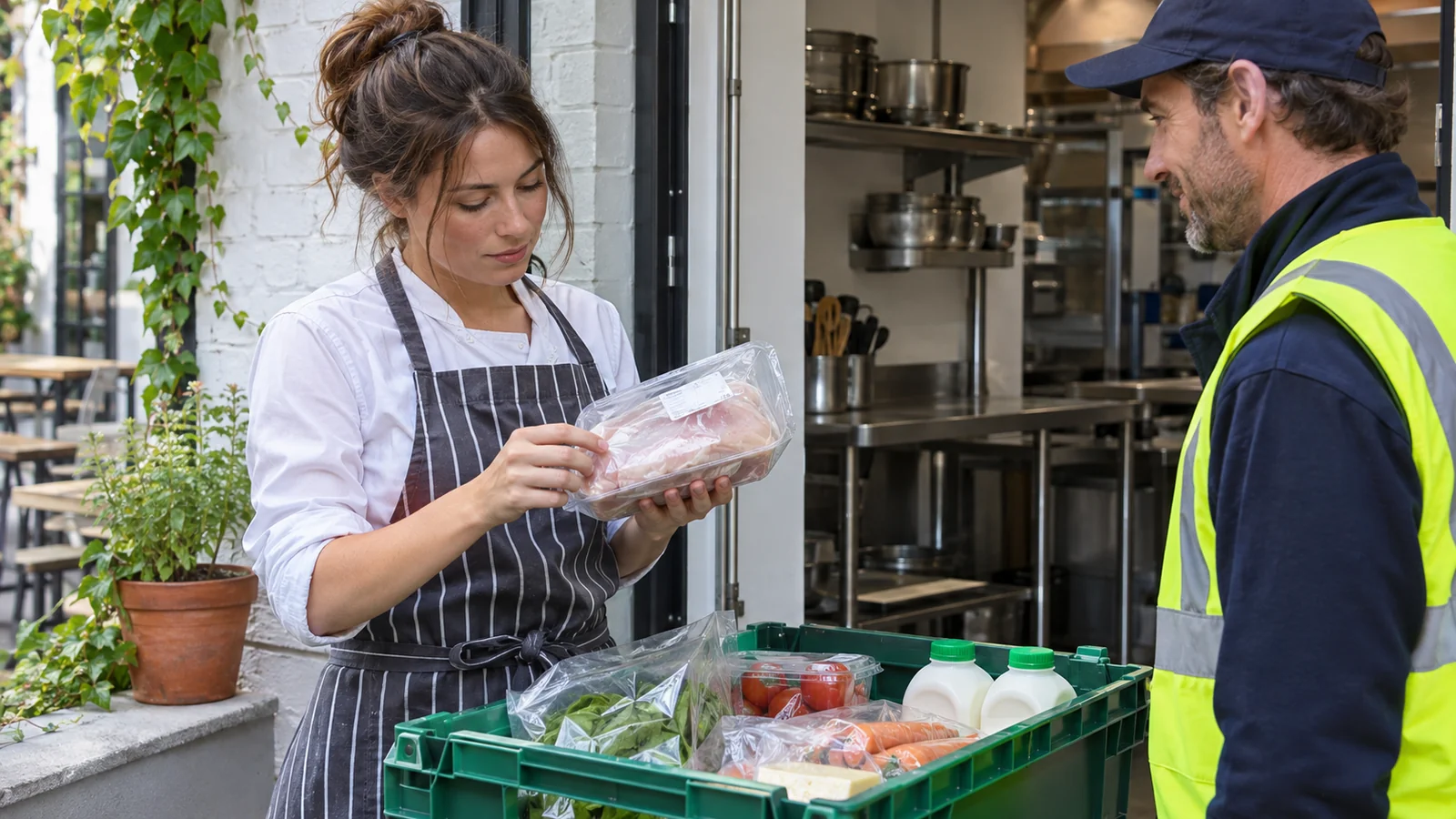
What should you check when a food delivery arrives?
The breakfast queue is growing when a supplier arrives at the back door. A member of staff signs the delivery note, stacks the crates beside the fridge and returns to service. Later, the chef finds a split pack of chicken and a different brand of sandwich filling. Nobody checked either before the driver left.
Food delivery checks should establish that the goods are the right products, have been kept under suitable conditions and are fit to accept. Check temperature where relevant, packaging, dates, signs of contamination and ingredient information before stock joins your normal supplies. Deal with anything doubtful straight away, then put accepted goods into appropriate storage.
Where deliveries fit into food safety management
Problems can enter a kitchen before any preparation begins. Damaged packaging may expose food to contamination. Poor temperature control can allow harmful bacteria to grow. An unexpected ingredient substitution can make the information used by your team unreliable.
The FSA's food safety management guidance explains the need for HACCP-based procedures and supporting records. Its supplier advice says to check that chilled and frozen deliveries are cold enough, packaging is undamaged and products match the order. Don't use food you believe has been handled unsafely; contact the supplier.
HACCP means Hazard Analysis and Critical Control Point. In practice, it involves identifying hazards and establishing suitable controls. Delivery checks form part of that system, but receiving food isn't automatically a critical control point in every business.
Use arrangements suited to your food and operation. The FSA's guidance covers England, Wales and Northern Ireland. Scottish businesses should use the relevant Food Standards Scotland guidance and seek local authority advice where needed.
Set up a receiving routine staff can follow
Agree delivery arrangements with suppliers, including where goods should arrive and who can receive them. Avoid arrangements that leave chilled products unattended outside a locked kitchen.
Name a receiving person and a deputy. They need to know the acceptance criteria, where the thermometer is kept and who can make decisions about questionable stock. Give them a way to contact the manager without having to leave the delivery unchecked.
For a small business, the routine might be a short receiving instruction beside the storage area. Keep it specific: which products need temperature checks, how checks are performed and what happens when a result fails.
The same approach matters in cafés managing daily food safety records, where the person receiving goods may also be taking orders or preparing breakfast. Plan the cover before the delivery arrives.
Practical food delivery checks
| Check | What staff should look for | If something isn't right |
|---|---|---|
| Product identity | Correct product, quantity and agreed specification | Hold substitutions for review before use |
| Temperature and condition | Chilled or frozen goods meeting your documented acceptance criteria | Investigate promptly and reject affected stock if safety can't be established |
| Packaging | Intact seals and packaging, without leakage or contamination | Separate affected items and assess rejection |
| Dates and labels | Legible information and sufficient usable shelf life | Query missing information or unsuitable dates |
| Transport and handling | Clean containers and protection from contamination | Assess the affected food and contact the supplier |
| Ingredient changes | Reliable information for substituted or reformulated products | Keep affected products out of use until information is checked |
Check the food temperature using a suitable method
Feeling a box isn't a reliable temperature measurement. Use a suitable thermometer and the method set out in your procedure. Staff should understand what they're measuring: vehicle air, a package surface and the food itself aren't interchangeable readings.
Keep measuring equipment clean and avoid contaminating food during checks. Choose samples that reflect the delivery's risks rather than repeatedly checking whichever carton is easiest to reach. Your procedure should explain when to extend sampling, such as when an initial result or the condition of a load raises concern.
GOV.UK's business chilling guidance identifies 8°C or below as the legal cold-food holding requirement in England, Wales and Northern Ireland, and recommends setting fridges at 5°C or below. Those figures aren't a universal acceptance specification for every delivered product. Apply relevant product requirements, storage instructions and your documented procedure; some foods need stricter controls.
For frozen deliveries, check the applicable product specification and signs of thawing. Don't treat one generic freezer setting as the legal delivery limit for every frozen food. A supplier's assurance doesn't replace investigating a doubtful load.
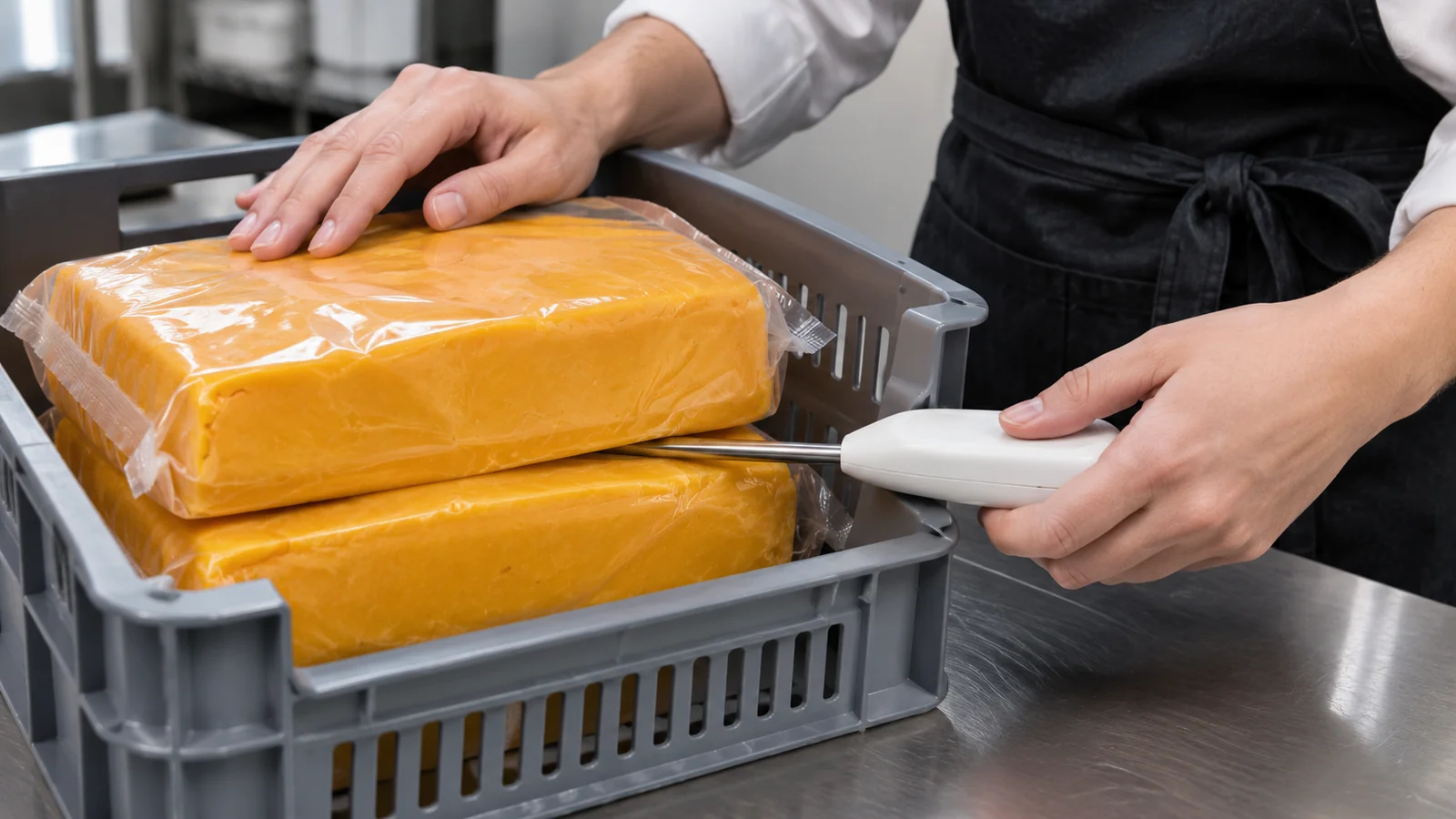
Look beyond the outer carton
An undamaged box can contain leaking packs. Inspect enough of the delivery to make a meaningful decision, especially higher-risk items or goods from a supplier with previous problems.
Keep raw food separate from ready-to-eat items during receiving and storage. Don't put delivery crates onto a clean preparation surface simply because the floor is busy. Plan a receiving space that protects food and leaves room to inspect it.
Check dates against your intended use. A product arriving with less shelf life than agreed may be unsuitable for your ordering plan even when it isn't yet out of date. Make those commercial acceptance expectations clear to suppliers.
Check substitutions before they reach preparation
A different sauce, stock powder or sandwich filling may have different ingredients. Put substitutions aside until the responsible person has checked reliable product information and decided what needs updating or communicating.
Don't rely on the appearance of a familiar container. Tell staff when an accepted change affects their work, including the information they use to answer customers' allergen questions.
What should delivery HACCP records contain?
Keep records proportionate to your procedure. A useful entry identifies the delivery, shows the checks performed and explains any exception. Suggested details include:
- Date and arrival time, supplier and delivery-note reference.
- Products checked, with relevant batch or lot details.
- Actual temperature readings and the measurement method where required.
- Packaging, date and condition checks.
- Name of the person carrying out the check.
- Acceptance, partial rejection or rejection decision.
- Action taken and any outstanding supplier follow-up.
This is a practical recording structure, rather than a prescribed form every kitchen must use. Keep delivery notes and supplier information accessible alongside the relevant check records. A tick saying “OK” can't explain which food failed or what happened to it.
Record promptly. If a check was missed, document the gap and the assessment made afterwards. Don't invent an arrival temperature from a reading taken after the food has been refrigerated.
What to do when a delivery check fails
Keep the affected food out of preparation while the responsible person assesses it. Identify it clearly so another worker doesn't assume it's available to use. Protect accepted stock while you deal with the problem.
Where safety can't be established, reject the affected goods. Record what was rejected and why, then arrange the supplier response. A credit note resolves a payment issue; your food safety record should also establish what happened to the food.
For example, a leaking raw chicken pack may require rejecting affected items, checking neighbouring goods for contamination and cleaning the receiving area. An unexpected sandwich filling may remain on hold until its ingredients are confirmed. Different problems need different decisions.
Don't put doubtful chilled stock into a fridge and assume the problem is resolved. Cooling it now doesn't establish that its earlier handling was safe. Our guide to HACCP corrective actions explains how to record the failure, immediate action and final decision.
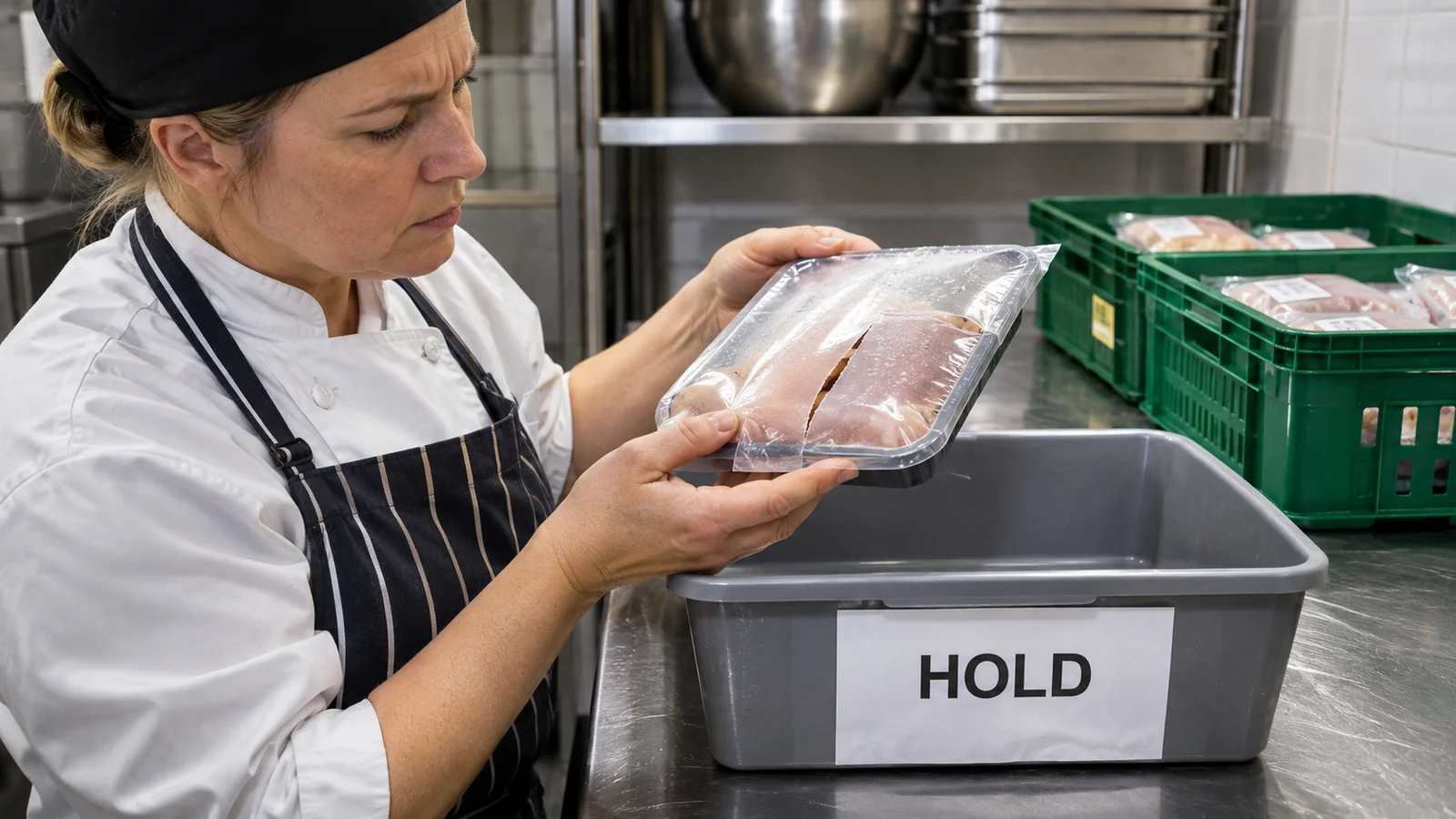
Common mistakes that weaken the routine
Signing first and checking later makes it harder to resolve problems with the driver present. Arrange receiving so inspection happens before final acceptance where practical.
Checking temperature but ignoring packaging or substitutions leaves other hazards unchecked. Treat the delivery as a set of relevant checks, rather than one thermometer reading.
Leaving accepted chilled stock beside the fridge while finishing the paperwork creates another avoidable problem. Complete essential checks promptly and move food into suitable storage.
Repeated failures also need management attention. Review previous entries, raise the pattern with the supplier and decide whether delivery arrangements or supplier choice need changing. Record who owns that follow-up.
Keep digital food safety records with your other checks
HACCP Records supports digital delivery check entry, centralised food safety records and retrieval of previous entries. That can help a manager review earlier deliveries without searching separate sheets or paper folders.
Use consistent supplier and product descriptions so records are understandable later. The same principle applies to keeping accurate digital food safety records during busy service: carry out the check, record the actual result and make responsibility for any problem clear.
Create your HACCP Records account to keep the evidence behind your food safety management easier to find. Your team still carries out the checks and decides whether food is safe to accept.
Images are AI-generated illustrations.
Food delivery checklist for your next order
- Assign someone to receive and inspect the goods.
- Check products, temperatures where relevant, packaging, dates and substitutions.
- Keep questionable items out of use and record the decision.
- Put accepted food into suitable storage promptly.
- Save the check results and relevant supplier documents.
- Follow up repeated failures with the supplier.