HACCP Corrective Actions: Put Problems Right with Less Paperwork
Learn how to handle HACCP corrective actions, protect affected food and keep clear records without adding unnecessary paperwork to your kitchen routine.

What should you do when a food safety check fails?
Lunch orders are building up in a small café. A chef checks a batch of chicken and finds it hasn't met the kitchen's documented cooking requirements. The next order needs chicken. Someone suggests giving it another minute and carrying on.
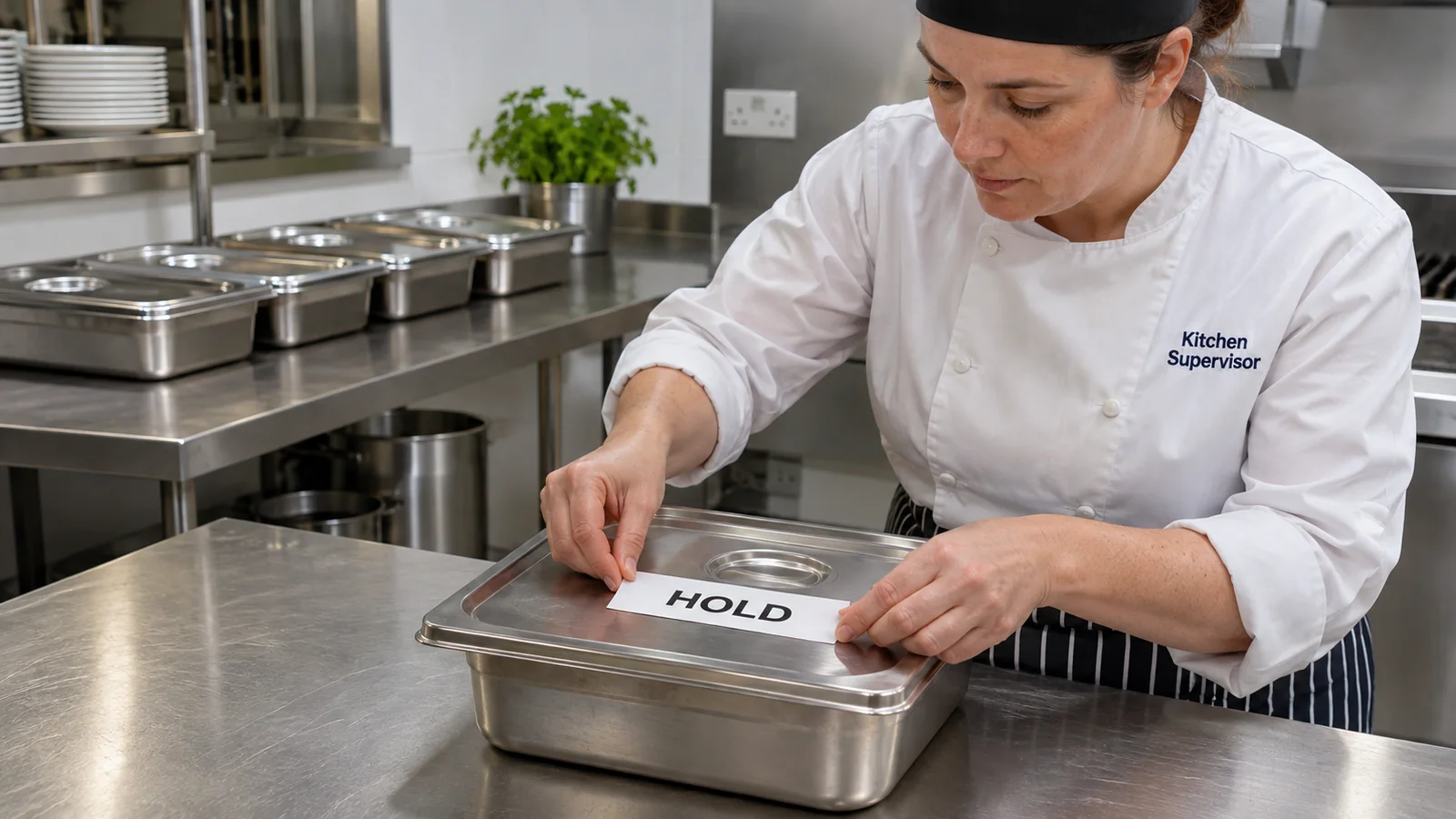
The response needs to be clear: keep that batch out of service, follow the established corrective procedure, recheck the food and record the outcome. If safety can't be established, don't serve it.
HACCP corrective actions explain what happens when a control fails. A useful response deals with the affected food, brings the process back under control and addresses the cause. Your record should show those decisions without making staff write the same information on several forms.
What does corrective action mean in HACCP?
HACCP stands for Hazard Analysis and Critical Control Point. It helps a business identify significant food safety hazards and establish suitable controls.
A critical control point, or CCP, is a stage where control is essential to prevent, eliminate or reduce a significant hazard to an acceptable level. A critical limit separates acceptable from unacceptable control at that point.
For example, your cooking procedure may specify a validated combination of core temperature and holding time. If the required conditions aren't achieved, the batch needs action before release.
The FSA's corrective action guidance explains the need to plan responses, assign responsibility and deal with affected products.
Cleaning and storage problems also need a clear response, although not every hygiene check is a CCP. Keep those distinctions accurate in your plan. Our guide to the seven principles of HACCP explains how corrective action fits alongside monitoring, verification and records.
Build the response into your food safety management system
GOV.UK's food safety management guidance sets out the need for HACCP-based arrangements, including putting failures right and keeping evidence. The detailed procedures and records should suit your activities. Check guidance for your UK nation and seek local authority advice where needed.
Before service, make sure staff can answer these questions:
- What result means the control has failed?
- What work must stop, and which food must be held back?
- Who can decide whether food is released, reprocessed or discarded?
- How will control be checked before work resumes?
- Where will the result and follow-up be recorded?
Use the limits and safe methods established for your food and process. A fridge operating target, a food temperature limit and a cooking requirement serve different purposes. Don't copy one number across unrelated checks.
Have cover for the responsible person. A procedure that depends on an owner answering the phone won't work reliably when they're unavailable.
A practical response to a failed check
1. Stop the affected activity and protect the food
Keep suspect food out of service and identify it clearly. Tell the team which batch, equipment or preparation area is restricted. Separate it from food that can safely be used.
Act before completing the record. If the problem affects one process, assess whether other work can continue safely. If essential controls can't be maintained, stop the activities that depend on them.
2. Establish the extent of the problem
Identify the food, quantity, relevant times and actual check results. Consider whether other batches or utensils could be affected.
The last reliable satisfactory check can help establish the period needing investigation. It doesn't necessarily prove the exact moment a failure began. Record uncertainty rather than replacing it with a convenient assumption.
3. Make a decision about the food
Use the corrective procedure appropriate to the failure. Continuing cooking may be suitable where an established safe method allows it. It isn't a general answer to every interrupted process or unknown temperature history.
Moving food into a working fridge doesn't establish that its earlier storage was safe. Repairing equipment doesn't settle what should happen to food already affected.
4. Confirm control before restarting
Use the relevant measurement or observation to establish that the process is working again. Record the result and the food decision separately where necessary.
5. Follow up the cause
An overloaded oven, unclear instruction or damaged seal may need a different response from a one-off handling error. Give unfinished actions an owner and a review point. Check later that the change worked.
Examples of practical corrective actions
These examples illustrate decisions to build into your own procedures. They aren't substitutes for assessing the food and circumstances.
| Failed check | Immediate response | Evidence and follow-up |
|---|---|---|
| Cooking requirements haven't been achieved | Hold the batch. Follow the safe corrective method and recheck before release. | Initial result, batch, action, recheck and final decision. Investigate repeated failures. |
| Chilled storage is outside the procedure's limit | Restrict use of affected food and assess its time and temperature history. | Available readings, affected stock, decision and equipment checks. |
| A food-contact surface hasn't been cleaned properly | Stop using it and apply the correct cleaning and disinfection method. Assess food already exposed. | Area, food assessment, work completed and satisfactory follow-up check. |
| Delivery packaging is damaged | Keep affected stock separate and assess it against your acceptance procedure. | Product, supplier, damage, acceptance or rejection decision and any supplier follow-up. |
| Ingredient information doesn't match a substituted product | Hold affected dishes until reliable allergen information and appropriate controls are established. | Ingredient details, dishes affected, decisions and staff communication. |
For equipment faults, our guide to food safety checks during equipment breakdowns covers temporary arrangements and restart decisions in more detail.
What should HACCP records contain when something goes wrong?
Keep enough detail for someone who wasn't there to understand the event. Include:
- The date, time, person and check involved.
- The actual result and the requirement it failed.
- The food, batch, quantity, equipment or area affected.
- Immediate restrictions and action taken.
- The decision about the food, including who authorised it.
- The follow-up result and any action still outstanding.
This is a suggested recording structure, rather than a legally prescribed form for every kitchen. The FSA's record-keeping guidance recognises paper and electronic storage and the need for proportionate, accessible records.
Write a useful entry, rather than a long one
“Chicken failed, sorted” leaves the important questions unanswered.
An illustrative entry might read:
Lunch batch C held out of service after failing the documented cooking check. Cooking continued under our established procedure. Recheck met the required conditions, with the actual reading and holding time recorded against the batch. Duty chef authorised release. Tray loading reduced for subsequent batches; supervisor to observe the next check.
In a real entry, include the actual times, measurements and names. Don't replace those details with “met requirements”.
Keep the original failed result. Record the recheck as a subsequent result so the sequence remains clear.
Common mistakes that leave the problem unresolved
Recording only the repair
“Engineer booked” doesn't explain whether food is safe or what staff can use meanwhile. Record the food decision and operating restrictions too.
Repeating a check until it passes
A later satisfactory reading doesn't explain the earlier failure. Establish what changed, whether the measurement was reliable and whether affected food can be released safely.
Leaving follow-up to the next shift
An open action needs a clear handover. Identify the restriction, the person taking responsibility and the next decision required.
Treating each failure as an isolated event
Repeated problems may indicate a method, capacity or training issue. Review previous entries and change the cause rather than repeatedly asking staff to “be more careful”.
Keeping a serious incident within the kitchen
If potentially unsafe food has already left the business, follow the relevant incident procedure promptly. The FSA's food incident guidance explains reporting and withdrawal or recall arrangements for England, Wales and Northern Ireland, with a link to Scotland's guidance. A completed internal record doesn't replace those actions.

Use digital food safety records to reduce duplicate paperwork
HACCP Records lets you enter relevant checks digitally, keep them with other food safety records and retrieve previous entries. That helps when reviewing a recurring problem without searching separate paper folders.
Agree a consistent way to identify food and equipment. A record saying “fridge” is harder to interpret than one identifying the specific unit. Record promptly, and make any late entry clear rather than inventing an earlier result.
The service supports record keeping. Your team still carries out the checks and makes the food safety decisions. Our page on digital food safety records for restaurants explains how the web app fits into daily kitchen work.
Start your free three-day demo to try keeping your checks and supporting evidence together. No card is required, and you can activate a paid subscription to continue with your setup and records.
Images are AI-generated illustrations.
Corrective action checklist for your next shift
- Confirm staff know the failure limits and corrective procedures for their work.
- Identify who can make food decisions, including cover when they're absent.
- Hold affected food and stop unsafe work promptly.
- Record the failure, actual results, action and final food decision.
- Check control has been restored before restarting.
- Hand over open actions and review repeated failures.