7 Principles of HACCP: Turn Your Plan into Daily Practice
Understand the 7 principles of HACCP with practical kitchen examples. Learn how to identify hazards, set safe limits and keep useful food safety records.

What are the 7 principles of HACCP?
The seven principles of HACCP are hazard analysis, identifying critical control points, setting critical limits, monitoring, corrective action, verification and record keeping.
HACCP stands for Hazard Analysis and Critical Control Point. It gives you a structured way to work out what could make food unsafe, decide how to control it and check that those controls work.
For a café, takeaway or restaurant, the useful question is what that means during service. Who checks the chicken? What result is acceptable? What happens if it fails? Where is the decision recorded?
The seven HACCP principles at a glance
| Principle | The practical question |
|---|---|
| 1. Conduct a hazard analysis | What could make this food unsafe? |
| 2. Identify critical control points | Where is control essential? |
| 3. Establish critical limits | What separates an acceptable result from a failure? |
| 4. Establish monitoring | Who checks, how and when? |
| 5. Establish corrective actions | What happens if control is lost? |
| 6. Validate, verify and review | Can the method work, does it work and is it current? |
| 7. Keep documents and records | What evidence explains the system and its operation? |
The FSA’s introduction to HACCP principles explains how these stages fit together.
Before you start: understand your kitchen
Walk through the route food takes from delivery to the customer. Include storage, preparation, cooking and service, plus cooling, reheating or transport where they happen. Check the written sequence against the actual work.
Basic hygiene arrangements, often called prerequisites, need to be effective too. These include cleaning, personal hygiene, pest control and equipment maintenance.
For most small catering businesses, food safety management procedures must be based on HACCP principles. GOV.UK’s food safety management guidance explains the general duty. The system should suit your activities, with guidance appropriate to your UK nation and specialist advice where needed.
1. Conduct a hazard analysis
Identify what could cause harm at each stage. Consider microbiological, chemical, physical and allergenic hazards. Then assess which hazards are significant and decide how they’ll be controlled.
In a kitchen preparing chicken sandwiches, questions might include:
- Could raw chicken contaminate cooked fillings or salad?
- Could harmful bacteria survive inadequate cooking?
- Could a changed sauce introduce an allergen missing from the menu information?
- Could damaged equipment shed fragments into food?
Be specific. “Bacteria” alone doesn’t explain the source or how the customer could be exposed. “Raw chicken juices contaminating prepared salad” gives the team something concrete to prevent.
Use our guide to identifying food safety hazards in a small business to work through a dish from start to finish.
2. Identify the critical control points
A critical control point, or CCP, is a stage where control is essential to prevent, eliminate or reduce a significant food safety hazard to an acceptable level.
Cooking raw chicken may be a CCP because the cooking process controls harmful bacteria before service. Your assessment must establish whether that applies to your process.
Don’t label every cleaning task or opening check a CCP simply because it matters. Some hazards are controlled through effective prerequisite arrangements. The FSA’s guidance on determining CCPs explains how judgement and decision trees can help.
Keep the reasons behind your decisions. Someone reviewing the plan should be able to follow your thinking.
3. Establish critical limits
A critical limit defines the boundary between acceptable and unacceptable control at a CCP. It must relate to the hazard and be measurable or observable in time to act.
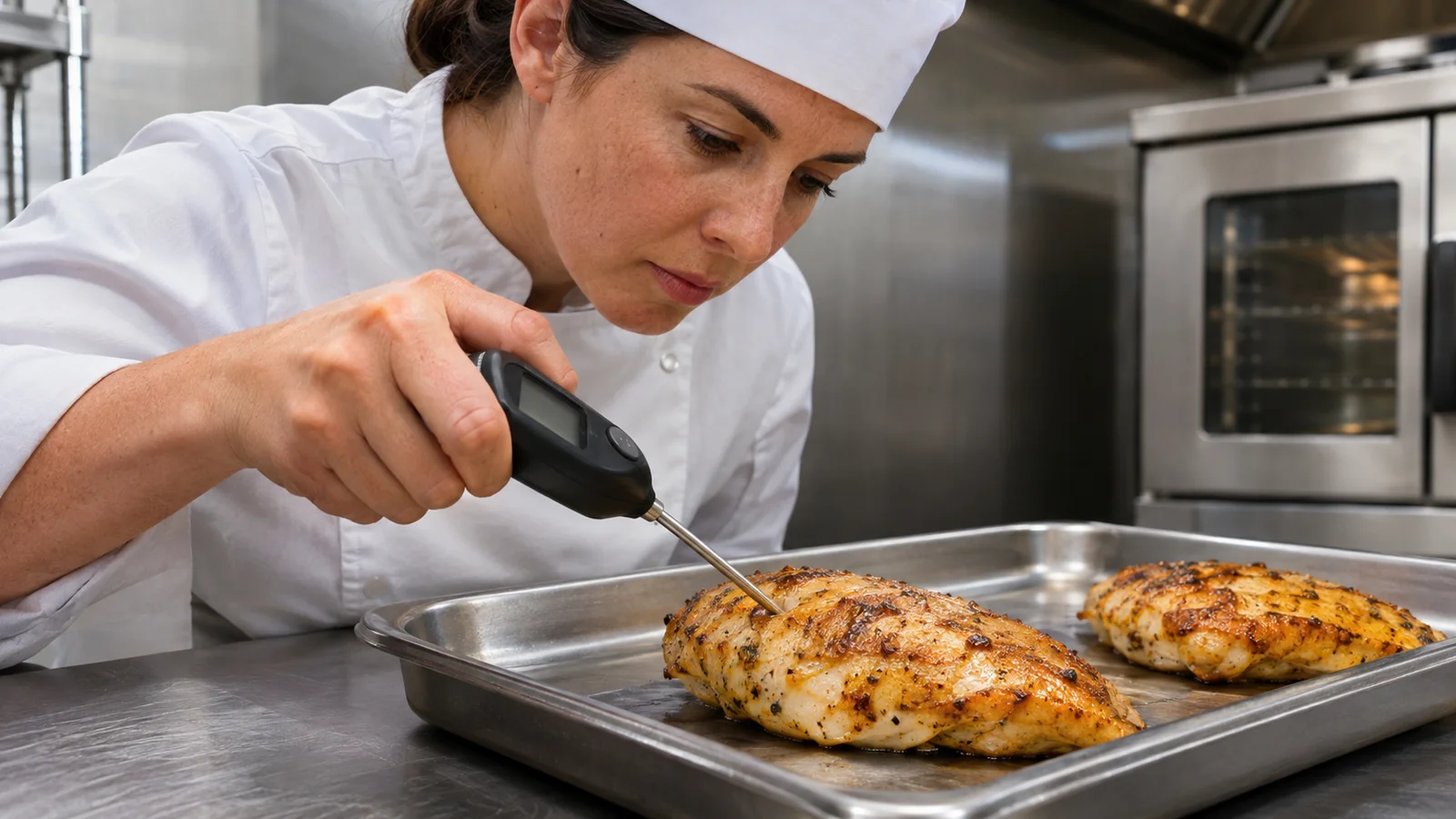
For cooking, this may involve both a core temperature and a holding time. The FSA gives 70°C for two minutes as an example for controlling Salmonella in chicken pieces. Both parts matter. It isn't a universal limit for every food or process.
Choose limits supported by relevant legislation, recognised guidance or suitable validation. Record the basis for the limit, rather than copying a number without checking its purpose.
See the FSA’s critical limit guidance and our practical advice on taking reliable core temperature checks.
4. Establish monitoring procedures
Monitoring checks whether a CCP remains within its critical limits. Instructions need enough detail for different staff to carry out the check consistently.
Define what’s measured, the method and equipment, the timing or frequency, who’s responsible and how the result is recorded. Decide these through your food safety assessment.
For example, a cooking procedure should explain which food or batch is checked, where to place the probe and how to confirm any required holding time. “Check it’s hot” leaves too much open to interpretation.
The FSA’s monitoring guidance covers planning checks that detect loss of control in time for action.
5. Establish corrective actions
Decide what staff should do when monitoring shows a failure. The response must address affected food as well as restoring control of the process.
Consider this illustrative cooking failure: a batch hasn't met its documented cooking limit. Keep it out of service. Continue cooking and recheck where your validated procedure allows. If safety can't be established, don't serve it.
Record the failure, the food involved, the action and the final decision. Investigate repeated failures, such as unsuitable portion sizes or overloaded equipment.
“Manager informed” doesn't explain what happened to the food. The FSA’s corrective action guidance addresses restoring control, dealing with affected products and preventing recurrence.
6. Validate, verify and review the system
These activities answer different questions:
- Validation: Is there evidence that the chosen controls can manage the hazards?
- Verification: Are the procedures being followed and working in practice?
- Review: Does the plan still reflect your food, equipment and processes?
For a small kitchen, verification might include observing a cooking check, reviewing failed results and confirming that corrective actions were completed. A signed sheet alone doesn't establish that the measurement was reliable.
Schedule reviews and consider changes that could trigger one, such as a new dish, supplier, cooking method or piece of equipment. Record the outcome and update instructions and staff training where necessary.
The FSA’s verification guidance explains validation, ongoing checks and review in more detail.
7. Establish documentation and record keeping
Your documents explain the system. Your records show its operation.
Documents may include the hazard analysis, reasons for selecting CCPs, critical limits and monitoring instructions. Records may include actual check results, corrective actions, verification and reviews.
Keep records proportionate to the business, clear enough to identify what was checked and available to the people who need them. Set an appropriate retention period for your operation and products. There's no single period that suits every situation.
The FSA’s documentation and record-keeping guidance sets out the distinction and practical considerations.
Why digital records can make principle 7 easier
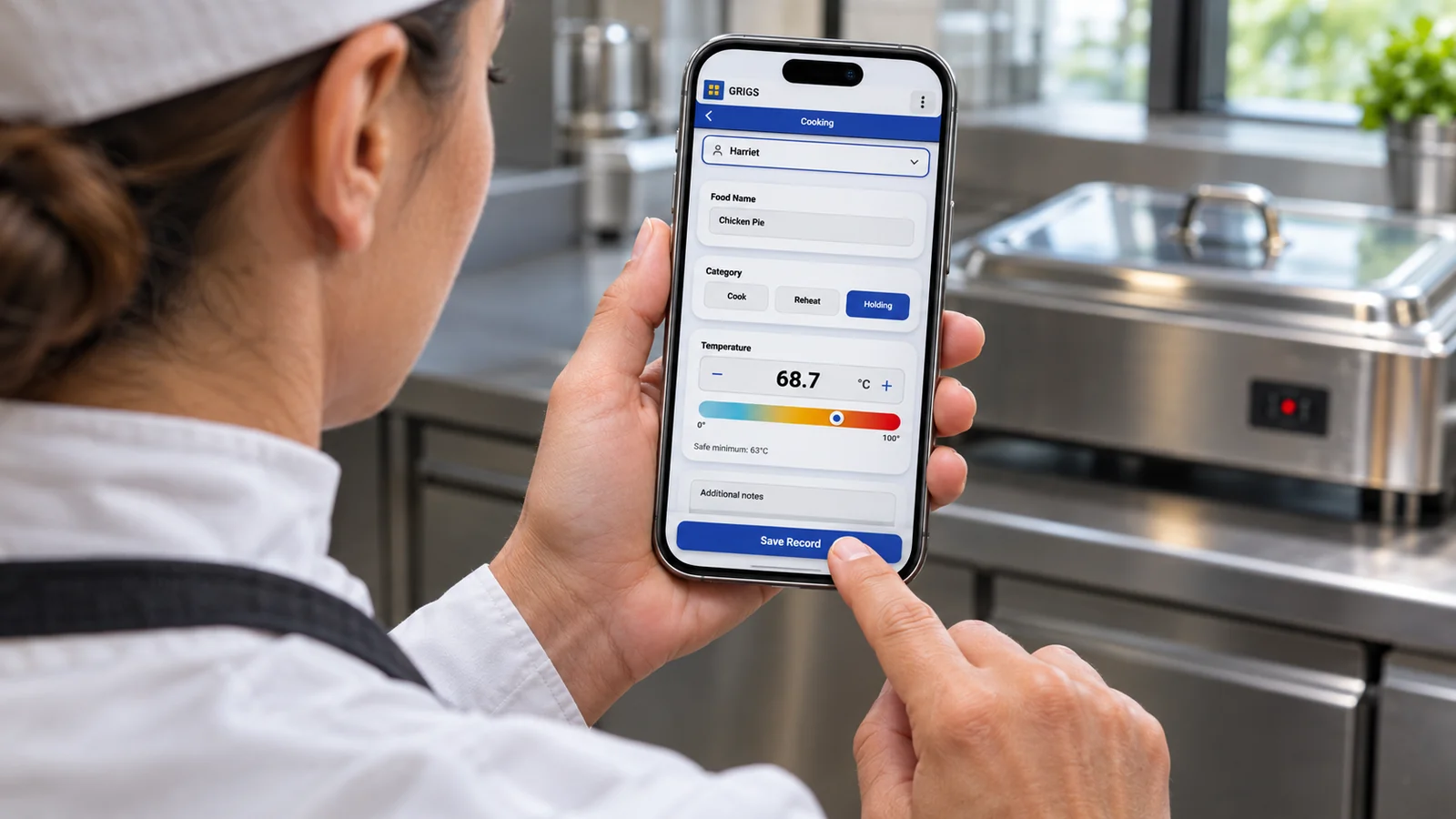
Digital food safety records can reduce loose paperwork and make the evidence easier to use during everyday kitchen management. With HACCP Records, you can:
- Keep temperature checks and corrective action records in one account, reducing the need to file separate paper sheets.
- Give authorised team members access to synchronised business records, so checks are available across shifts once they've synced.
- Retrieve previous entries to review a failed check and the response, rather than search through folders.
- Prepare PDF reports for supported record categories and date ranges when you need to share records for a review or inspection.
For example, a chef can enter a hot-holding reading after checking the food, then a manager can review the synchronised record later. Record the actual result promptly, including any action needed. The web app organises the evidence; your team still carries out the checks and makes food safety decisions.
Our digital food safety records for restaurants page explains how the online service fits into a kitchen routine.
Start your free 3-day demo to try recording real checks in your own kitchen. No payment card is required. Your 72 hours begin once you've completed your business setup.
Common questions about HACCP principles
Does every kitchen need the same HACCP plan?
No. The hazards, controls and evidence need to reflect the food and processes in that business. A copied plan needs careful assessment before it can describe your operation accurately.
Is completing a checklist enough?
A checklist can support a defined procedure. It can't establish that you've identified the right hazards, chosen effective controls or dealt safely with a failed check.
What's the difference between monitoring and verification?
Monitoring checks control during the process. Verification assesses whether the system is operating as intended. Taking a cooking reading and later reviewing how staff carry out those checks are different activities.
Can I use electronic HACCP records?
The FSA's record-keeping guidance considers both paper and electronic storage. Choose a method that keeps suitable evidence accessible and supports the checks your business needs.
Put your daily records in one place
Start your free 3-day demo to try recording temperature checks and corrective actions in HACCP Records. The three-day demo needs no payment card. You can activate a paid subscription to continue with the setup and records you've entered.
Images are AI-generated illustrations. The digital records image uses a user-supplied emulated interface.