Identifying Food Safety Hazards: The Simple Check Small Businesses Often Miss
Improve food safety management by identifying hazards in everyday kitchen tasks, choosing practical controls and keeping useful digital food safety records.
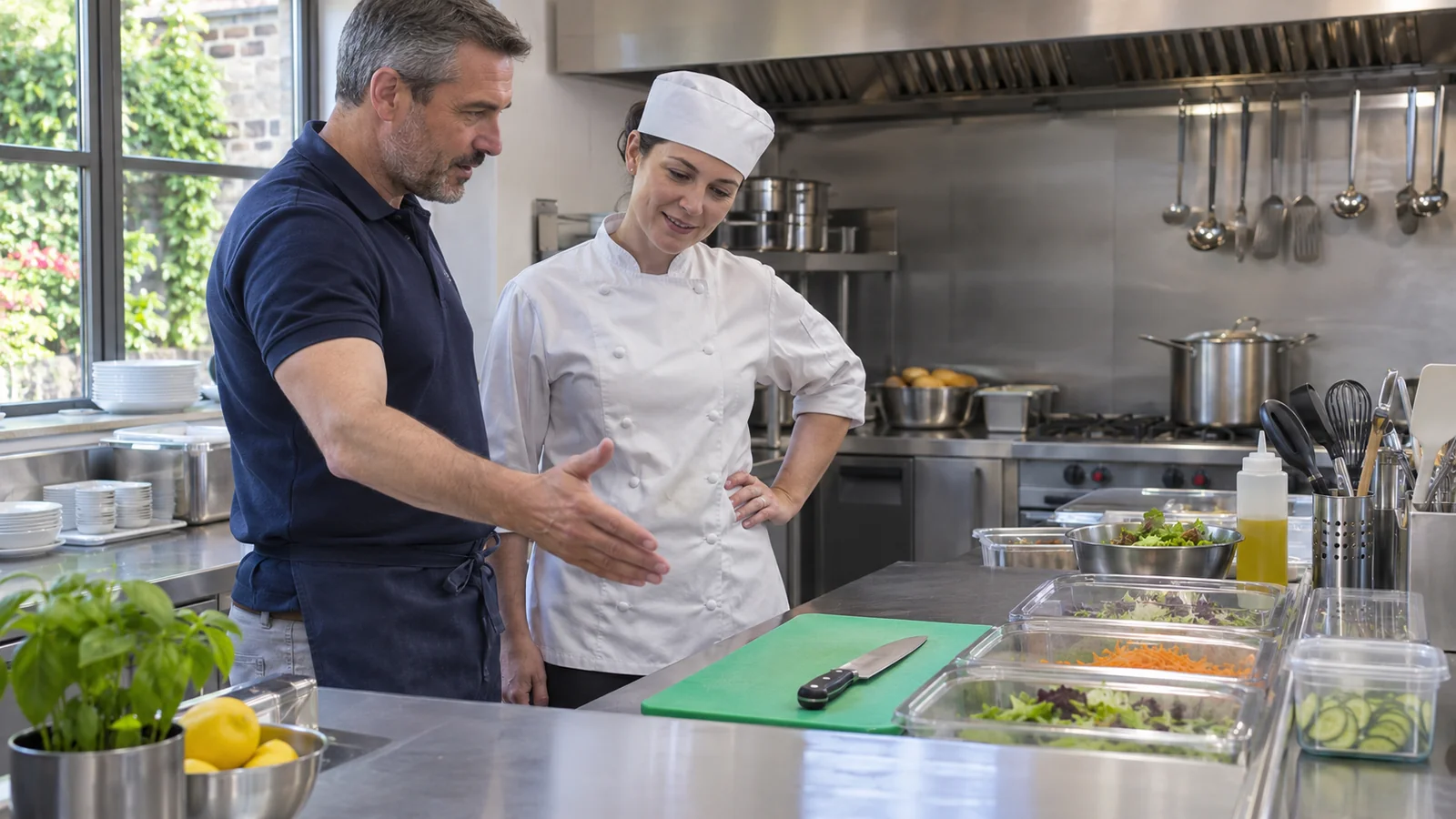
The kitchen looks tidy. What could still go wrong?
Imagine a café introducing cooked chicken sandwiches. The team already prepares raw chicken for hot meals, but now cooked chicken will also be cooled, stored and served cold.
The menu change looks small. The food safety questions aren’t.
Where will the chicken cool? Who decides its storage life? Could equipment used for raw chicken reach the sandwich station?
Identifying food safety hazards means asking these questions before the new dish becomes part of service. Start by following the food through each task and identifying what could make it unsafe.
This walkthrough is a practical starting point. It supports your food safety management system, but it doesn’t replace a proper assessment of your operation.
What is a food safety hazard?
- Food safety hazard
Something in food, or introduced into food, that could harm the person eating it. Examples include harmful bacteria, cleaning chemical residues, sharp fragments and an undeclared allergenic ingredient.
A hazard describes the potential source of harm. Risk considers how likely that harm is and how serious it could be.
For example, harmful bacteria in raw chicken are a hazard. The risk depends partly on how the chicken is stored, prepared and cooked, and whether contamination can reach other food.
The FSA’s hazard identification guidance advises working through each process step and considering hazards already present, introduced during handling or affected by the process.
Consider these hazard groups
| Hazard group | Example | Question for your kitchen |
|---|---|---|
| Microbiological | Harmful bacteria transferred from raw food | Can raw ingredients or equipment contaminate ready-to-eat food? |
| Allergenic | A substituted sauce containing an unexpected allergen | Does the current ingredient information match the dish being served? |
| Chemical | Cleaning product residue on a food-contact surface | Is the product suitable and used according to its instructions? |
| Physical | A fragment from damaged equipment | Could loose or broken material enter exposed food? |
Some guidance includes allergens within chemical hazards. Considering them separately can help staff give them proper attention.
What does UK food safety law require?
For most small catering businesses, food safety procedures must be based on HACCP principles.
Article 5 of Regulation 852/2004 includes identifying hazards, establishing controls and monitoring, deciding corrective actions and keeping proportionate documents and records. Procedures must also be reviewed when relevant products or processes change.
The legal framework differs between Great Britain and Northern Ireland. Use the guidance relevant to your nation and seek local authority advice for activities needing specialist controls.
The official managing food safety guidance explains the need to keep procedures and records current.
Walk through the process, including the awkward stages
Write down the stages your food actually passes through. Include temporary storage, movement between stations and work done before or after the main service.
Choose a representative dish
Start with something involving several tasks, such as a cooked filling prepared ahead. Note the ingredients, intended customers and how the food will be served.
Follow its route
Include receipt, storage, preparation, cooking and service. Add cooling, reheating, transport or display where they genuinely happen.
Describe what could cause harm
Replace vague entries such as “storage problem” with a specific concern, such as harmful bacteria multiplying during unsuitable storage.
Identify the control
State what prevents, removes or reduces the hazard. Then decide how staff will check that control and respond to failure.
Compare the plan with real service
Watch the task when staff are busy. Check that the equipment, space, time and instructions make the method workable.
Ask the people doing the work. A preparation routine that seems sensible on paper may involve crossing the raw preparation area to reach a shared utensil drawer.
The FSA’s implementation guidance recommends involving staff and checking that planned procedures work in practice.
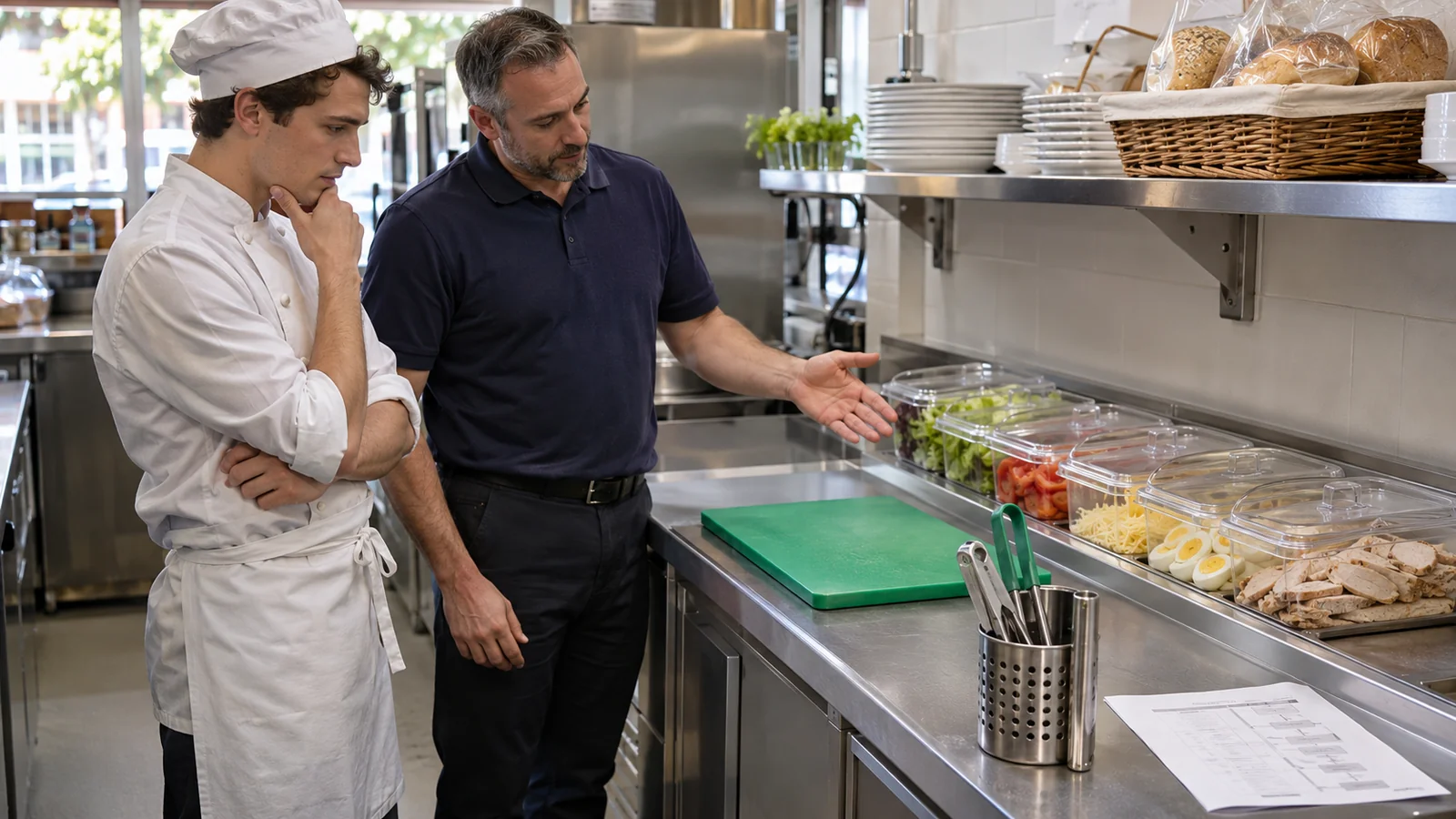
Turn a hazard list into practical controls
Writing “bacteria” in a table doesn’t tell anyone what to do. Identify the source, the stage and the route to the customer.
These examples illustrate the approach. Your actual controls and limits need to suit your food and processes.
| Situation | Hazard to consider | Practical control to assess |
|---|---|---|
| Raw and cooked ingredients share a preparation area | Transfer of harmful bacteria to ready-to-eat food | Effective separation, suitable equipment and a defined cleaning method |
| A supplier replaces an ingredient | An allergen is present but missing from customer information | Check the specification and update the information before use |
| A deep container of cooked food is left to cool | Growth of harmful bacteria during unsuitable cooling | A suitable cooling method with defined checks and corrective action |
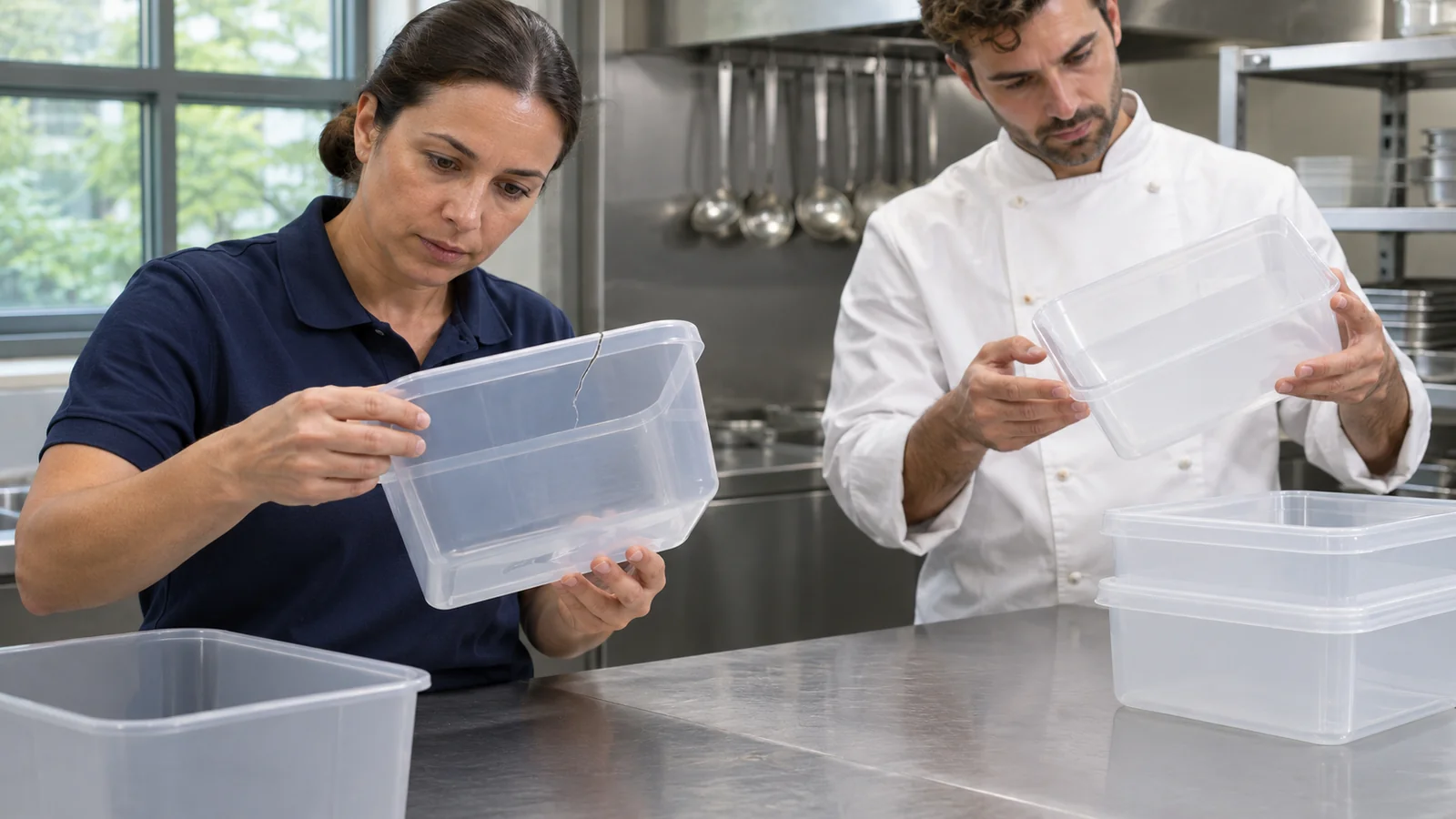
| A damaged container is used for preparation | Fragments enter food | Remove damaged items and assess affected food |
| Cleaning takes place beside exposed ingredients | Chemical contamination | Protect food and use cleaning products correctly |
For practical separation advice, read preventing cross-contamination between raw meat and ready-to-eat food.
Not every control is a critical control point
Basic hygiene measures, often called prerequisites, support the whole operation. Examples include cleaning, personal hygiene and equipment maintenance.
A critical control point is a stage where control is essential to manage a significant food safety hazard.
Decide this through hazard analysis. Don’t label every checklist item a critical control point simply because it matters.
What should your HACCP records show?
Your records should connect the hazard with the control and the checks used to assess it.
The FSA’s documentation guidance says records should suit the size and nature of the business and help verify that controls are maintained.
A useful working structure is:
- The food or process being assessed.
- The hazard and how it could arise.
- The control and relevant limit or standard.
- Who checks it and when.
- The actual finding.
- What happened when the result wasn’t acceptable.
- Who reviewed the response.
Use enough detail to identify the food, batch or equipment involved. “Chicken checked” may be unclear when several batches are being prepared.
For cooking-related monitoring, see taking reliable core temperature checks.
When a control fails, deal with the food as well
The FSA’s corrective action guidance covers restoring control, identifying affected food and investigating the cause.
For example, if raw meat juices contaminate prepared salad, stop its use and discard the contaminated salad. Clean and disinfect affected surfaces and equipment, then address how the contamination happened.
If food has an uncertain cooling history, isolate it while a competent person assesses the available evidence. Don’t assume reheating will make every unsafe food safe.
If a substituted ingredient changes the allergen information, stop using the old information for that dish. Confirm the ingredients, correct the information and brief staff before restarting.
These are examples, not instructions covering every incident. If potentially unsafe food has already left your control, seek prompt advice from your local authority about the necessary response.
Common mistakes that leave hazards overlooked
Copying a plan without checking the kitchen
Another business’s plan may cover different ingredients, customers and equipment.
Use recognised guidance as a starting point, then make sure your procedures describe your own work.
Reviewing only when an inspection is due
Changes can introduce hazards before anyone updates the folder. Build a review into decisions about new dishes, suppliers, packaging and equipment.
Treating a good result as proof of the whole process
A satisfactory fridge reading doesn’t prove food cooled safely before entering it.
Check each stage that your assessment identifies as important.
Missing the handover
Make responsibility clear when one person prepares food and another stores, reheats or serves it. The second person needs the information required to continue the safe method.
Where digital food safety records fit
Once you’ve identified the hazards and decided on suitable checks, digital entry can keep those checks with your other food safety records.
HACCP Records.app supports recording relevant checks digitally and retrieving previous entries. This can reduce reliance on separate paper sheets and folders.
HACCP Records keeps records locally first and synchronises them with your organisation’s online account for access across authorised devices. It doesn’t assess hazards automatically; your team still needs to identify risks and take appropriate action.
A HACCP app can help organise the evidence. You still need to decide what should be checked, enter accurate findings and act on failures.
For more on organising that evidence, read which food safety records to have ready for an inspection.
start your free demo if you’re ready to move relevant checks into one organised digital record system.
A practical hazard-review checklist
Use this when reviewing a dish or process
- Have we followed the food from delivery through to the customer?
- Have we considered microbiological, allergenic, chemical and physical hazards?
- Does each identified hazard have a suitable control?
- Can staff carry out the method during a busy service?
- Are checking responsibilities and required records clear?
- Do corrective actions cover affected food as well as the equipment or process?
- Have recent changes been assessed and procedures updated?
Official guidance
Guidance checked on 2 November 2026. These resources support assessment; they don’t replace advice on specialist processes.
- FSA MyHACCP: identify and list potential hazards
- FSA MyHACCP: conduct a hazard analysis
- GOV.UK: managing food safety
- Regulation 852/2004, Article 5
- FSA MyHACCP: implementation and review
- FSA MyHACCP: corrective actions
- FSA MyHACCP: documentation and record keeping
Images are AI-generated illustrations of kitchen hazard reviews.