Equipment Breakdowns: Food Safety Checks and Corrective Action
Learn what to do when kitchen equipment fails, how to assess affected food, record corrective actions and check repairs before restarting service.
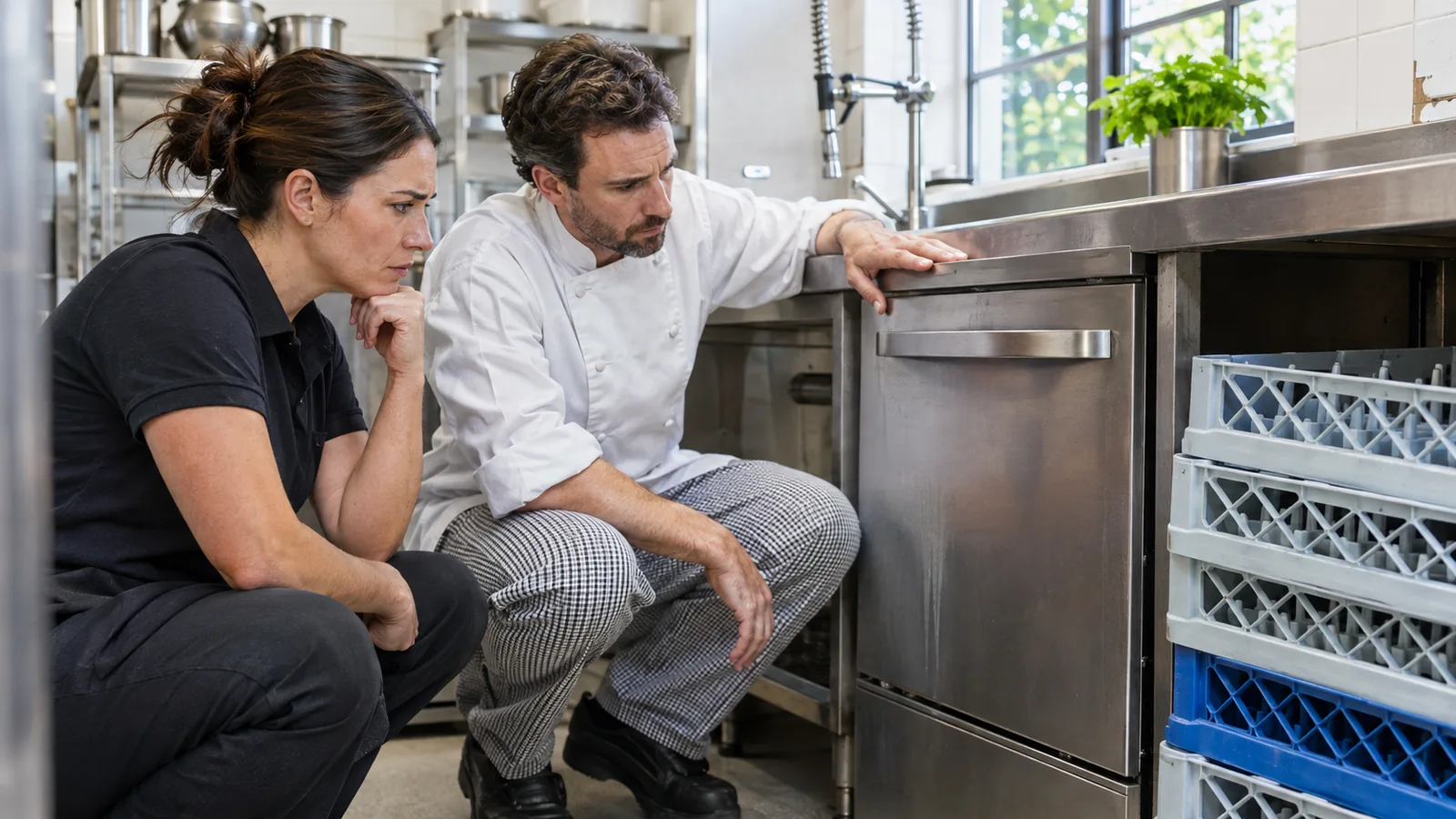
What should you do when kitchen equipment breaks down?
Imagine a café halfway through lunch service. The dishwasher finishes its cycle, but the plates are still dirty and the machine doesn't seem to be heating properly. Clean cups are running low. Someone suggests running everything through twice and carrying on.
Stop using the suspect machine, keep potentially unclean items away from clean stock and assess whether you have a suitable alternative washing and disinfection method. If you can't maintain the hygiene controls needed for service, reduce or stop the affected work. Arrange a competent repair, record your decisions and verify satisfactory operation before restarting.
The same approach applies to a failing oven, unreliable refrigeration or damaged food-processing equipment. Food safety management needs to cover what happens to the food and utensils, as well as what happens to the machine.
Which food safety control has failed?
Start with the job the equipment performs. A machine can still switch on while failing to cook, chill or clean effectively. Noise, lights and a completed cycle aren't proof that its safety function is working.
The FSA's guidance on equipment and food premises explains that food-contact equipment must be maintained in good condition and cleaned effectively. Keeping equipment suitable for safe use is a hygiene duty. The incident log and restart checks below are practical ways to manage failures, rather than a prescribed form every business must use.
These principles apply across small kitchens, but your detailed procedures must fit your operation and country. England, Wales, Northern Ireland and Scotland don't have identical food safety frameworks.
| Equipment problem | Control that may be affected | Immediate management question |
|---|---|---|
| Dishwasher fails to clean or disinfect | Clean utensils and food-contact items | Can we provide a suitable alternative method and separate dirty items? |
| Oven heats unevenly or cuts out | Thorough cooking | Can we verify the affected food and safely complete cooking under an established procedure? |
| Fridge stops maintaining its operating conditions | Chilled storage | What does the food's temperature history show, and is alternative storage available? |
| Mixer or slicer has damaged or loose parts | Protection from physical contamination | Could fragments have entered food, and which batches need holding back? |
| Hot-water equipment fails | Handwashing and cleaning | Can the required hygiene facilities still operate effectively? |
A full electricity failure affects several systems at once. Use the separate guide to food safety decisions during a power cut for that wider situation.
Stop affected work and put someone in charge
Identify the equipment clearly and prevent accidental reuse. Follow your safe shutdown arrangements and manufacturer instructions. Don't ask kitchen staff to investigate electrical faults or remove guards as an improvised repair.
Give one person responsibility for the food safety decisions and another for contacting the repair service if necessary. Make sure both understand what has stopped and what evidence is missing.
Check the wider workflow. A dishwasher failure may affect crockery, utensils and the space needed to keep dirty items separate. An oven failure may leave partly cooked food waiting while staff concentrate on getting the machine running.
Tell the whole shift what the restriction means. “Don't use dishwasher 1; keep items from its last suspect cycle separate” is more useful than “there's a problem in the wash-up”. Pass the same information to the next shift.
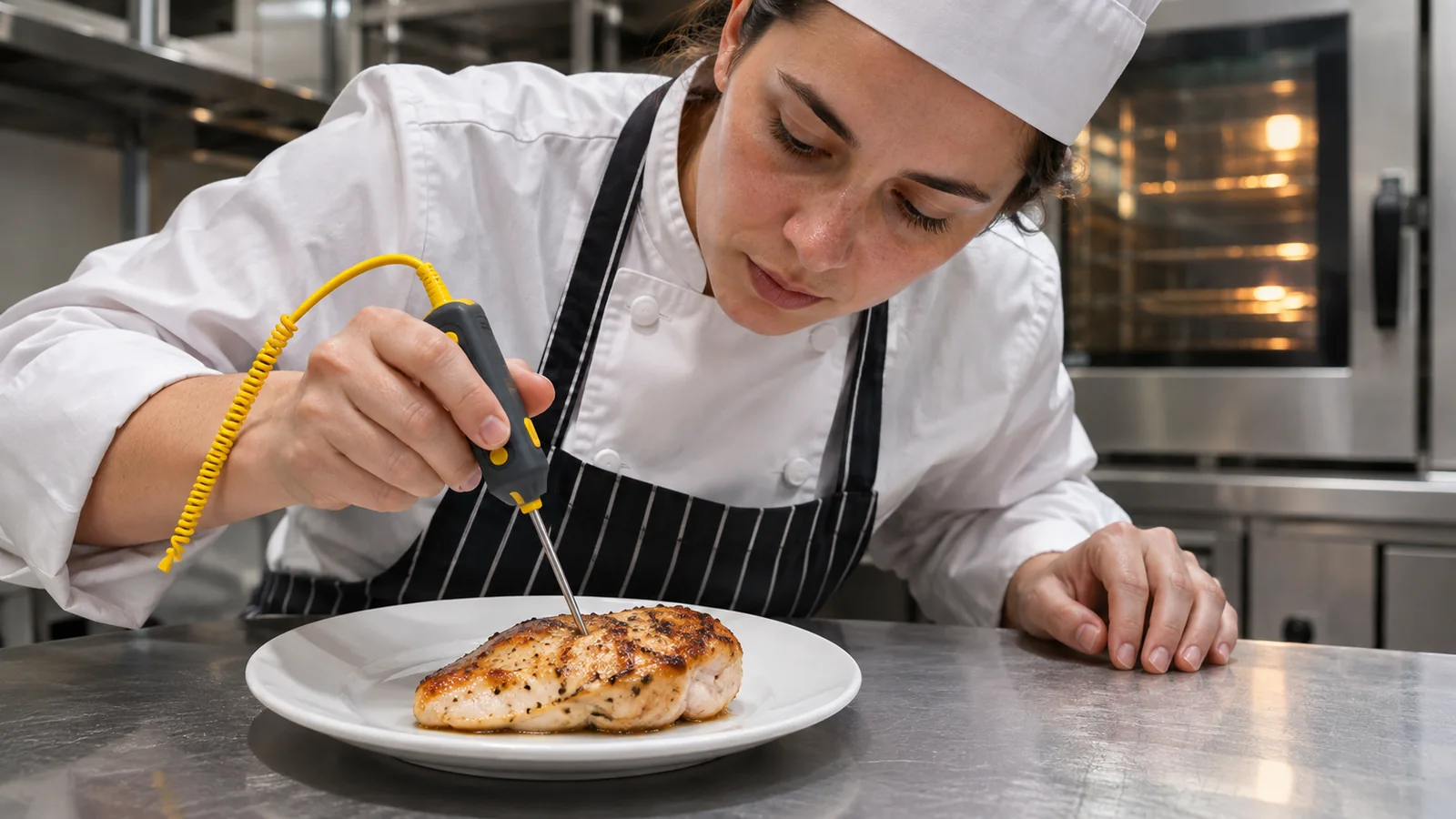
Assess affected food and utensils separately
Establish what was being processed, stored or washed when the fault occurred. Use the last reliable satisfactory check to help identify the affected period, but don't assume it tells you exactly when the failure began.
For food, record the product or batch, available readings and timings, and any uncertainty. Keep suspect food out of service while a competent person makes the decision. Smell and appearance can't establish that food with an uncertain safety history is safe.
For a cooking fault, assess whether food achieved the validated cooking conditions in your procedure. Don't assume a longer timer setting compensates for an unknown oven fault. If cooking has been interrupted, use an established safe corrective action rather than leaving food waiting until the engineer arrives.
For refrigeration, assess the food's time and temperature history as well as the cabinet reading. The government's business chilling guidance distinguishes legal chilled-holding requirements from recommended fridge settings. Follow the limits and product instructions applicable to your business. Moving food to working refrigeration doesn't erase earlier exposure. For a specific equipment example, see our guide to checking broken fridge seals.
For a dishwasher fault, identify items that may not have been cleaned and disinfected properly. Keep them separate for suitable reprocessing. If dirty equipment has already been used, assess the food and surfaces it touched too.
If a machine has shed material, hold back potentially affected batches. Don't assume removing one visible fragment makes the rest safe. Seek advice from your local authority food safety team where you can't establish an appropriate decision, particularly if potentially unsafe food has already left the business.
Choose a workable temporary arrangement
A temporary method needs to provide the control you lost, at a scale the kitchen can manage.
A working oven may handle a smaller menu safely. It may not have the capacity to absorb the entire failed oven's workload. Check cooking performance under your normal procedure and adjust orders accordingly.
Alternative refrigeration must have suitable capacity and maintain the required conditions without overloading. Preserve food identification and keep raw and ready-to-eat food separate during transfers.
Manual washing needs a suitable cleaning and disinfection procedure, appropriate facilities and enough staff time. A quick rinse isn't an alternative to effective cleaning. Follow product instructions, including dilution and contact time where relevant. The government's cleaning guidance for food businesses explains the need to clean and disinfect food areas and equipment effectively.
If handwashing or essential cleaning facilities aren't adequate, stop the activities that depend on them. Buying disposable plates won't solve a handwashing failure.
For restaurants managing daily kitchen checks, the practical response may be a shorter menu or reduced bookings. Agree the limit before the rush, and tell staff when the temporary arrangement must stop.
What should your HACCP records show?
Keep enough detail to explain the fault, its consequences and the actions taken. “Machine broken, engineer called” leaves the food assessment unanswered.
Useful incident details include:
- Discovery date and time, equipment identifier and person reporting.
- Symptoms of failure and the last reliable satisfactory check.
- Affected food, utensils or batches, with readings and timings where relevant.
- Items held back, reprocessed, transferred or discarded, and why.
- Temporary methods, service restrictions and the responsible manager.
- Repair arrangements, advice received and outstanding actions.
- Checks after repair and who authorised return to use.
An illustrative entry might say: “Dishwasher 1: poor cleaning found during service. Machine taken out of use. Items from suspect cycle separated for reprocessing. Manager checked alternative washing arrangements and reduced service capacity. Repair requested; performance check required before reuse.”
Add the actual observations, times and actions from your incident. Don't copy an example as evidence that checks happened.
If you make an entry later, identify it as a late entry and separate the event time from the time you wrote the record. Leave unknown details unknown.
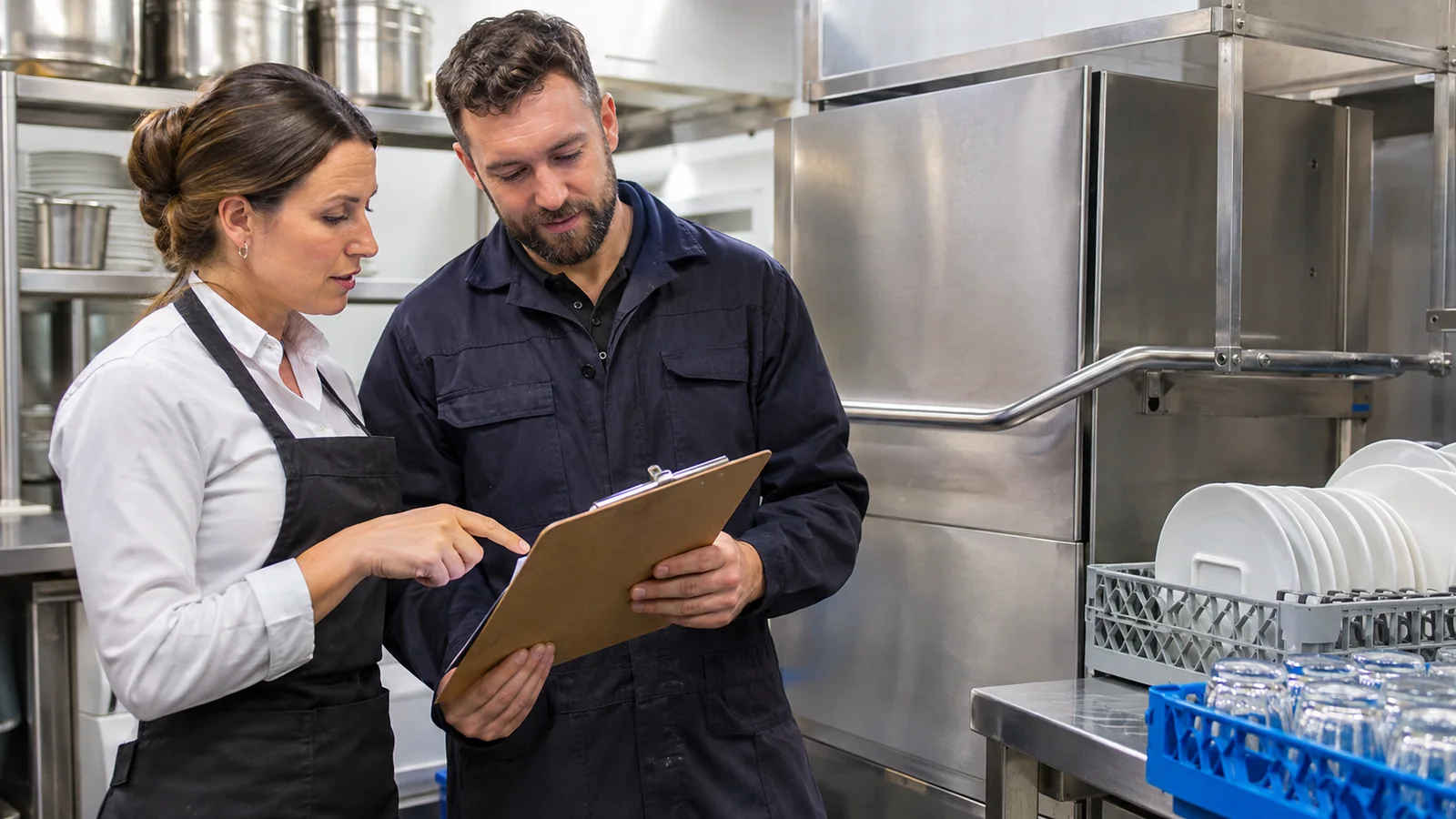
Check the repair before restarting
A service report confirms what the engineer attended to. Your operating checks establish whether the equipment can support safe work again.
Confirm the repair is complete, guards and parts are in place, and the equipment and surrounding area have been cleaned as needed. Follow manufacturer or engineer instructions for recommissioning and verify the relevant function under your food safety procedure.
For a dishwasher, that includes confirming effective cleaning and the disinfection process appropriate to the machine. For refrigeration, establish satisfactory operation before restocking. For cooking equipment, verify food outcomes rather than checking only that the oven gets hot.
Record who authorised restart and any extra checks needed during the first service. Resolve the affected food decision separately: repairing a fridge doesn't make previously unsafe stock safe.
Common mistakes that leave the problem open
Repeatedly resetting equipment without investigating the fault can hide a recurring failure. Look back at previous incidents and ask a competent engineer to address the cause.
Closing the incident when an appointment is booked leaves repair and restart checks outstanding. Give someone responsibility for following it through.
Allowing a temporary arrangement to become the normal routine can create capacity and hygiene problems. Set a review point and check whether it still works during busy periods.
Finally, make restrictions visible to the next shift. A clear handover prevents someone reusing a machine or releasing held stock because they weren't told.
Keep corrective actions and earlier records together
HACCP Records supports digital corrective-action records and historical record retrieval. Use these to document relevant checks and actions alongside your other food safety records, then review earlier entries when equipment fails again.
Digital food safety records can reduce the need to search separate sheets and folders. They still depend on staff entering accurate information and managers checking that action is complete. Don't assume the software diagnoses a fault, assesses food automatically or arranges repairs.
Create your HACCP Records account to keep relevant checks and corrective actions together. You can use the three-day demo before choosing a paid subscription and retain the setup and records you've entered when you activate it.
Equipment breakdown checklist
Before normal work resumes
- Identify the fault and stop affected unsafe work.
- Assess food and utensils, including gaps in their safety history.
- Confirm any temporary method provides suitable control and capacity.
- Record decisions, restrictions and the person responsible.
- Arrange competent repair and follow it through.
- Verify satisfactory operation and authorise restart.
- Brief the next shift and review recurring failures.