Broken Fridge Seals: What Could Go Wrong in a Busy Small Kitchen?
Learn what to check when fridge seals split, how to protect chilled food, arrange repairs and keep useful food safety records in a busy small kitchen.
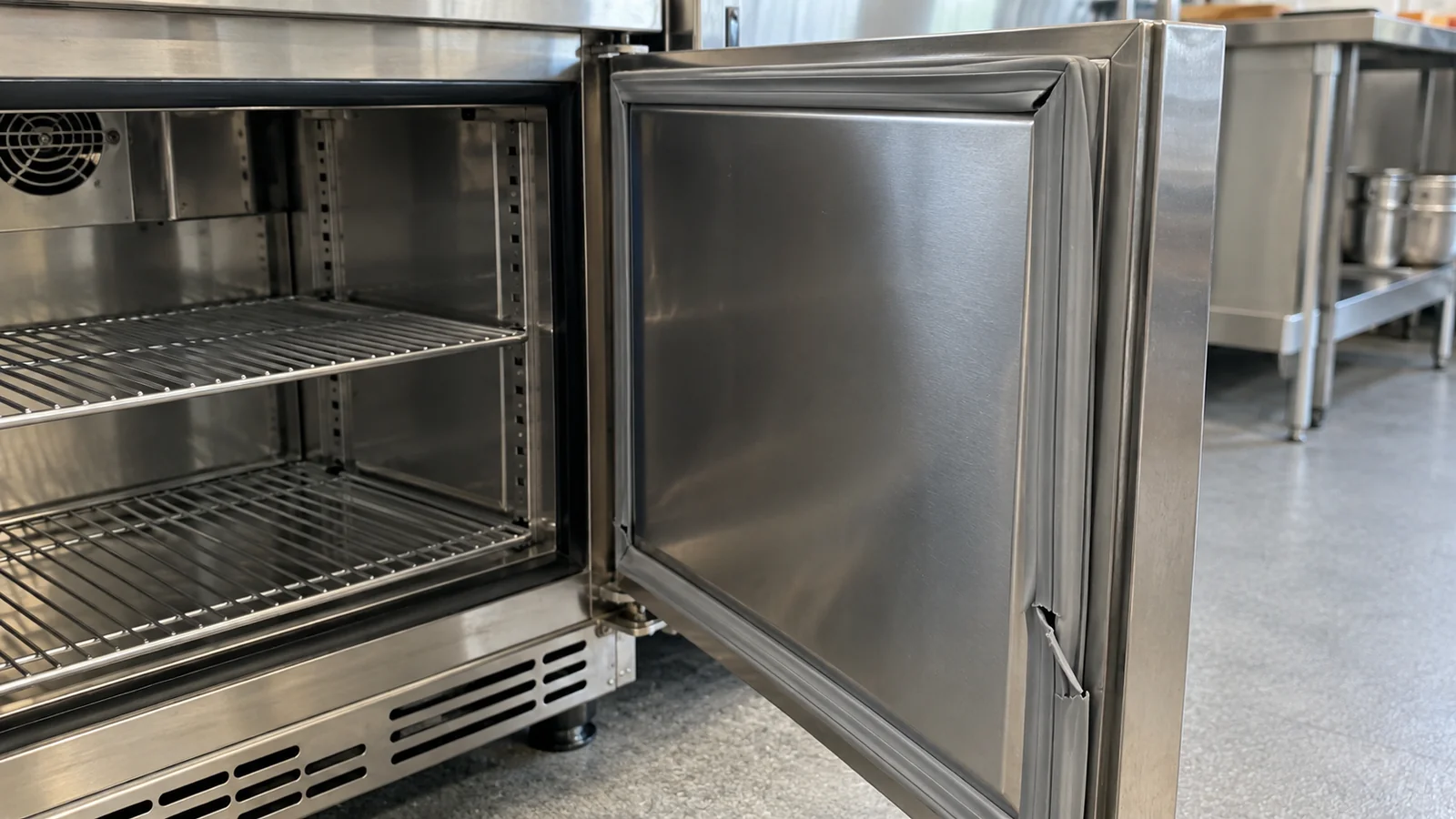
Broken fridge seals: a small fault that needs a proper check
You’re getting ready for lunch when someone notices the prep fridge door hasn’t closed properly. A corner of the rubber seal is hanging loose. The fridge still feels cold, and there are sandwiches to make, so it’s tempting to push the door shut and deal with it later.
A broken fridge seal needs prompt attention. Check whether the door closes properly, establish whether chilled food is still being held safely and arrange a suitable repair. If the unit can’t maintain safe storage conditions, move food to suitable working refrigeration and stop using the faulty fridge.
Good food safety management means dealing with both parts of the problem: the equipment fault and any effect on the food. Booking an engineer doesn’t answer whether today’s stock is safe.
What can go wrong when a fridge seal breaks?
The door seal, also called a gasket, helps the closed door fit against the cabinet. If it’s torn, distorted or loose, the door may no longer seal properly.
Poorly maintained refrigeration can lead to inadequate temperature control. Food Standards Scotland identifies this risk in its CookSafe maintenance guidance.
There are also cleaning and contamination concerns. Splits and damaged folds can be difficult to clean, while loose pieces may detach. The FSA’s maintenance safe method explains why damaged equipment and loose parts need attention.
In a café, the immediate concern might be ready-to-eat sandwich fillings. In a takeaway, it might be chilled ingredients stored through a busy evening. Consider what the fridge contains and how the fault affects the controls you rely on.
What’s required, and what’s recommended?
Food hygiene law requires food premises to be maintained in good repair and condition. Equipment that comes into contact with food must also be kept in a condition that minimises contamination and allows effective cleaning. The relevant provisions are in Regulation (EC) No 852/2004, Annex II.
That doesn’t create a universal legal instruction to replace every damaged gasket within a set number of hours. Your response must address the actual risk and keep food safe while the defect is resolved.
For ordinary chilled storage, distinguish these points:
| Temperature point | What it means |
|---|---|
| Fridge setting of 5°C or below | FSA recommendation, giving a margin for keeping chilled food within its limit |
| Food at 8°C or below | General legal chilled-holding requirement for relevant foods in England, Wales and Northern Ireland, subject to applicable exemptions |
| Lower product storage temperature | Follow any stricter storage requirement applying to the particular food |
The FSA’s chilled storage and display guidance explains the 5°C recommendation and 8°C requirement. Don’t treat 5°C as the universal legal maximum, or 8°C as the right thermostat setting.
Scotland has a different temperature-control framework. Set appropriate limits in your food safety system using CookSafe and local environmental health advice, rather than presenting the England, Wales and Northern Ireland rule as UK-wide.
Practical checks when you find a damaged seal
Inspect the door and gasket
Look around the full seal, including the lower corners and hinge side. Check for tears, loose sections, trapped food debris and areas that no longer sit against the cabinet. Make sure containers or overfilled shelves aren’t preventing the door from closing.
Check hinges and door alignment too. A replacement seal won’t necessarily solve a door that’s hanging incorrectly. Follow the manufacturer’s instructions and ask a competent refrigeration engineer to investigate where needed.
Cleaning an intact but dirty seal may resolve a closure problem. Cleaning won’t repair a split or restore missing material.
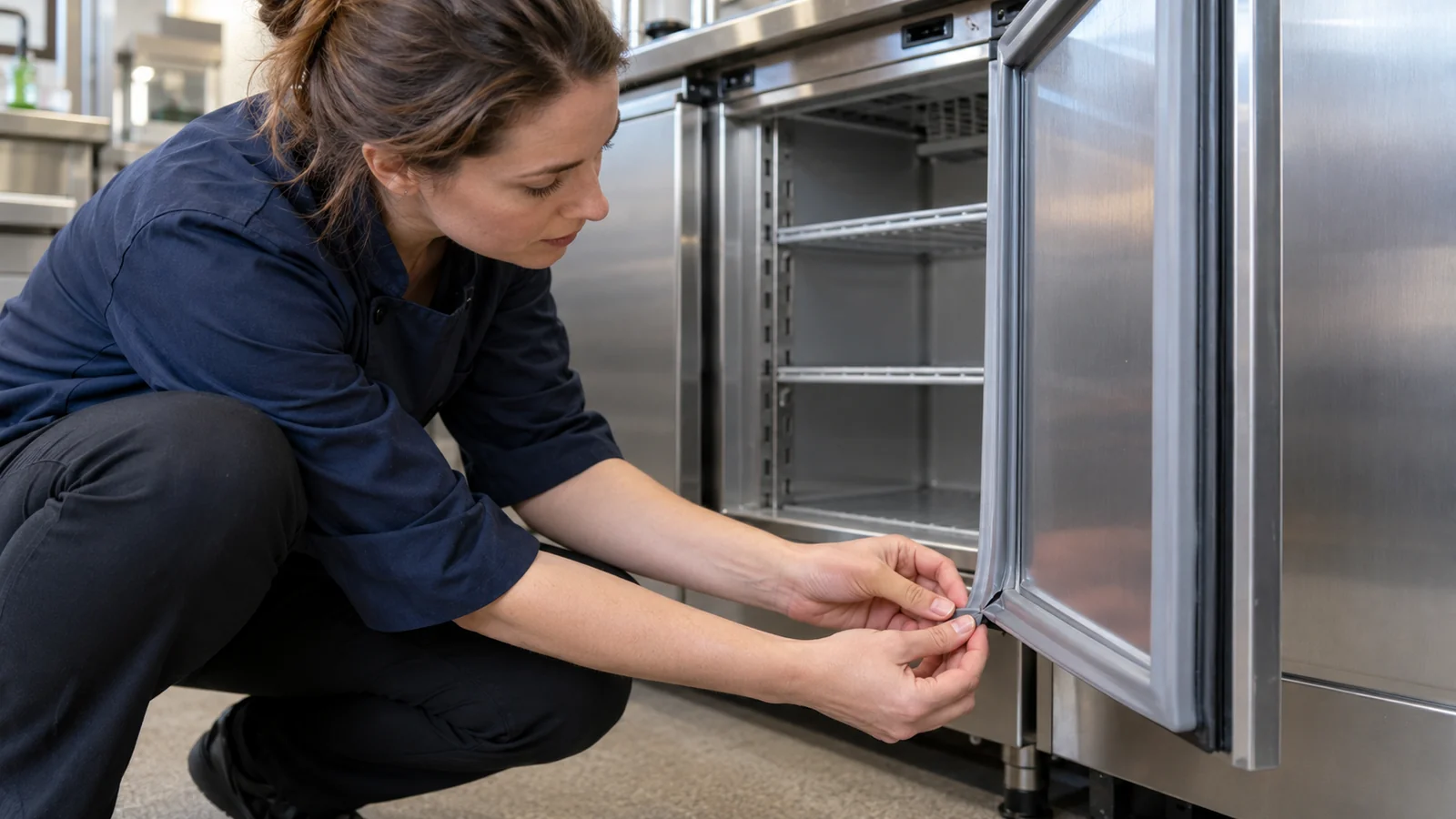
Check temperatures using your safe method
Review the current reading and recent records. A display shows conditions at its sensor, so don’t rely on it alone when investigating a suspected fault.
The FSA’s chilled-storage safe method recommends checking equipment temperatures at least daily, starting with opening checks. It also describes checking between packs using a clean, disinfected probe to help assess equipment performance.
Use your documented method to assess affected food, checking representative locations rather than only the coldest spot. A between-pack reading helps with assessment but isn’t the same as measuring the centre of the food. Keep probes clean and disinfected, and check their accuracy under your normal procedure.
If the fault changes the risk, increase monitoring while you make the decision and arrange repair. Extra checks mustn’t become an excuse to keep using equipment that can’t maintain safe conditions.
Protect the stock
Where suitable alternative refrigeration is available, transfer food without overloading it or blocking airflow. Keep raw foods separate from ready-to-eat products and preserve packaging, date labels and storage instructions.
Our guide to preventing cross-contamination between raw meat and ready-to-eat food covers the separation controls that still apply during an urgent move.
If you haven’t got enough safe capacity, reduce preparation or service rather than leave stock in unreliable refrigeration.
What if the food is already too warm?
Stop and assess it. Establish which products are affected, their temperatures and how long they may have been outside the required conditions. Check the last reliable satisfactory record, but don’t assume that tells you the exact moment the temperature rose.
The FSA’s Safe Catering guidance bases decisions about food above 8°C on its time and temperature history, with environmental health advice where needed. Moving food to another fridge doesn’t undo its previous exposure.
Don’t use a smell or taste test to decide whether suspect food is safe. If you can’t establish a safe basis for keeping it, don’t serve it. Seek prompt advice from your local environmental health team where the history or decision is unclear.
A time allowance intended for controlled service or display isn’t permission to run a faulty storage fridge. Keep the response consistent with the food, your safe method and any specific advice received.
Which HACCP records should you keep?
Maintenance procedures support your HACCP-based food safety system. A seal inspection doesn’t automatically need to become a separate critical control point. Your records should show the defect, the food assessment and the completed response.
Useful recommended details include:
- The fridge identifier, discovery date and time, and person reporting it.
- The defect, such as a split lower door gasket or a door failing to close.
- Temperature readings, times and the method used.
- Food assessed, transferred, held back or discarded, with reasons.
- Temporary restrictions, repair arrangements and the responsible person.
- The repair date and checks confirming the unit is ready for use.
For example, an illustrative entry might read: “Prep fridge 2: lower seal split. Stock assessed under chilled-storage procedure and transferred to fridge 1. Unit labelled out of use. Replacement gasket requested. Manager to check door fit and operating temperature after repair.” Add actual readings and food decisions from the incident, rather than copying generic wording.
Keep the repair evidence with the relevant checks. A contractor’s invoice shows work was carried out; your follow-up check shows you considered whether the fridge was suitable to use again. Our guide to food safety records to have ready for an inspection explains how to organise that evidence.
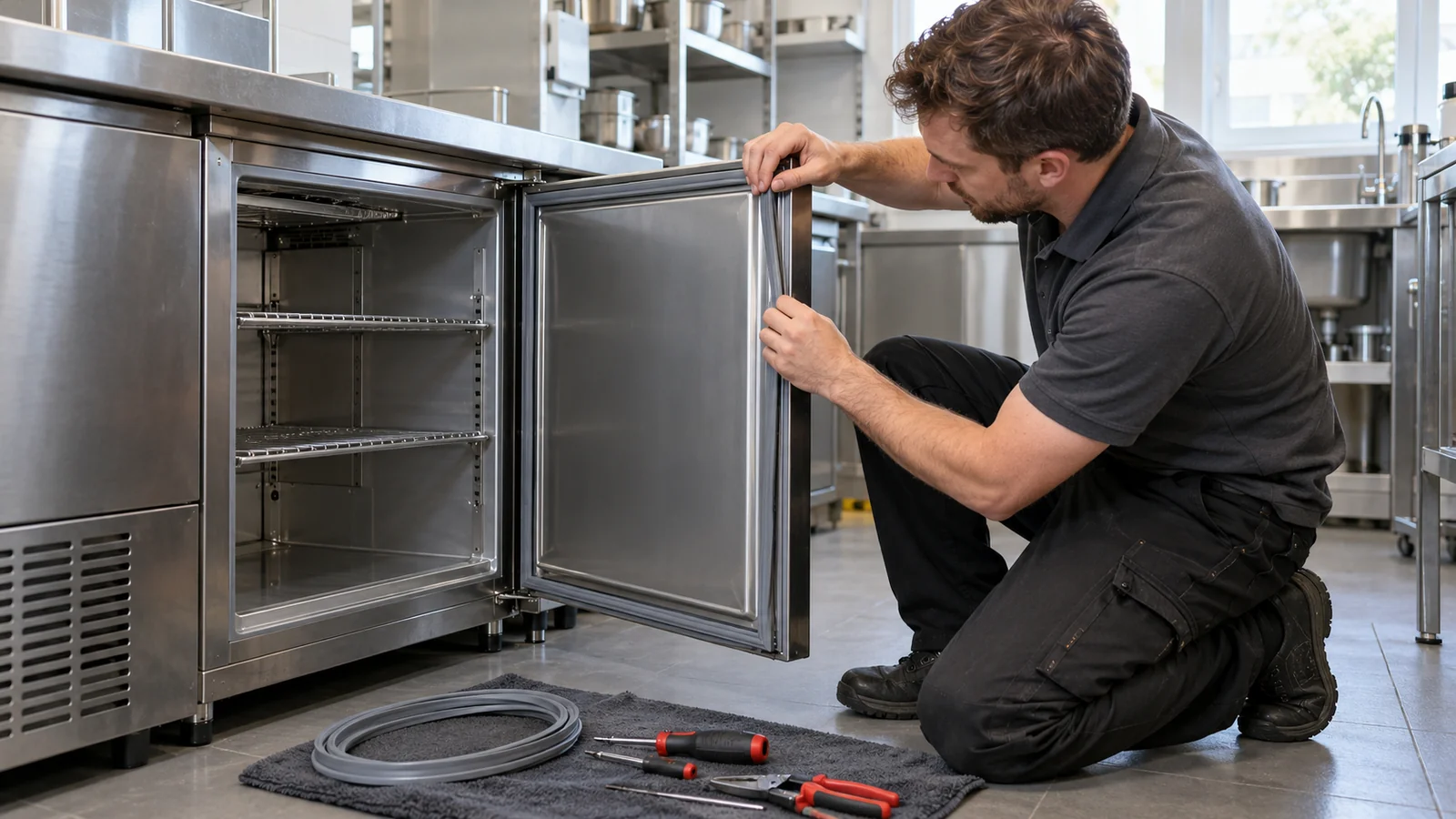
Common mistakes and useful corrective actions
Turning the thermostat down and carrying on
A colder setting doesn’t repair the seal. Investigate the cause, protect the food and arrange repair. Check whether loading, door alignment or another fault is contributing.
Treating tape as a permanent repair
Don’t assume an improvised patch restores a cleanable, effective seal. Follow manufacturer or engineer advice and use a suitable replacement. Remove the unit from use if safe storage can’t be maintained.
Reporting the fault without checking completion
Give someone responsibility for following it through. Before restocking, check the repair, clean as appropriate, confirm door closure and verify satisfactory operation under your procedure. Continue checks during normal use to confirm the problem hasn’t returned.
Repeatedly replacing seals without asking why
If damage keeps happening, review how the fridge is loaded, opened and cleaned. Check that staff aren’t trapping containers in the door or using unsuitable cleaning methods. Ask the engineer about recurring alignment or component problems.
How digital food safety records can help
Separate temperature sheets, maintenance notes and repair paperwork can make a recurring fault difficult to follow. Digital food safety records can help you enter relevant checks, keep them with other food safety records and retrieve earlier entries.
The app supports digital record entry, centralised record storage and historical record retrieval. Use these features to keep the evidence behind your food safety management easier to find. Previous entries can help you review whether a fault has happened before and what action was recorded.
For failures involving dishwashers, ovens or other kitchen equipment, use our guide to equipment breakdown checks and corrective action.
If you want to organise your HACCP records digitally, start your free demo. Staff still need to inspect equipment, assess food and confirm that repairs have worked.
Broken fridge seal checklist
- Inspect the seal, door closure and loading.
- Check temperatures and review the relevant records.
- Assess affected food using its time and temperature history.
- Move suitable stock to reliable refrigeration where needed.
- Stop using the faulty unit if it can’t maintain safe conditions.
- Arrange repair and record the actions taken.
- Verify satisfactory operation before normal use resumes.