High-Touch Surface Cleaning in Food Businesses: A Practical Guide
Learn which high-touch surfaces to clean in a busy food business, how to choose safe cleaning methods and what records help demonstrate the checks.
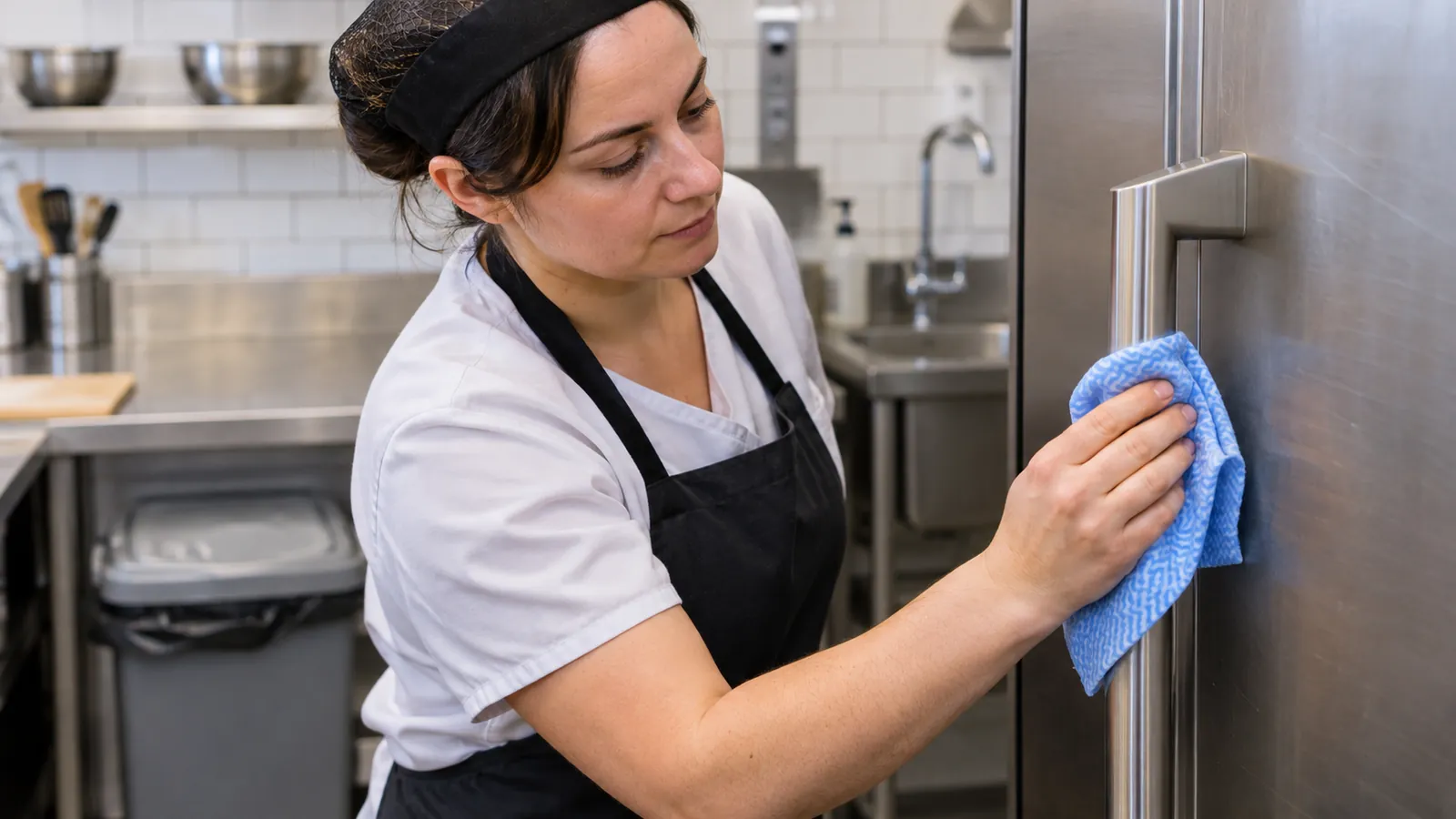
The fridge handle nobody thought to clean
It's the middle of lunch service in a small café. One member of staff has handled raw chicken, another is assembling sandwiches, and everyone keeps opening the same fridge. The worktops are being cleaned, but the fridge handle, tap lever and bin lid have barely been considered.
These are high-touch surfaces: places handled repeatedly during normal work. They can transfer contamination between hands, equipment and food, even when the kitchen looks tidy.
Good high-touch surface cleaning means identifying the touch points, setting a realistic cleaning and disinfection routine, using the right method and checking that it happens. The frequency should reflect the risk and how the kitchen operates. A single end-of-day wipe won't necessarily cover what happens during service.
Why high-touch cleaning matters to food safety management
A contaminated hand can touch a fridge handle, then another person can touch the same handle before preparing ready-to-eat food. A cloth used on a bin lid can spread contamination if it's later used on a preparation bench. These are examples of cross-contamination, where harmful bacteria or other contaminants move from one place to another.
Cleaning removes food residue, grease and dirt. Disinfection reduces harmful microorganisms on an already clean surface. The two have different purposes, and neither replaces proper handwashing or separating raw food from ready-to-eat food.
There can also be an allergen risk. Residue left on a shared control, utensil or preparation surface may transfer to another product. Disinfecting a surface doesn't automatically remove allergen residues. Effective cleaning is needed, with methods suited to the food and surface involved. The Food Standards Agency's research on allergen cleaning explains why no single cleaning method works equally well in every situation.
What's required by law, and what's good practice?
UK food businesses must manage food safety and maintain suitable hygiene arrangements, with differences in the detailed legal framework across the four nations. For England, Wales and Northern Ireland, government guidance on cleaning says businesses must be able to demonstrate effective cleaning. It specifically identifies high-touch points such as door handles, bins, light switches and electronic devices. Cleaning procedures and supporting records form part of the wider food safety management system.
For Scottish catering businesses, Food Standards Scotland's CookSafe guide provides cleaning schedules and HACCP-based guidance.
The law doesn't prescribe one identical cleaning interval or tick-sheet design for every café, takeaway and restaurant. Choose the frequency, method and evidence that fit your actual risks and procedures. Frequent cleaning of touch points, named responsibility and management checks are sensible ways to make that duty work in practice.
Which high-touch surfaces should you include?
Walk through the building during a busy period and watch what staff actually handle. Include the front counter, stores and wash-up area, not just the main preparation benches.
| Touch point | What to consider in the cleaning schedule |
|---|---|
| Fridge and freezer handles | Frequent handling, including after staff have worked with raw ingredients |
| Tap levers and sink controls | Contact before or after handwashing and food preparation |
| Bin lids and pedal areas | Waste-handling contamination and cleaning equipment used nearby |
| Oven knobs, buttons and equipment controls | Staff movement between raw and cooked food tasks |
| Scales, probe handles and shared utensils | Multiple users and contact with different foods |
| Door handles, switches and handrails | Heavy use during deliveries, service and shift changes |
| Card terminals, tills and order screens | Staff moving between payments, customer contact and food handling |
| Service counter touch points | Contact with staff, customers and items returned from tables |
For cafés with compact preparation and service areas, the till, fridge and food preparation area may be only a few steps apart. The cleaning plan needs to reflect that movement, rather than treating front of house and back of house as completely separate.
Don't assume every item needs the same chemical or frequency. An electrical control, for example, may need a different approved cleaning method from a stainless-steel preparation surface. Follow equipment and chemical manufacturers' instructions.
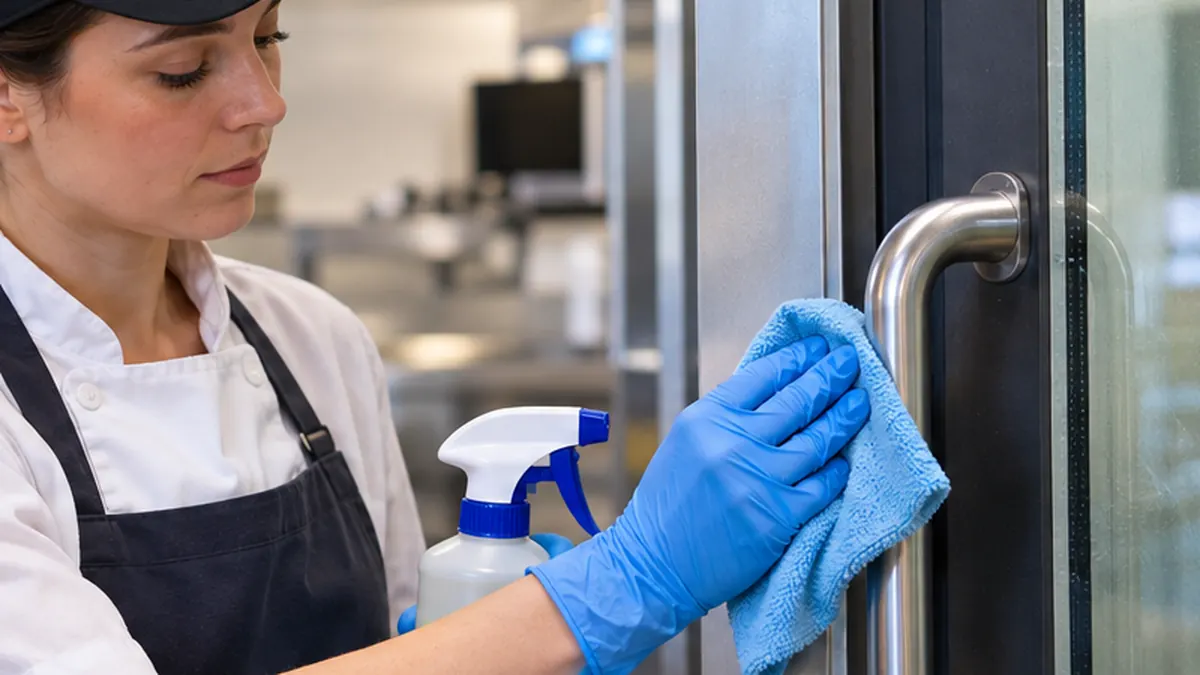
How to clean and disinfect touch points properly
The exact procedure depends on the surface, the contamination risk and the product being used. For food areas, the FSA's Safer Food, Better Business cleaning schedule sets out a practical approach.
Protect food and prepare the area
Move or cover exposed food before cleaning. Check whether equipment needs switching off and whether the product is suitable for the surface. Use any protective equipment specified in the instructions.
Remove dirt and food residue
Clear visible debris, grease and spills. Use a suitable detergent and clean cloth or other designated equipment. A disinfectant won't work reliably through dirt and grease.
Rinse where required
Remove detergent residues as directed by the product instructions and your cleaning procedure. Avoid spreading dirty water or residue onto clean areas.
Disinfect when the risk requires it
Use a suitable disinfectant or sanitiser at the correct dilution. Keep the surface wet for the full contact time stated by the manufacturer. Follow any required final rinse and drying instructions.
Check and return the area to use
Make sure the surface is clean, no chemical residue can contaminate food and equipment is ready for safe use. Record the check where your system requires it.
Don't choose a universal contact time such as '30 seconds' unless that's what the particular product instructions require. Avoid spraying chemicals directly onto unsuitable electrical equipment. Keep food-safe cleaning equipment separate from items used for bins, floors and toilets.
Set cleaning frequencies that work during service
Start with the normal flow of the business, then add cleaning triggers for incidents that change the risk. A practical plan might distinguish between cleaning before food preparation, after raw-food contamination, at agreed points during service and at closing.
For example, in busy takeaway operations, a worker might take a delivery, handle packaging and return to an order screen. That doesn't create a universal rule to disinfect the screen after every touch. It does mean managers should assess the contamination risk, make handwashing expectations clear and arrange touch-point cleaning to suit the workflow.
Assign each task to a person or shift role. Say which surface is included, which product to use, how to use it and when it's due. Review the arrangement when the menu, equipment, layout or staffing changes.
Build a schedule staff can actually follow
A usable cleaning schedule answers five questions:
- What? The surface or group of touch points.
- How? The cleaning method and suitable product.
- When? The routine interval and extra triggers after contamination.
- Who? The member of staff or role responsible.
- What if it fails? The immediate action and who needs to know.
Avoid vague entries such as 'clean kitchen surfaces'. They don't tell staff whether the fridge handle, till screen or wash-up tap has been included.
What cleaning records should you keep?
A record should show something useful, not simply add paperwork. Your food safety management system may use a cleaning schedule alongside completed checks, staff instructions and corrective action entries.
For scheduled high-touch cleaning, useful evidence can include the task or area, the date and time, who completed it and any exception. The schedule itself should identify the method, product and required frequency. A manager can then review completion and check that staff are following the right procedure.
If something goes wrong, note what was found, the action taken, any food or equipment affected and how the issue was resolved. A missed check shouldn't be signed off retrospectively as if it happened on time. Record the gap accurately and deal with it.
HACCP records help show that safety controls are being managed. High-touch cleaning is generally part of the business's underlying hygiene arrangements, often called prerequisite controls, rather than automatically being a critical control point. The records still matter because poor cleaning can undermine several parts of the food safety system.
Common mistakes and realistic corrective actions
| What goes wrong | What to do straight away |
|---|---|
| Fridge handle has been missed during cleaning | Clean it using the agreed method, record the missed check if required and review responsibility or frequency |
| A cloth used on a bin is used on a preparation surface | Stop using the cloth, clean and disinfect the affected area, replace the cloth and assess whether any food has been contaminated |
| Staff use a chemical at the wrong dilution | Stop using the mixture, prepare it correctly and repeat the affected cleaning; review staff instruction |
| Contact time is cut short during a rush | Repeat disinfection correctly and give staff enough time to complete the task |
| A surface may have contaminated ready-to-eat food | Stop using the area, assess affected food and discard food that cannot be assured safe; clean and disinfect before restarting |
| Several checks are missing from the record | Check what actually happened, complete any outstanding cleaning and record the gap without inventing entries |
Recurring failures deserve more than another tick. Ask whether staffing, training, product availability, equipment condition or a poorly designed schedule is causing the problem. For restaurants managing several preparation stations, a clearly assigned cleaning responsibility at shift handover can prevent touch points being overlooked between teams.
How digital food safety records can help
Paper cleaning sheets can work, but they may be stored away from the area being cleaned, left incomplete or difficult to find when someone wants to review previous checks.
With the HACCP Records web app, a small business can record cleaning-related checks digitally, keep them alongside other food safety records and retrieve historical entries from one place. That makes it easier to look back at the evidence when a manager reviews cleaning arrangements or follows up a repeated issue.
The benefit isn't the tick box itself. Staff must still clean correctly, follow the agreed schedule and report problems. Digital food safety records simply help keep the evidence organised and accessible without relying on separate paper sheets and folders.
If you want to keep cleaning checks and HACCP records together, start your free HACCP Records demo. The online service offers a three-day full-access demo with no payment card required, after business setup. You can retain your setup and records when you activate a paid account.
High-touch cleaning checklist for your next shift
Check the routine before service starts
- Identify the handles, taps, switches, controls and other shared touch points
- Confirm the cleaning schedule names the correct methods, products and frequencies
- Check that staff know which tasks they're responsible for
- Make suitable chemicals and separate cleaning equipment available
- Build in extra cleaning after spills, raw-food contamination and other incidents
- Check completed work and record any problems and corrective action
- Review recurring gaps rather than just asking staff to sign the sheet
A clean-looking worktop is only part of the picture. The useful test is whether staff can explain what they clean, how they clean it, and what they do when the routine doesn't go to plan.