Reheating Temperature Checks: Safe Methods for Small Kitchens
Check reheated food safely, understand UK temperature guidance, avoid microwave cold spots and record failed checks and corrective actions in your kitchen.
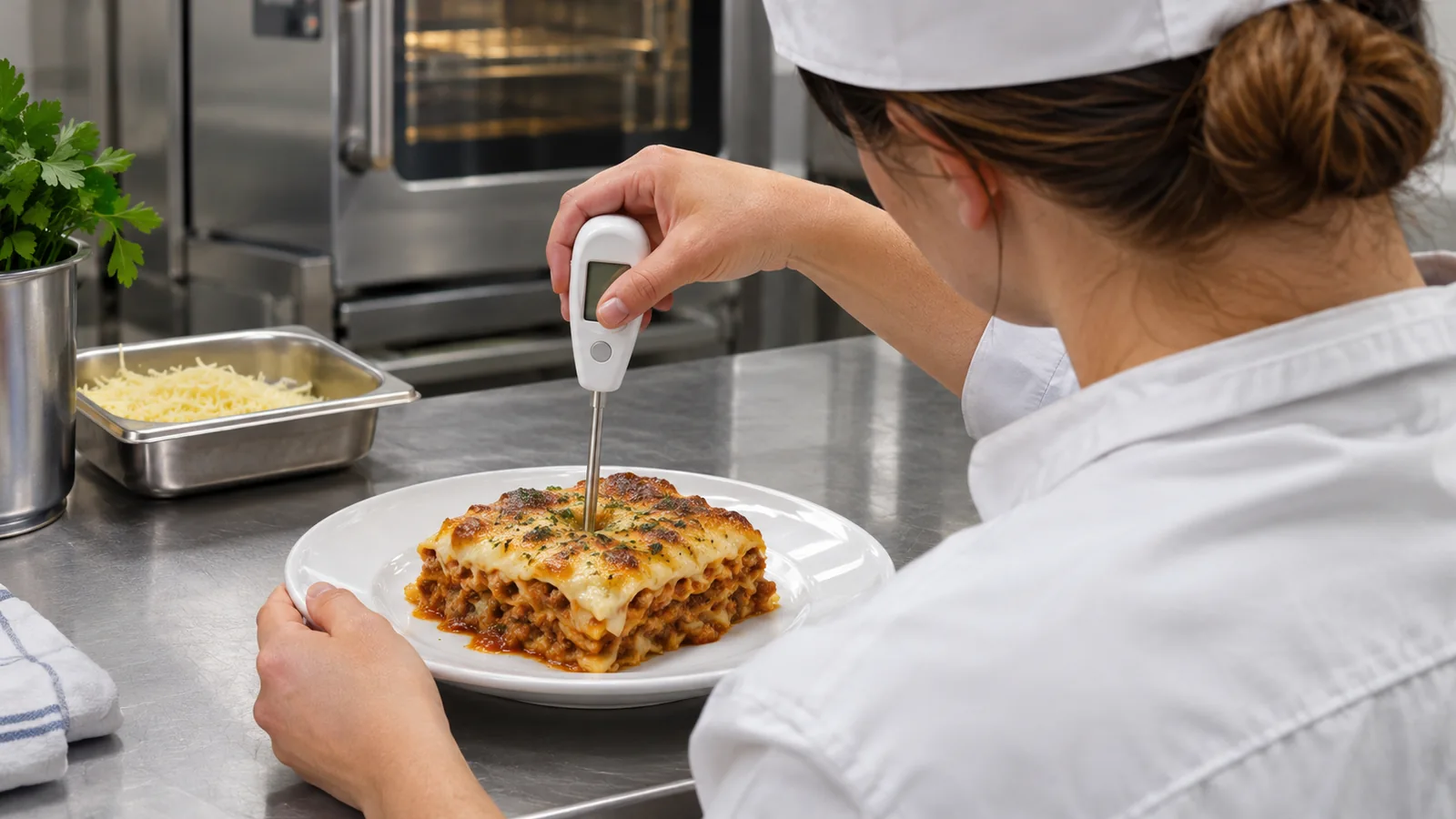
Check the middle before the meal goes out
Imagine a café with a queue building at lunchtime. A chilled portion of lasagne comes out of the microwave, bubbling at the edges. The cook starts plating it, but a probe check finds that the centre hasn't reached the kitchen's reheating target.
Keep that portion out of service. Reheating temperature checks should confirm that food reaches your established safe conditions throughout, including any required time at temperature. Use a suitable, clean probe and check likely cold spots. If the check fails, take corrective action and recheck before serving.
Reheating isn't simply making a previously cooked meal warm enough to eat. It needs a reliable method, suitable equipment and a clear decision when the result isn't satisfactory.
What temperature should reheated food reach?
The government's business cooking and reheating guidance says reheated food should be steaming hot throughout and reheated only once. For thorough cooking, it gives standard combinations such as 70°C for two minutes or 75°C for 30 seconds.
Where your reheating procedure uses a time and temperature combination, specify both parts and verify that it works for your food and process. A momentary reading of 75°C isn't evidence of 30 seconds at that temperature. Don't describe 75°C as a single universal legal reheating limit across the UK.
Scotland has a specific provision. The Scottish reheating regulations require food within their scope to reach at least 82°C when reheated commercially before immediate consumption or display for sale. They provide a defence where reaching that temperature would cause deterioration in the food's qualities.
Food Standards Scotland's CookSafe guidance describes suitable alternatives in those circumstances, including 70°C for two minutes. This isn't a general option to ignore the Scottish requirement. Establish an appropriate procedure and seek local authority advice if you're unsure.
| Point to establish | What staff need to know |
|---|---|
| Applicable guidance and legal requirements | Which country and process the procedure covers |
| Reheating target | The temperature and any required time at that temperature |
| Checking method | Where to probe and how to check likely cold spots |
| Failed result | What stays out of service, what action to take and when to recheck |
For the wider principles of probe placement and time at temperature, see our guide to core temperature checks and cooking records.
Agree a method for each type of dish
A soup, a deep tray of cottage pie and an individual microwave meal don't heat in the same way. Write your procedure around the dishes, portion sizes, starting conditions and equipment you actually use.
For a practical method, identify:
- The dish and normal portion size or batch depth.
- Whether it starts chilled or frozen, following relevant product instructions.
- The equipment, setting and preparation steps.
- The reheating target and checking method.
- Who checks it and what happens if it fails.
These are useful working details, rather than a legally prescribed form. They help a new cook repeat the safe method and help a supervisor investigate a problem.
Changing a portion size, container or microwave can affect the result. Check the revised method before assuming the old timing still works. For takeaways organising temperature records, keeping dish names and reheating stages clear also helps avoid confusing checks during a busy order period.
How should you check for cold spots?
Use a suitable penetration thermometer whose accuracy checks are satisfactory. Clean and disinfect the probe using your approved method before and after use, and between foods where needed. Follow its instructions for insertion depth and allow the reading to settle.
Aim to assess the slowest-heating part of the food, rather than choosing the easiest place to insert the probe. Keep its sensing section away from the hot tray or container. For mixed or uneven portions, consider which ingredients or locations may remain coolest.
A large dish or microwave-heated portion may need checks in several places. Your sampling and recording arrangements should reflect the process. One convenient high reading doesn't represent an entire uneven load.
Take microwave stirring and standing seriously
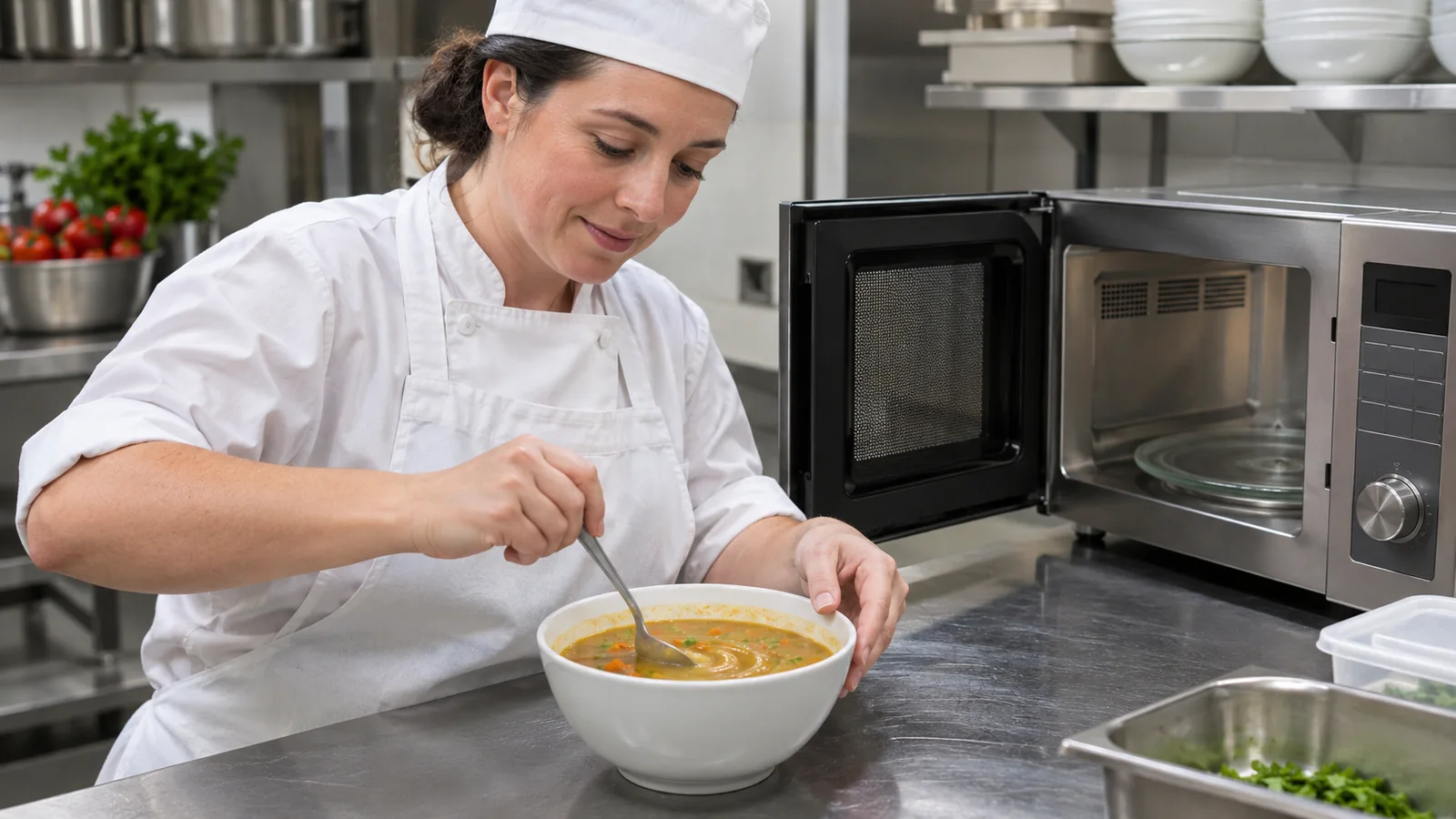
The FSA's reheating safe method explains that microwaved food can have hot edges and a cold centre. Follow product instructions for stirring and standing; for food you've prepared yourself, stir where appropriate and establish an effective method.
That standing period forms part of the process. Don't skip it because customers are waiting. Check several areas for cold spots, then release the food only when the required conditions have been met.
What should happen when a reheating check fails?
Keep the affected food out of service and record the actual result. Don't enter the target as if it were the measurement.
If the equipment works and further heating is appropriate under your procedure, continue the same reheating process and check again. That differs from cooling a finished reheated dish and reheating it for another service. Follow the guidance to reheat only once.
If repeated checks fail, stop relying on the normal timer. Investigate portion size, loading and equipment performance. Where food history or safety is uncertain, don't serve it. A manager should make the decision and seek environmental health advice where needed.
| Problem found | Practical response |
|---|---|
| Centre below the specified target | Keep out of service, continue heating where appropriate and repeat the check |
| One hot reading but another cold area | Address uneven heating and reassess the portion |
| Probe reading seems unreliable | Use a suitable checked thermometer and assess whether earlier checks need review |
| Equipment isn't performing normally | Stop affected work and establish a safe alternative before continuing |
| Required check wasn't made before dispatch | Record the gap honestly and assess the food safety implications promptly |
Reheating and hot holding need separate decisions
Complete reheating before moving food into hot holding. The FSA's safe method says not to put food into holding without properly reheating it first, and to serve it immediately unless it goes straight into holding.
A holding reading doesn't establish that the earlier reheating stage was satisfactory. Label the activity accurately in your records so someone reviewing the shift can distinguish reheating from subsequent holding checks.
Avoid placing a cool batch in holding equipment and hoping it will eventually become safe. Use equipment and a method suitable for the reheating task.
What should reheating HACCP records include?
A useful record identifies the food, the result and any follow-up. Decide the level of detail and checking frequency in your food safety management system, rather than collecting readings without a purpose.
Recommended details include:
- Date and time of the check, and the person completing it.
- Dish, portion or batch identification.
- The required temperature and time, where applicable.
- Actual reading and confirmation of the required duration.
- Corrective action and the repeat result before release.
For example, an illustrative entry could say: “Lunch lasagne portion: initial centre check below our specified target. Kept out of service, reheating continued and repeat check completed before serving.” Add your actual readings and times. The example isn't evidence that a check happened.
Record uncertainty honestly. If someone notices a missing entry after service, don't recreate a temperature from memory. Assess the gap and explain the action taken now. Our guide to food safety records for an inspection explains how checks and follow-up evidence fit together.
Use repeated failures to improve the method
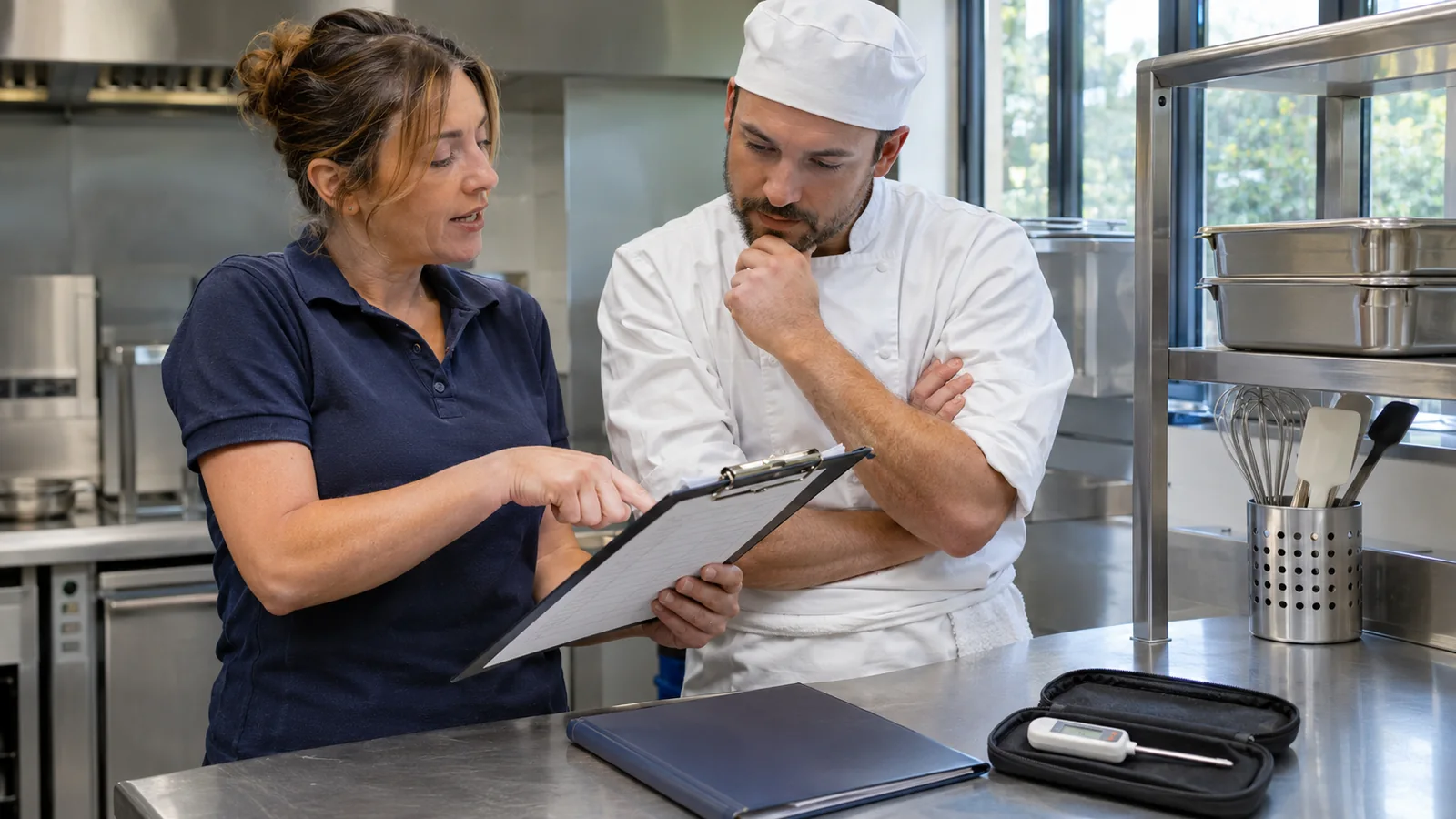
If the same dish regularly needs extra heating, review the process. Ask whether portions have become larger, equipment is overloaded or staff are missing a step. Check what happens during the busiest period, rather than testing only an empty kitchen.
Make the revised instructions clear, show staff how to follow them and verify the result. A corrective action should improve control as well as deal with today's portion.
Keep digital food safety records with your other checks
HACCP Records supports digital temperature check entry, centralised record storage and historical record retrieval. You can enter relevant reheating checks and find earlier entries without searching separate paper folders.
Use clear dish names and the correct check type. Review earlier records to identify gaps or repeated problems. The app organises the information you enter; staff still need to measure accurately, confirm any required time and decide whether food can be served.
Create your HACCP Records account to keep relevant temperature checks together. Try the three-day demo, then activate a paid subscription to continue with your existing setup and records.
A short reheating checklist
Before reheated food is released
- Use the established method for the dish, portion and equipment.
- Apply the target appropriate to your process and country.
- Follow stirring and standing instructions where relevant.
- Check likely cold spots with a suitable clean probe.
- Confirm the temperature and any required time at that temperature.
- Keep failed portions out of service, take action and recheck.
- Record actual results and follow-up before serving or hot holding.