Raw Meat and Ready-to-Eat Food: Simple Separation Checks
Use practical checks before and during service to keep raw meat away from ready-to-eat food, spot failures and record the action taken in a small kitchen.
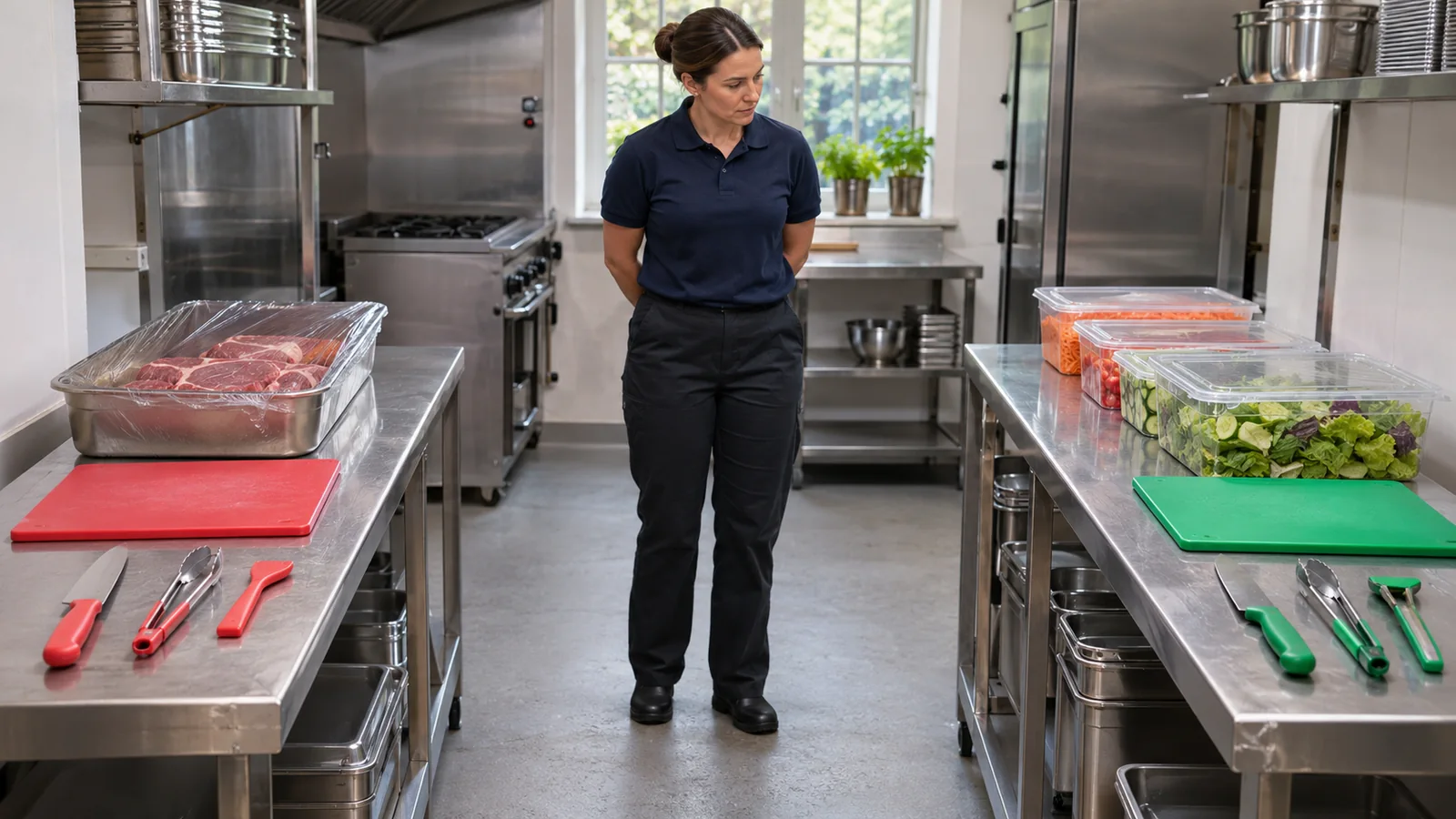
What should you check before food preparation starts?
Imagine a takeaway getting ready for the evening rush. The red and green chopping boards are in place, so everything appears organised. Then someone notices a pair of raw-meat tongs resting beside the salad containers and a delivery tray blocking the route to the handwash basin.
Simple separation checks should look at how the kitchen is actually working: where food sits, which tools staff use, what their hands touch and whether ready-to-eat ingredients remain protected. Correct any problem before affected work continues, and repeat relevant checks when the setup changes during service.
This article gives a practical checking routine. For the detailed procedures behind it, use our guide to preventing cross-contamination between raw meat and ready-to-eat food.
Start with six simple checks
These are recommended prompts for your kitchen routine, rather than six checks prescribed by law. Adapt them to your menu, layout and food safety procedures.
| Check | What to look for | If the check fails |
|---|---|---|
| Preparation areas | Ready-to-eat work is protected from raw preparation and its equipment | Stop the conflicting activity and restore the agreed separation |
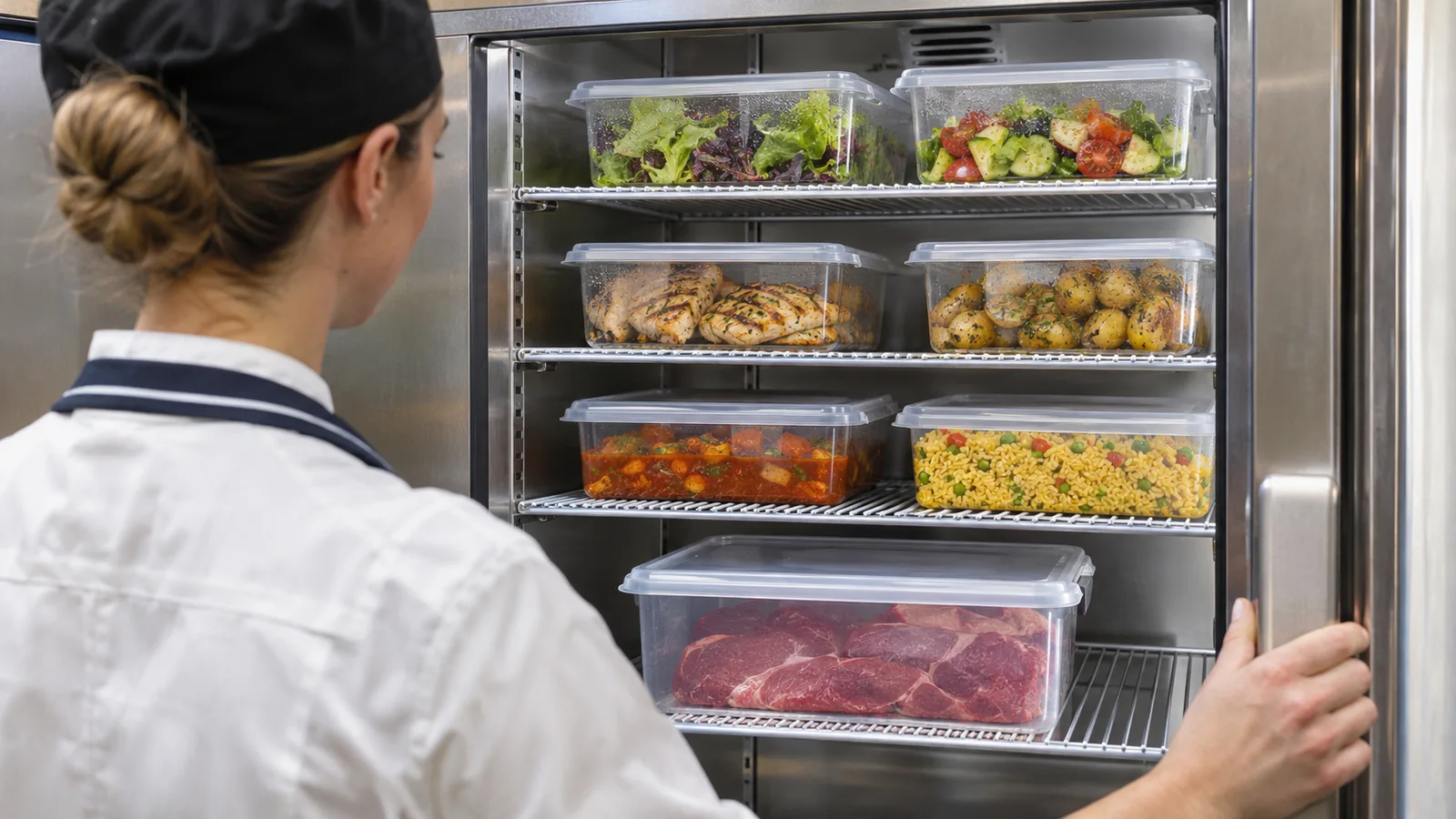
| Fridge storage | Raw meat is contained and cannot drip onto ready-to-eat food | Correct the storage and assess anything that may have been contaminated |
| Utensils | Tongs, knives and other tools are in their assigned places | Remove suspect items and provide suitable clean equipment |
| Hands and clothing | Staff can change tasks without carrying contamination | Complete the required hygiene change before restarting |
| Touch points and cleaning materials | Handles, cloths and other shared items aren't carrying contamination between areas | Address the affected items under your cleaning method |
| Handover | The next person knows which areas are ready for use and what remains restricted | Explain the current status before work changes hands |
The FSA's cross-contamination guidance explains the underlying duty to separate work areas, surfaces and equipment adequately. It also covers keeping raw food below ready-to-eat food in shared refrigeration. A completed checklist supports that control; it doesn't replace it.
Check the preparation area before ingredients come out
Stand where staff will work. Identify the ready-to-eat station and check what has been placed on it. Look for raw-food packaging, trays or tools that arrived during unloading or cleaning.
Ask a practical question: can the cook complete the next task without moving raw ingredients across exposed ready-to-eat food? If the answer depends on everyone remembering to move a salad bowl at the right moment, review the arrangement.
Don't treat an empty space as automatically available. A cleared raw-preparation bench still needs the changeover required by your procedure before ready-to-eat work begins.
For catering trailers with limited preparation space, check whether the actual task sequence fits the available area. A short checklist can't make an unsuitable workflow safe.
Open the fridge and check the containers
Look beyond the shelf plan. A container may have been moved temporarily, a lid may be missing or a raw-meat pack may be leaking into its tray.
Check that the arrangement still prevents raw food or its juices reaching ready-to-eat ingredients. Include reserve stock and food brought forward for the rush, rather than checking only the most visible shelf.
If you find a leak, assess the food and surfaces affected. Moving the raw pack to a lower shelf deals with its location, but doesn't resolve contamination that has already happened.
Watch one change from raw to ready-to-eat work
Ask a member of staff to show the normal change between tasks. Watch the full sequence, including the equipment put down and the handles touched along the way.
The FSA's E. coli cross-contamination guidance explains that gloves don't replace handwashing, and hands need washing when gloves are changed or removed. It also describes the greater risk involved where raw and ready-to-eat work share an area, and the need for effective cleaning and disinfection.
Check whether staff follow the agreed method without being prompted. A correct answer during a briefing doesn't establish that the same routine happens under pressure.
Our article on personal habits that spread contamination covers other hand-contact risks. Here, concentrate on the actual transition between raw and ready-to-eat tasks.
The linked FSA publications apply to England, Wales and Northern Ireland. Scottish businesses should use the Food Standards Scotland CookSafe guidance and the procedures appropriate to their operation.
Repeat checks when the working arrangement changes
An opening check captures one point in time. Build short observations into the moments when separation is most likely to change:
- A raw-food delivery is unpacked near preparation work.
- Another cook takes over the station.
- An extra batch needs space during the rush.
- Equipment is moved or sent for washing.
- A shared area changes from raw to ready-to-eat work.
Give the duty supervisor responsibility for checking that restrictions are understood and problems are resolved. Name a deputy when they're absent. This is a practical management arrangement, not a statutory job title.
At handover, explain the current position. “The sandwich bench is still out of use pending the changeover check” gives the next person something definite to act on.
What should happen when a check finds a problem?
Stop the affected activity and keep suspect food out of service. Establish what touched what, which food may be affected and whether any has already left the kitchen.
If raw meat juices have contaminated ready-to-eat salad, discard it. Don't rinse it and put it back into service. Address affected surfaces and utensils under your cleaning and disinfection method before work resumes.
Some failures need more than moving equipment back. If staff have used the wrong tongs, assess the food those tongs touched. If potentially unsafe food has been supplied, tell the responsible manager and seek prompt local authority advice.
Then correct the cause. A missing utensil holder, unclear handover or crowded delivery route may need a practical change. Repeating “be careful” won't explain how tomorrow's shift should work differently.
What should your HACCP records show?
Record the check honestly and include enough detail to follow any failure through to completion. You don't need a separate written report for every safe movement of a utensil.
For a problem, useful details include:
- The date, time and station or storage unit checked.
- The specific failure and food or equipment involved.
- What was stopped, discarded, cleaned or moved.
- Who completed the action and who checked the area before reuse.
- Any remaining restriction or follow-up task.
An illustrative entry could say: “Raw-preparation tongs found at sandwich station. Sandwich work paused. Supervisor assessed affected food and equipment, completed the required actions and checked the station before restarting.” Add the actual food decision and observations from the incident. Don't copy an example as proof that action happened.
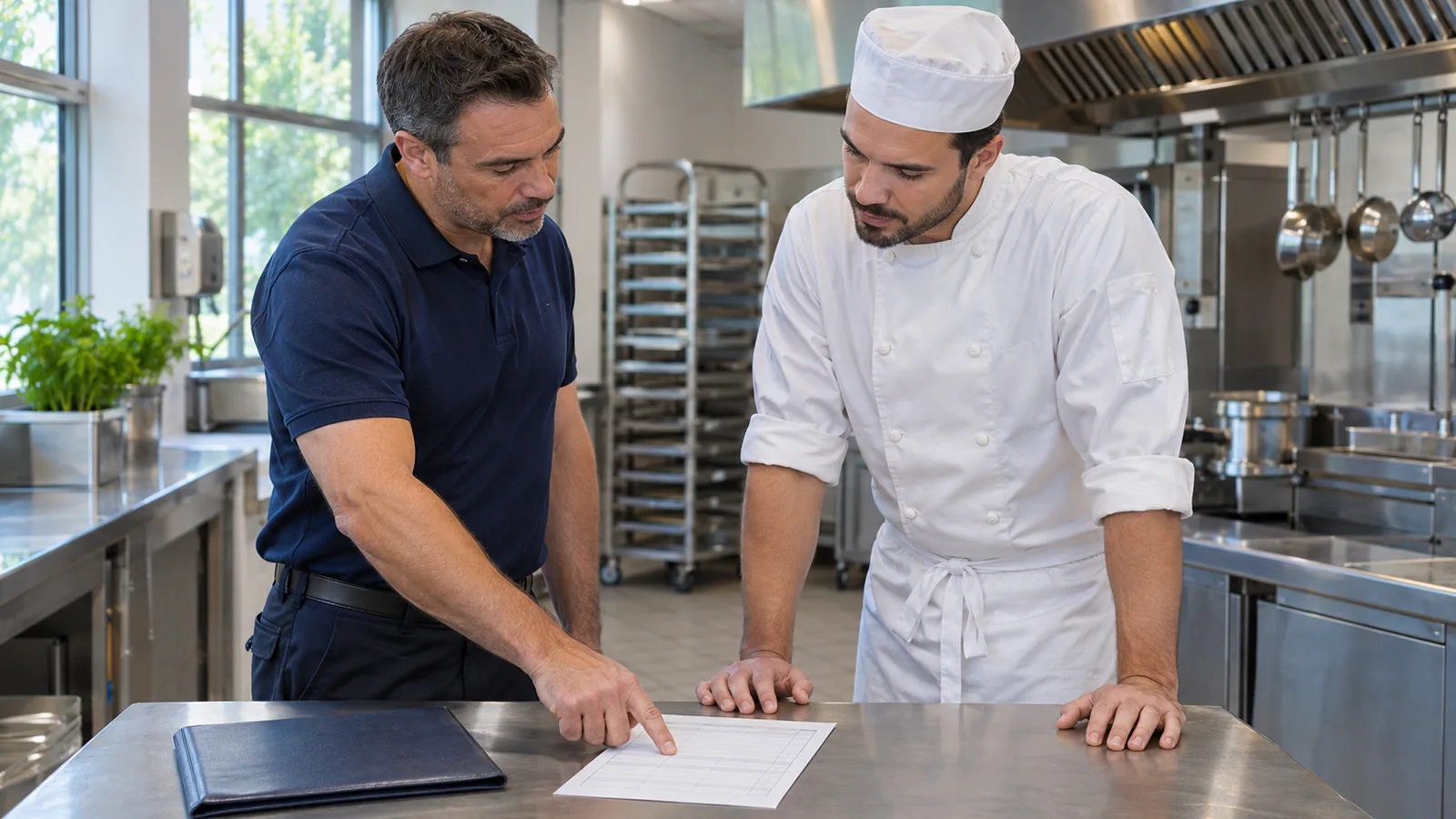
Keep the records behind simple checks together
HACCP Records supports digital food safety record entry, centralised record storage and historical record retrieval. Use relevant entries to keep your checks together and find earlier problems without searching separate folders.
Digital food safety records can help a manager review repeated issues. They don't observe the kitchen or confirm that food is safe. Staff still need to carry out the checks and act on what they find.
Create your HACCP Records account to make relevant records easier to complete, organise and retrieve. Try the three-day demo, then activate a paid subscription to continue with your setup and records.
Simple separation checklist
Before and during service
- Ready-to-eat preparation is protected from raw-food work.
- Raw meat is contained and stored safely away from ready-to-eat food.
- Utensils remain assigned to the correct task.
- Staff follow the hygiene change between tasks.
- Touch points and cleaning materials are included in the check.
- Affected work stops when a failure is found.
- Actions and outstanding restrictions are recorded and handed over.