A Practical Guide to Personal Habits That Spread Contamination for Small UK Food Businesses
Spot personal habits that spread contamination in a busy kitchen, improve hand hygiene and task changes, and keep useful records of checks and corrective action.
Small habits can carry contamination into the next task
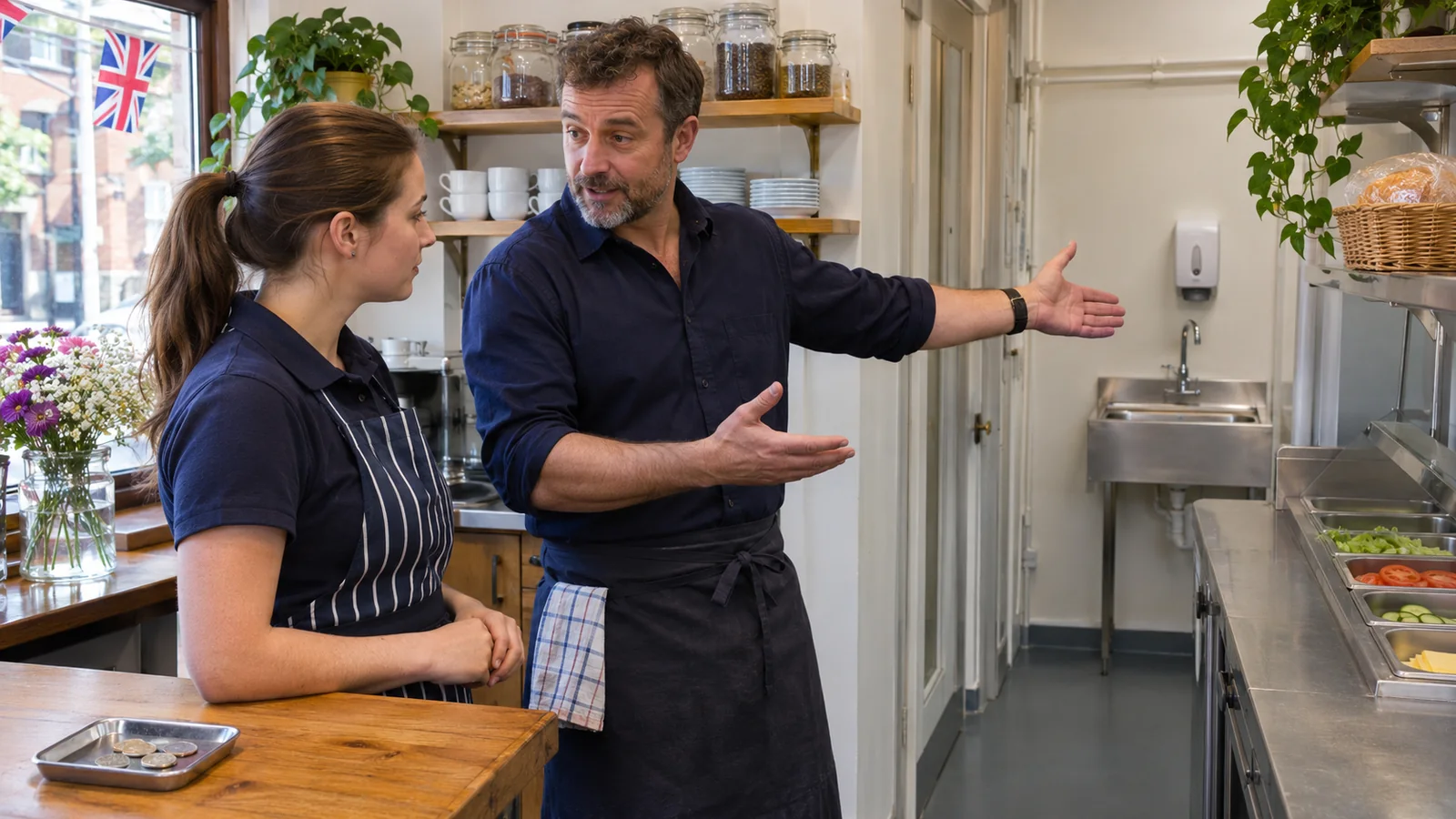
A café worker takes payment, pushes their hair back and starts filling a sandwich. Later, someone wipes their hands on an apron before picking up clean tongs. Neither person intends to handle food carelessly. They're following a familiar routine during a busy service.
Personal habits that spread contamination often happen between the tasks people remember to check. The practical response is to identify those moments, wash hands when needed, keep contaminated items away from food and organise work so staff can follow the safe method.
This guide focuses on face touching, phones, payments, clothing, cloths and gloves. Food safety management needs to account for how people actually move through a shift, including interruptions.
Which personal habits should a supervisor look for?
Look for a route from something contaminated to food, clean utensils or a food-contact surface. The risk may be direct, such as fingers touching a ready-to-eat sandwich, or indirect, such as contaminated hands touching a utensil handle another worker will use.
These examples are prompts for observing your own kitchen:
| Habit or interruption | A useful control to review |
|---|---|
| Touching hair, face or a nose | Pause and wash hands before returning to food preparation. |
| Checking a phone, then handling food | Keep personal phone use away from preparation work and include handwashing before restarting. |
| Taking payments and immediately assembling orders | Arrange a clear changeover between counter and food duties. |
| Wiping hands on an apron or shared cloth | Use the proper handwashing routine and suitable hand drying. |
| Wearing the same gloves through different jobs | Change gloves and wash hands at the necessary task boundaries. |
| Handling a bin, then returning to a clean task | Put handwashing into the return to work, even after a quick interruption. |
Don't assume that fast contact is harmless. Equally, avoid treating every object in the room as if it presents an identical risk. Assess the task, what was touched and the food that could be affected.
What does official hygiene guidance require?
GOV.UK staff hygiene guidance covers suitable clean protective clothing and advises staff to avoid touching their face or hair while handling food. It identifies handwashing points including before preparation and after contact with raw food, waste, phones and cash registers.
Those controls support the duty to produce safe food. Your detailed workplace arrangements, such as storing personal phones in a locker or allocating one person to payments, are practical ways to manage the risk. Don't present one particular staffing arrangement as a universal legal requirement.
Use guidance and procedures appropriate to your nation and business. The FSA's E. coli guidance covers England, Wales and Northern Ireland and signposts Scottish guidance. Seek advice from your local food safety team when the operation needs a more specific assessment.
Make task changes clear enough to follow
Face touching and personal items
People may adjust glasses, scratch their face or move loose hair without noticing. A supervisor should interrupt the unsafe sequence calmly, rather than waiting until food has been handled.
As a practical arrangement, ask staff to secure hair and sort out personal items before starting work. If they need to adjust something during preparation, they should step away from exposed food, deal with it and wash their hands before resuming the task.
Keep personal items out of working preparation spaces. If a device is needed for a legitimate work task, decide where it belongs, how it is cleaned and when handwashing is needed. “It's for work” doesn't remove the need to consider contamination.
Payments, doors and quick interruptions
A small takeaway may not have enough people to keep counter work and food preparation permanently separate. It still needs a safe routine for moving between them.
Walk through a typical order. Where does the worker put the food down? What do they touch at the till? Can they reach the handwash basin without blocking another task? What happens when a delivery arrives halfway through?
Agree a simple changeover and practise it. Where practical, allocate counter work during the busiest period so the food handler isn't repeatedly switching jobs. Never promise a faster service than the team can safely provide.
Clothing and cloths
An apron isn't a hand towel. Wiping hands on it doesn't replace washing, and a contaminated apron can carry the problem into later tasks.
Include clothing changes when protective clothing becomes contaminated. Keep cleaning cloths appropriate to their task and follow the business's cleaning method. Don't use one cloth for waste spills, handles and a sandwich bench because it's the nearest thing available.
GOV.UK cleaning guidance includes work surfaces, cloths and frequently touched points such as handles and electronic devices. A clean-looking bench doesn't answer whether the cloth or hands used on it were suitable.
Do gloves or hand gel solve the problem?
Gloves can become contaminated during the same interruptions as bare hands. Watch the sequence: gloves go on, the worker opens a bin, touches a handle and then picks up a bread roll. Putting gloves on at the start didn't protect that later task.
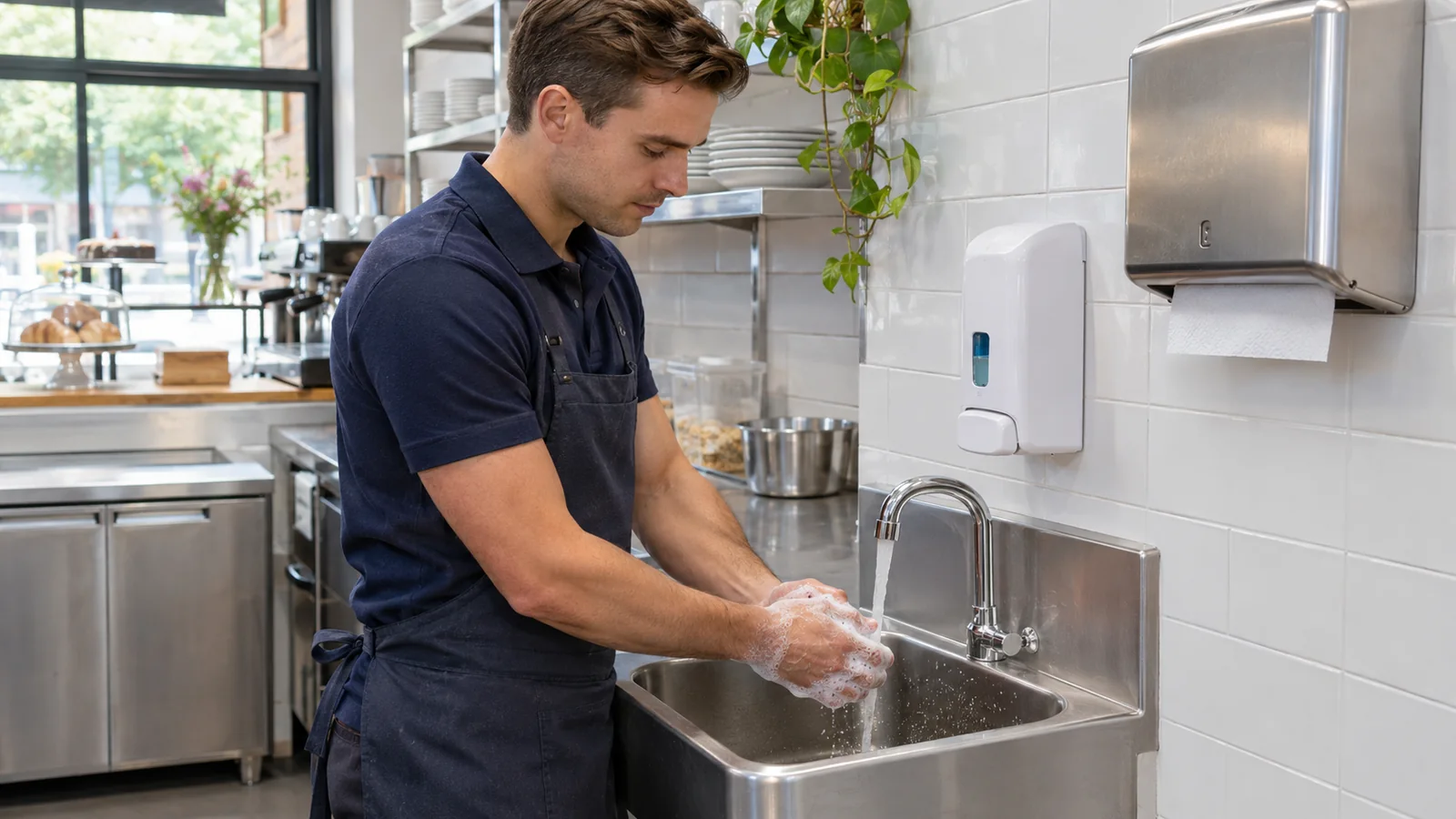
The FSA's E. coli cross-contamination guidance explains that gloves don't replace effective handwashing. It also states that antibacterial hand gel mustn't replace handwashing.
If gloves are used, follow the guidance on changing them and washing hands when changing or removing them. Keep replacements accessible so staff don't carry on with a contaminated pair because the box is elsewhere.
What about eating, drinking and tasting?
Include them in your personal hygiene arrangements, but give staff a workable place and opportunity for breaks. A lidded drink doesn't remove hand contact with the mouth or container.
Our guide to eating and drinking in food preparation areas covers staff drinks, personal snacks and controlled tasting in more detail.
What should happen when a habit creates a risk?
Stop the affected task and tell the supervisor. Establish what was touched and which food, utensils or surfaces may be affected. Arrange handwashing, any necessary clothing or glove changes, and appropriate cleaning and disinfection before restarting.
Keep potentially affected food out of use while a competent person assesses it. Discard food that may be contaminated and can't be shown to be safe. Don't assume that wiping the bench makes food already handled safe to serve.
Then ask why the sequence happened. Was the basin obstructed? Were staff expected to handle payments and food without time for a changeover? Was the instruction unclear? Fix the working arrangement as well as reminding the person.
A calm correction protects food immediately. A later check establishes whether the changed routine is being followed.
Which HACCP records are useful?
These everyday hygiene controls usually support the HACCP-based food safety system rather than each becoming a separate critical control point. Your HACCP records should help show that the arrangements work and that failures receive a response.
GOV.UK food safety management guidance includes keeping records of systems, checks and actions taken when problems occur. It doesn't mean writing an incident report every time someone correctly washes their hands.
Useful evidence can include relevant instructions, staff briefings, supervisory observations and records of significant failures. For an incident, note the task, location, affected food or equipment, action taken, responsible person and follow-up.
For example, record that preparation stopped after a payment-handling interruption, what was assessed and how work restarted. Only record actions actually completed. Don't add a tick after service to suggest an earlier check happened.
Our article on food safety training records explains how to connect instruction with competence at the workstation.
How digital food safety records help
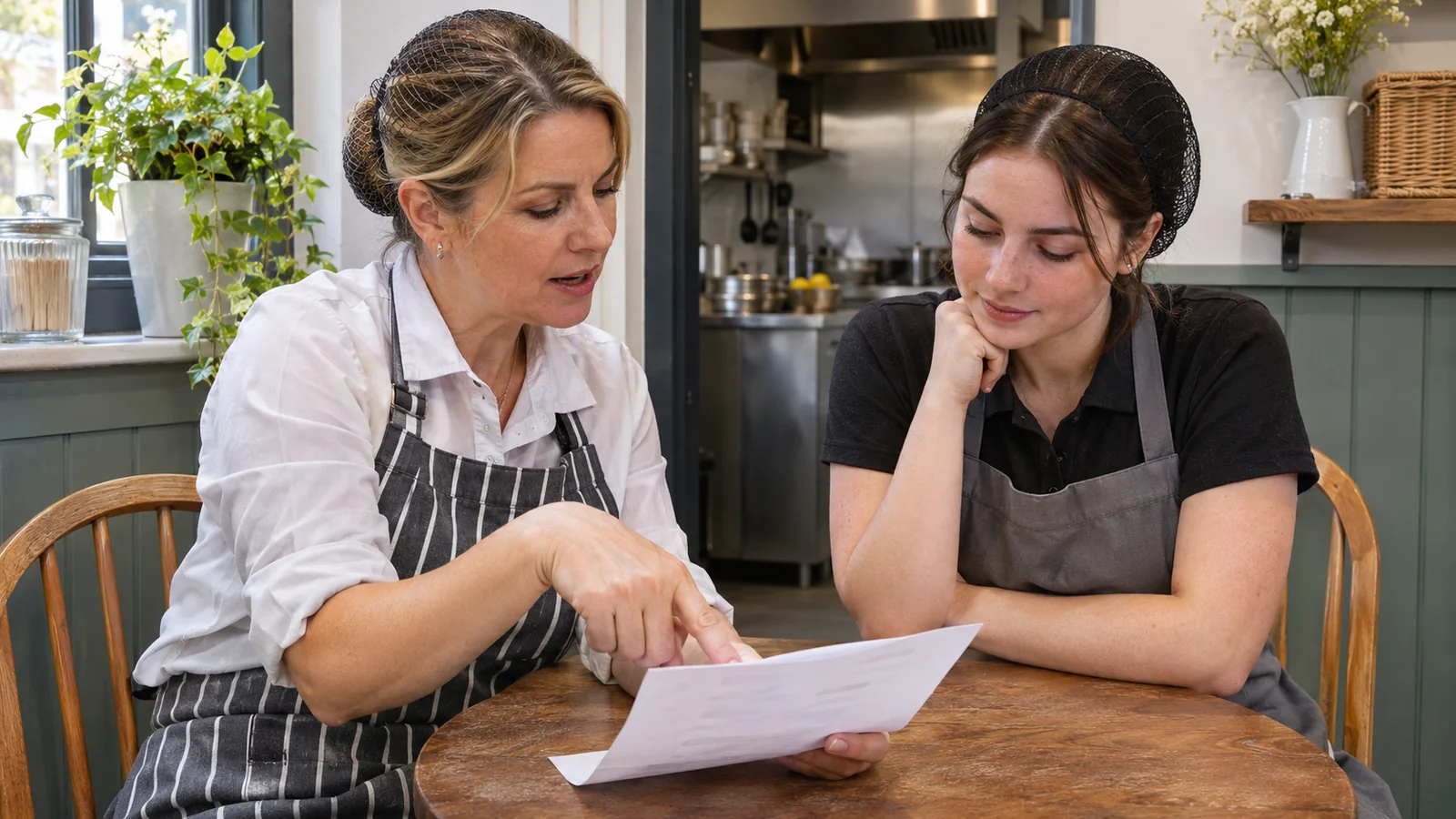
HACCP Records supports digital food safety record entry, centralised record storage and retrieval of previous entries. That can make relevant hygiene checks easier to keep with the business's other records, rather than in separate paper folders.
Looking back can help you notice that the same interruption keeps appearing. Use that information to review the routine. Recording the same failure repeatedly without changing anything won't control it.
For a small business example, see digital food safety records for cafés.
Create your HACCP Records account to make relevant checks easier to complete, organise and retrieve. The team still needs practical instruction and supervision.
A short personal hygiene checklist
Before and during service
- Staff know when to wash hands after interruptions and between duties.
- The handwash basin, soap and hand-drying materials are accessible.
- Personal items and staff food and drinks have suitable storage.
- Aprons and cleaning cloths aren't used as substitutes for handwashing.
- Gloves are changed appropriately and don't replace handwashing.
- Supervisors act on contamination concerns and check the revised routine.
- Significant failures and completed follow-up actions are recorded accurately.