Suspected Food Poisoning Complaints: What Small Food Businesses Should Do
Handle a suspected food poisoning complaint calmly: record the facts, protect customers, preserve evidence and know when to contact food safety authorities.

A customer says your food made them ill. What now?
It's just before evening service when a customer contacts your takeaway. Two people felt unwell after sharing a meal bought the previous night. The team is preparing another batch of the same dish, and the manager who worked yesterday isn't in yet.
Treat suspected food poisoning complaints as a food safety concern straight away. Listen, record what the customer reports, alert the responsible manager and assess whether any food or process needs to be stopped. Preserve the relevant evidence and seek advice from your local authority's food safety team where there's concern about an ongoing risk.
A complaint doesn't prove your food caused the illness. It does need a prompt, organised response. Don't wait for a second complaint or a laboratory result before considering whether customers could still be at risk.
How should you respond to the customer?
Thank them for raising the concern and acknowledge that they're unwell. Avoid arguing, guessing the cause or promising an investigation outcome before you've checked anything.
A suitable response could be: “I'm sorry to hear you've been unwell. We take this seriously. I'll record the details and ask our manager to review the relevant food safety checks. What's the best way for us to contact you?”
Ask focused questions to identify the meal and circumstances:
- When and where was the food bought, collected or delivered?
- What dishes were ordered, and is there an order number or receipt?
- When was the food eaten?
- How many people ate it, and how many reportedly became unwell?
- When did they first feel unwell?
- Is any food or packaging still available?
Don't interrogate the customer or try to diagnose them. The NHS food poisoning guidance explains that symptoms can begin within hours or days, sometimes longer. The last meal eaten isn't automatically the source, and timing alone doesn't identify the cause.
Direct customers needing health advice to an appropriate healthcare service. They can also report suspected food poisoning through their local food safety team. Don't discourage reporting or make a refund conditional on silence.
What should you check immediately in the kitchen?
Give one manager responsibility for coordinating the response. Identify the dish, service period, ingredients and any remaining batch. Check whether the same ingredients or preparation method are being used now.
For a cooked chicken dish, for example, look beyond the cooking entry. Consider delivery, storage, preparation, cooking, cooling, reheating and handling after cooking, wherever those stages apply. A satisfactory cooking reading doesn't answer every question about the meal's history.
Check whether there were equipment faults, interrupted checks, unexpected delays or concerns about hygiene. Speak to the people who did the work without suggesting the answer you want them to give.
If staff illness may be relevant, follow your fitness-to-work procedure. Our guide to returning to food work after illness explains why feeling better isn't sufficient on its own.
Keep food that may be affected out of use
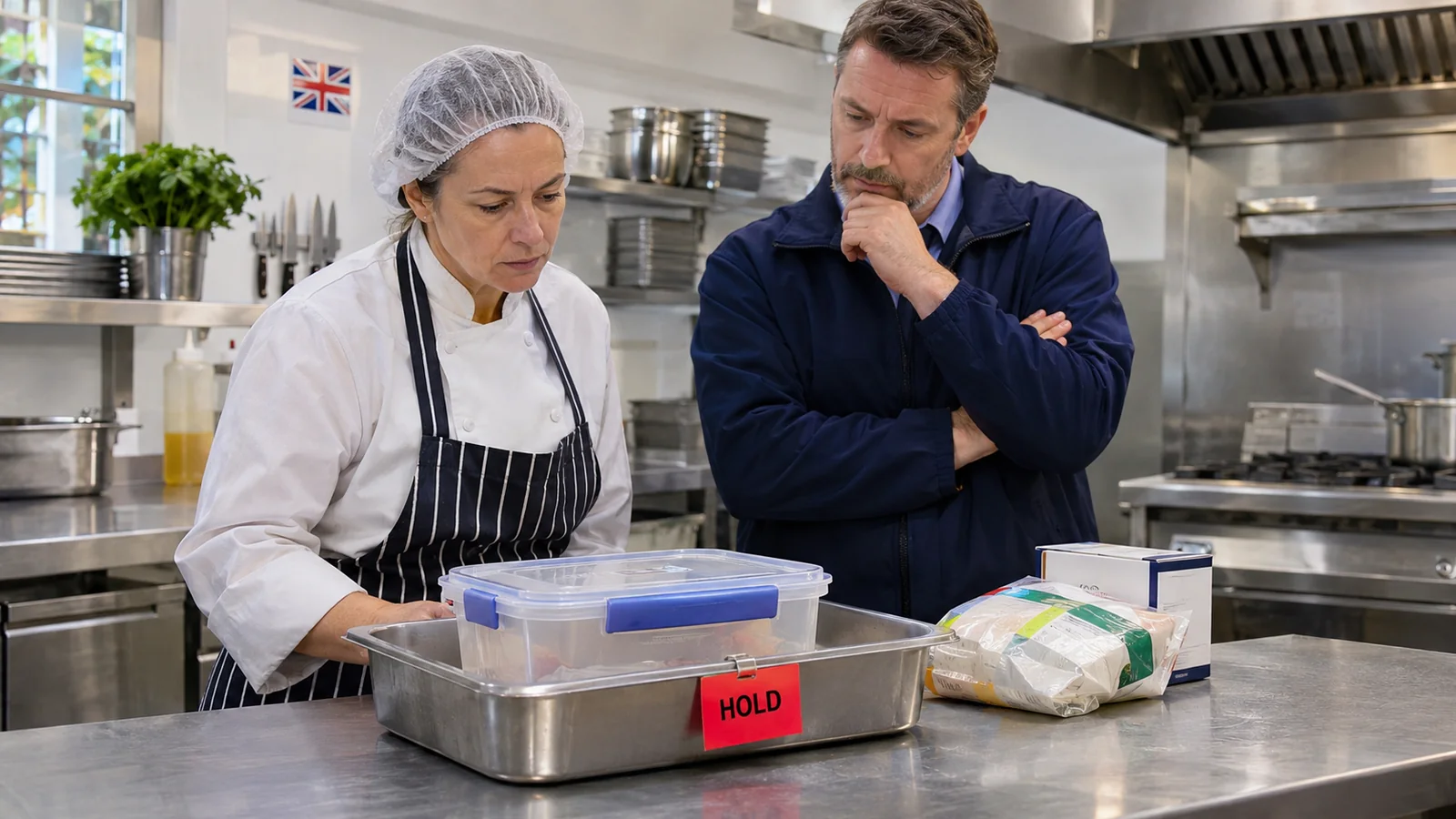
Where your assessment identifies food that may be unsafe, stop serving it while you investigate. Separate it from usable stock and identify it clearly so nobody puts it back into service by mistake.
Keep packaging, supplier details and batch information with it. Ask the food safety officer promptly whether food or other material should be retained for examination, and how to store it. Don't send samples to a laboratory or change their storage conditions without appropriate advice.
Routine waste disposal and cleaning can remove useful evidence. Protect customers first, but document what you've found and ask for advice before destroying material that may matter to an investigation.
When should you contact the authorities?
As practical good practice, contact your local authority promptly if reports suggest a possible outbreak, your checks reveal a significant failure, or you can't rule out an ongoing risk. Several reports linked to a meal or event deserve urgent attention. A single report can also reveal a serious problem.
That advice is separate from the legal duty to report unsafe food. The FSA's business incident-reporting guidance, covering England, Wales and Northern Ireland, says businesses must inform their local authority or port health authority and the FSA where there is reason to believe food fails safety requirements and should be withdrawn or recalled.
Don't wait for confirmation of a particular organism if that reporting threshold has already been met. Follow the current reporting route in the guidance and keep a note of when you contacted each authority and the advice received.
In Scotland, use Food Standards Scotland's food incident guidance and contact your local environmental health team.
The FSA's withdrawal and recall guidance distinguishes removing unsafe food from the supply chain from a recall involving action by consumers. Work with the authorities to identify the affected food, distribution and necessary communication. Don't assume a refund resolves the food safety issue.
What should your HACCP records help establish?
Your HACCP records should help reconstruct the relevant service, not just demonstrate that forms exist. HACCP is the system of identifying food safety hazards and controlling them. The useful question is whether those controls worked for the food concerned.
| Evidence to retrieve | What it can help establish |
|---|---|
| Order and service details | Which dishes and service period need checking. |
| Supplier, delivery and batch details | Where ingredients came from and which stock may be linked. |
| Relevant temperature records | What was checked during storage and processing, and when. |
| Cleaning, maintenance and corrective actions | Whether known failures or contamination concerns were addressed. |
| Staff accounts of the work | What happened in practice and where evidence is missing. |
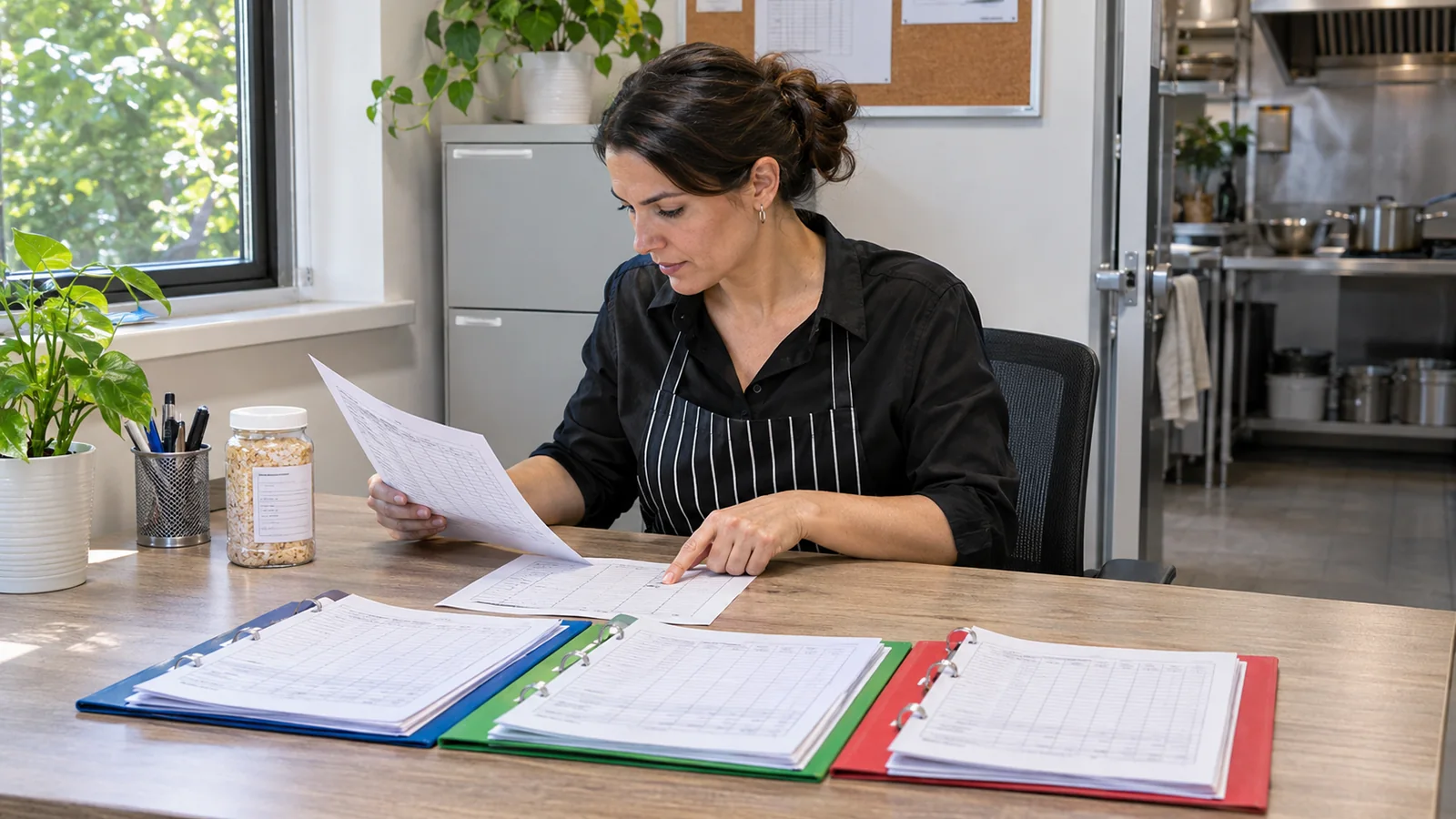
Keep the original entries and supporting messages. Don't fill gaps with invented readings, overwrite an earlier account or ask someone to sign a check they didn't perform.
A missing entry isn't proof that food caused illness, but it limits what you can establish. Record that uncertainty honestly. Our guide to food safety records for an inspection explains how to keep evidence useful and accessible.
Keep the complaint record focused
Use a reference number to connect the complaint, operational checks and follow-up. Keep personal contact information and any necessary health details securely, with access limited to those handling the matter.
Routine kitchen corrective-action notes don't need a customer's medical history. Record operational facts, decisions, actions and the incident reference there. Let the investigating authority advise what further information is needed.
What mistakes make the response harder?
Dismissing the complaint because nobody else has called can delay protective action. So can assuming that a good hygiene rating or completed temperature sheet settles the matter.
Another mistake is recording a suspected link as a confirmed finding. Keep wording factual: “Customer reported illness after eating the dish” describes the allegation. “Dish caused food poisoning” states a conclusion that needs evidence.
Avoid concentrating only on the named dish. Shared ingredients, utensils or preparation steps may widen the investigation. Equally, don't blame every item in the kitchen without assessing the evidence.
Keep commercial decisions, such as refunds, separate from the safety investigation. A customer may accept a refund while you still need to investigate a process failure.
What corrective action should follow?
Match action to what you've found. You might need to stop a preparation method, repair refrigeration, change a cleaning arrangement or brief staff again. Record who is responsible and what must happen before the affected operation resumes.
Then check whether the change works. If a cooling method failed, simply telling the team to “cool food faster” leaves the practical problem unresolved. Review how the work is done and verify the revised method before relying on it.
Record an outcome even if the cause remains unconfirmed. Explain what evidence was reviewed, what action was taken and any advice or further investigation still outstanding.
How digital food safety records support the response
HACCP Records supports digital corrective-action records, centralised incident history and retrieval of previous entries. That helps a manager find operational checks and earlier actions without searching separate paper folders.
Use those records to document the kitchen response and follow-up. Keep sensitive complaint information in an appropriate restricted record rather than copying it into routine notes. The service supports record keeping; it doesn't diagnose food poisoning or replace an authority's investigation.
For more about the relevant day-to-day records, see digital food safety records for restaurants.
Create your HACCP Records account to keep relevant checks and corrective actions together online.
A practical complaint-response checklist
When a suspected food poisoning complaint arrives
- Acknowledge the report and record enough facts to identify the meal.
- Give a manager responsibility and assess any continuing food safety risk.
- Stop affected operations where necessary and keep suspect stock out of use.
- Preserve original records, packaging and relevant evidence.
- Contact the appropriate authorities promptly and meet incident-reporting duties.
- Record corrective actions, responsible people and follow-up checks.
- Keep the customer informed without claiming an unconfirmed cause.