Food Date Labelling and Routine Use-By Checks
Manage food date labels and routine use-by checks, assign daily responsibilities, rotate chilled, frozen and dry stock, and record corrective actions.
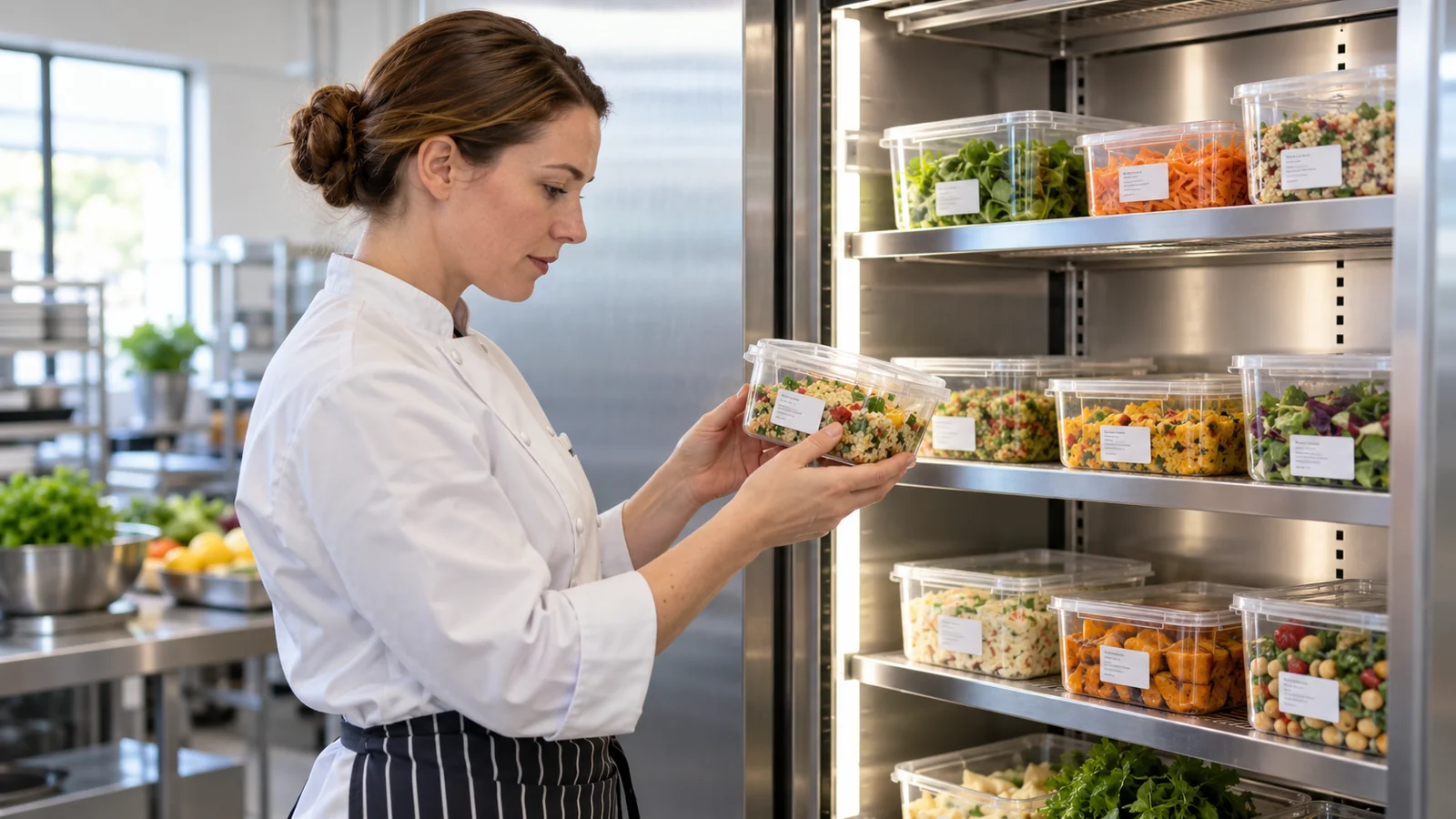
Date labelling chilled foods: what should you do first?
You’re preparing for lunch when you find two tubs of sandwich filling in the fridge. One has a clear label. The other has a day sticker with no date, and nobody on the shift knows when it was made. It looks fine, but that doesn’t tell you whether it’s safe to serve.
Keep the uncertain food out of use while you check its identity, preparation or opening history and storage conditions. Correct the label only if reliable evidence supports the date. If you can’t establish that the food is safe, don’t serve it. Discard it where a safe basis for keeping it can’t be established.
Date labelling chilled foods is part of food safety management because it helps staff know what food they have and when it must be used or discarded. Putting today’s date on an unidentified tub doesn’t recover its history.
Understand which date you’re looking at
Not every date on food means the same thing. Staff need to understand the difference before they can use a labelling system correctly.
| Date or instruction | What it tells you |
|---|---|
| Manufacturer’s use-by date | A safety date, dependent on following storage instructions |
| Best-before date | A quality date, rather than the same safety deadline as a use-by date |
| After-opening instruction | How storage or the permitted keeping period changes after opening |
| Kitchen preparation or opening date | When your team carried out the relevant activity |
| Kitchen use-or-discard deadline | The endpoint set under your documented safe method |
Food Standards Scotland’s date-labelling guidance explains the distinction between use-by and best-before dates. Food can contain harmful bacteria even when it looks and smells normal.
An internal label also needs context. “Monday” could mean prepared on Monday, opened on Monday or discard on Monday. A clear system tells everyone which it is, including relief staff arriving for one shift.
Legal duties and recommended kitchen practice
It’s illegal to sell food after its use-by date. GOV.UK’s food-labelling guidance also explains when consumer-facing products need date marks and storage instructions.
Internal stock-rotation labels serve a different purpose from the full labels required on food sold prepacked. A preparation sticker isn’t a substitute for applicable consumer information, ingredient or allergen requirements. If you start packaging food for sale, check those requirements separately.
Your food safety procedures should control how long food is kept and how staff identify its history. The FSA’s stock-control safe method provides practical guidance on keeping track of stock and retaining relevant information when food is transferred from its original packaging.
Using a particular colour sticker, label printer or brand of day dots isn’t a universal legal requirement. What matters is an effective method that staff understand and follow.
For Scottish businesses, Food Standards Scotland’s CookSafe stock-control guidance helps you set and monitor appropriate house rules. Use the guidance relevant to your business and seek local environmental health advice where necessary.
Set a keeping period with a sound basis
Follow the product’s instructions
Check both the original use-by date and any after-opening instructions. The printed date on an unopened pack doesn’t automatically remain the working deadline once you’ve opened it.
For example, a pack might have several days remaining before its use-by date but require earlier use after opening. Apply the earlier relevant deadline. Keep the original product information available when decanting so another shift can check the instructions and identity.
Use a documented method for prepared food
Don’t give every chilled product the same shelf life simply because your labels have a convenient number of boxes. Follow an appropriate safe method for the food and process, taking account of ingredients, preparation, handling and storage.
If you want to keep food longer than recognised guidance allows for your circumstances, obtain suitable evidence and advice first. Don’t extend dates to avoid waste or because the fridge has been cold.
This article doesn’t set a universal keeping period for every chilled dish. Rice, vacuum-packed products and other foods or processes needing particular controls should follow their specific safe methods.
Remember that refrigeration and dates work together
A valid date doesn’t make poorly stored food safe. Review temperature control and any known breaks in refrigeration alongside the label.
If equipment is unreliable, deal with that problem as well. Our guide to broken fridge seals and food safety explains how to assess the food and equipment separately.
Day-dot labels: a simple option, with limits
Day-dot labels are stickers marked with days of the week, often using a different colour for each day. They can give a small kitchen a quick visual stock-rotation system without a label printer. Choose labels suitable for your containers and storage conditions.
| Pros | Cons and practical limits |
|---|---|
| Quick to apply during preparation or opening | A weekday alone doesn't identify the calendar date or week |
| Colours can help staff scan stock quickly | Colour alone isn't enough; staff need readable wording and a shared method |
| No printer or software is needed | Small dots may leave too little room for the food name, date and time |
| Can support a consistent routine across shifts | Labels can detach, become illegible or leave residue, depending on the product and conditions |
Agree whether the day means prepared, opened or use-or-discard. Write the actual calendar date and any necessary time, using a larger companion label if the dot is too small. Keep the food clearly identified. Remove old labels when containers are cleaned so the next batch doesn't inherit conflicting dates.
A day dot doesn't set the shelf life. Calculate the deadline from the product instructions and your safe method, then label it. Don't assume that a seven-day pack of stickers means food can be kept for seven days.
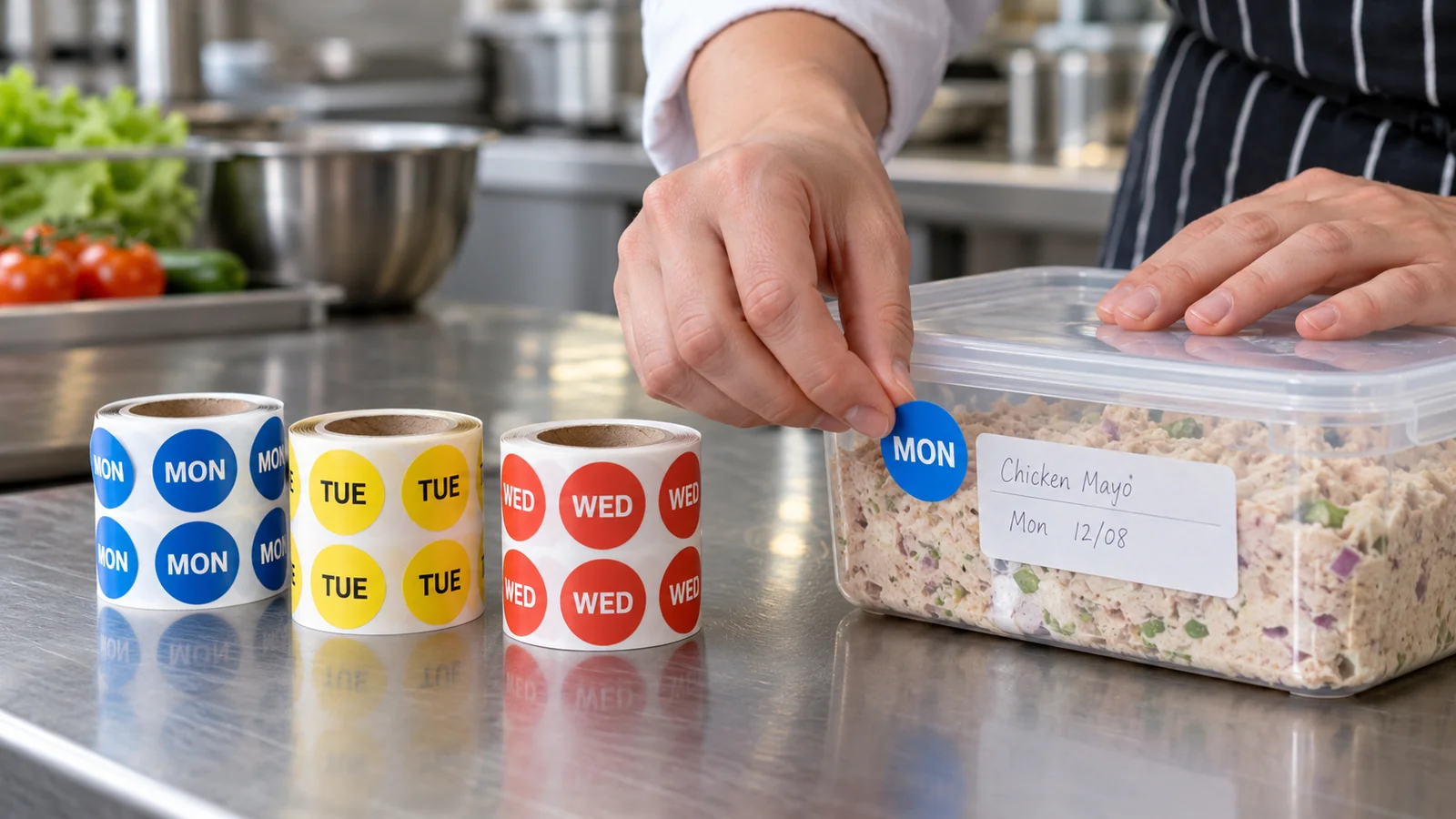
A practical routine for a small kitchen
Make the method easy to follow during service. Keep suitable labels and a working pen close to the preparation area, away from contamination risks. Agree who labels food and who checks stored stock.
As recommended practice, use labels that identify the food and show the relevant preparation or opening date and use-or-discard deadline. Include times where the procedure depends on them. Use an unambiguous format, with a clear distinction between opening and discard information.
At opening checks, review labels, deadlines and stock condition alongside storage temperatures. Arrange stock by the earliest relevant deadline, rather than assuming the most recently delivered item can always wait longest.
Keep batches separate. Don’t top up an older container with fresh food and give the mixture a new date. Staff should be able to identify which batch they’re using and apply the correct control.
Explain the routine to new starters and relief staff. Ask them to show how they calculate a deadline from your procedure and the product instructions. Our guide to food safety training records and practical competence checks covers recording that instruction.
Who should carry out routine use-by date checks?
Give each shift a named person responsible for checking stock and a deputy when they’re absent. The duty manager should confirm that problems have been dealt with. These are recommended working arrangements, rather than legally prescribed job titles or a universal checking timetable.
Build checks into the points where your kitchen can act on the result:
| When | What to check and do |
|---|---|
| Delivery | Check dates, condition and storage requirements. Agree enough remaining shelf life for the planned use. |
| Opening | Check preparation fridges, reserve stock and opened packs. Identify food approaching its deadline and remove expired stock. |
| Before preparation or service | Confirm that the actual ingredient or container is still within its applicable deadline. Don’t rely only on the morning sign-off. |
| Closing and handover | Confirm disposal or other completed actions, and tell the next shift about stock that needs using first. |
A daily check should cover the stock you actually use, including containers behind newer deliveries. Rotate by the earliest relevant deadline. Delivery order alone can mislead when a newer delivery has a shorter use-by date.
Identify near-expiry stock while there’s still time to use it safely, reduce preparation quantities or adjust the next order. Don’t extend a deadline to avoid recording waste. If a pack has an after-opening instruction, the opening date matters even when the original use-by date is later.
Include frozen and dry stock in the routine
Frozen food
Check the food’s identity, date information, packaging and storage history. For food frozen on site, retain the original product information and record when it was frozen. Plan defrosting and the subsequent use deadline under your safe method and the product instructions.
The government’s business freezing guidance says to freeze fresh food before its use-by date, note the freezing date and label frozen food. Freezing is a planned control for suitable food, not a way to rescue expired stock or erase an uncertain history.
A product safely frozen before its original chilled deadline needs the documented frozen-storage and defrosting controls applied. Don’t judge it solely by the old chilled date or invent an unlimited frozen shelf life. If stock has thawed unexpectedly, keep it out of use while its safety is assessed.
Dry and tinned food
Many dry, tinned and bought-in frozen products carry best-before dates. These concern quality rather than the same safety deadline as a use-by date. Passing a best-before date doesn’t automatically make food unsafe, but it still needs an appropriate condition and storage assessment before use.
Check packaging and signs of damage or contamination as well as the date. Keep ingredients protected after opening and retain their identity, allergen information and relevant dates when decanting. Some products need refrigeration after opening, so don’t assume a shelf-stable unopened jar can remain in the dry store once opened.
Arrange a named review of longer-life stock at a frequency suited to your turnover, alongside checks when receiving and using it. No date label makes damaged, contaminated or badly stored food acceptable.
When a label is missing, unclear or wrong
Hold the food back and check the evidence
Keep it separate from stock ready for service and make clear that it mustn’t be used pending assessment. Check the original packaging, batch information, preparation records and relevant storage checks.
A delivery date alone doesn’t prove when a pack was opened. A recollection that something was “probably made yesterday” isn’t a reliable date-control system.
Make and record the decision
If evidence establishes the correct history and the food remains within the applicable safe conditions, replace the label accurately. Record why that correction was justified.
If the food is beyond its use-by date, don’t serve it. If its identity, age or storage history can’t be established sufficiently to support safe use, discard it. Seek environmental health advice if a more complex assessment is needed, while keeping the food out of service.
Don’t try to rescue uncertain stock by freezing it or cooking it after the safety deadline has passed. Those actions aren’t a way to erase an unknown or unsafe history.
Fix the reason it happened
Check whether the label fell off, the pen failed or staff didn’t understand the method. The correction should match the cause: suitable labels, clearer instructions, smaller preparation batches or better supervision may each be appropriate.
If a wrong date has already affected food served to customers, tell the responsible manager immediately and assess the incident. Contact environmental health promptly where potentially unsafe food has been supplied.
What should your HACCP records show?
Food labels control individual items; HACCP records help show whether the system is being followed. You don’t necessarily need a separate diary entry for every correctly labelled tub.
The FSA’s SFBB diary and review sheets provide space for problems, actions and extra checks. Use records suited to your business, with enough detail to explain whether stock controls were followed.
Useful evidence includes your stock-control procedure, storage checks, staff instruction and records of failures and corrective actions. When something goes wrong, record:
- The food or batch involved and the date and time found.
- What was missing or incorrect.
- The evidence checked and any relevant storage concerns.
- Whether food was discarded or accurately relabelled, with reasons.
- Who took responsibility and what will prevent a repeat.
For example: “Unlabelled sandwich filling found during opening check. Preparation date couldn’t be verified. Container removed from service and contents discarded. Labelling method reviewed with preparation team; supervisor to check the next batch.” This is an illustrative entry, not an account of an actual incident.

How digital food safety records can help
Separate stock-check sheets, kitchen diaries and folders can make a recurring labelling problem difficult to follow. Digital food safety records can help you record relevant storage checks, keep the records together and retrieve previous entries.
The app supports digital storage-check entry and retrieval of historical records. Use it to keep the records behind this control together, so you can review what was checked and what action was recorded. The food itself still needs clear identification and the correct physical label.
Our guide to food safety records to have ready for an inspection explains how supporting evidence fits together. To simplify recording your checks, start your free demo.
Food date-labelling and stock-check checklist
- Identify the food and retain relevant original product information.
- Apply use-by dates and after-opening instructions correctly.
- Set prepared-food deadlines through an appropriate safe method.
- Label at the time of preparation, opening or transfer.
- Assign daily checking responsibilities and hand over near-expiry stock.
- Check dates alongside storage conditions and keep batches separate.
- Include frozen and dry stock, applying the correct kind of date and after-opening instructions.
- Hold uncertain food out of service while it’s assessed.
- Record failures, food decisions and completed corrective actions.