Damaged Food-Contact Surfaces: Checks for Small Food Businesses
Spot damaged food-contact surfaces, decide when to stop using equipment and keep clear records of repairs, replacements and follow-up checks in your kitchen.
When a clean chopping board still needs replacing
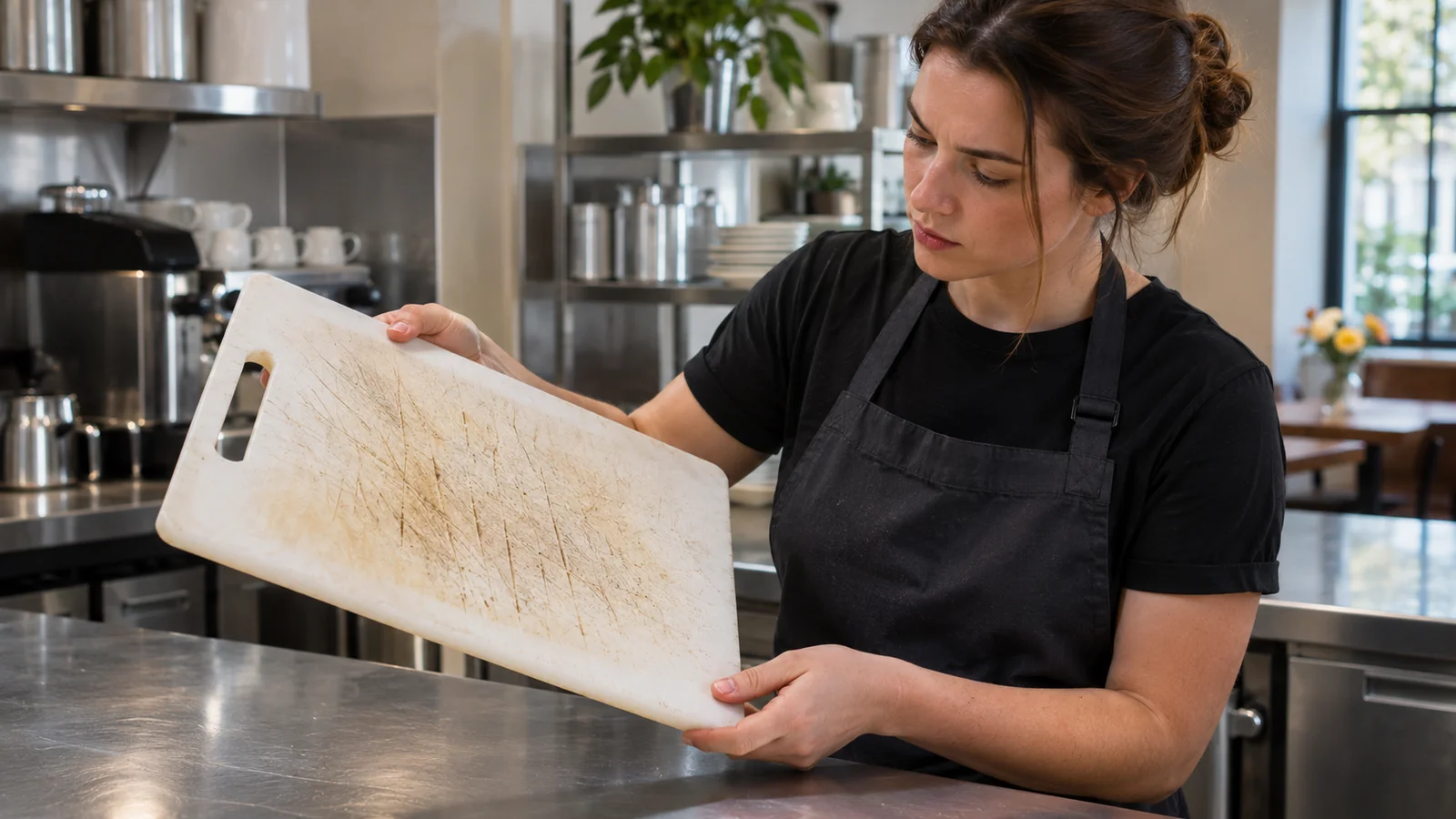
The sandwich orders are starting to arrive. A café worker takes a chopping board from the clean rack and notices deep grooves across its centre. It’s been washed, but food residue is still caught in one of the cuts. The usual response is another scrub, then back onto the bench.
Take that board out of use and replace it with a suitable, sound one. A damaged food-contact surface needs attention when its condition prevents effective cleaning and disinfection or creates a risk of fragments entering food. Completing yesterday’s cleaning sheet doesn’t establish that it’s suitable today.
The same check applies to split utensils, cracked containers, chipped dishes and lifting worktop edges. Look at condition as well as cleanliness, then act before the next batch of food touches the damaged item.
Why damaged food-contact surfaces matter
Damage can create places where food debris collects and cleaning becomes difficult. Cracks, pits and open joints may be hard to reach, even when the surrounding surface looks clean. Loose plastic, laminate or other material can also break away into food.
These problems matter particularly where a surface touches ready-to-eat food, such as sandwich fillings, salad ingredients or cake decorations. There may be no further cooking stage before the customer eats it.
Maintenance belongs in everyday food safety management. It’s usually part of the basic hygiene arrangements that support your HACCP system, rather than a separate critical control point. Calling every surface check a CCP can make the plan confusing without improving the control.
The FSA’s guidance on prerequisite controls places equipment suitability, cleaning and preventive maintenance among the foundations of safe food production. In practice, cleaning and maintenance need to work together: cleaning won’t repair a cracked surface.
What does UK guidance require?
Food hygiene requirements include keeping food-handling surfaces sound and easy to clean and, where necessary, disinfect. Equipment must also be maintained so its condition minimises contamination risks. These are duties, rather than optional presentation standards.
The FSA’s guidance on setting up food business premises explains the requirements for surfaces and equipment in England, Wales and Northern Ireland. Scottish businesses should use the relevant Food Standards Scotland guidance and local authority advice.
The inspection routine below is a practical recommendation. It isn’t a statutory daily inspection timetable or a universal replacement interval. Set your checking frequency around the equipment, level of use, food handled and likelihood of damage. Ask your local authority food safety team if you’re unsure whether a particular material or proposed repair is suitable.
Where should you look for damage?
Check items after cleaning, when food and debris aren’t hiding their condition. Use good lighting and inspect edges, undersides and joints as well as the main working face. Don’t run bare fingers along damaged edges or exposed blades.
| Item or area | Signs needing attention | Practical response |
|---|---|---|
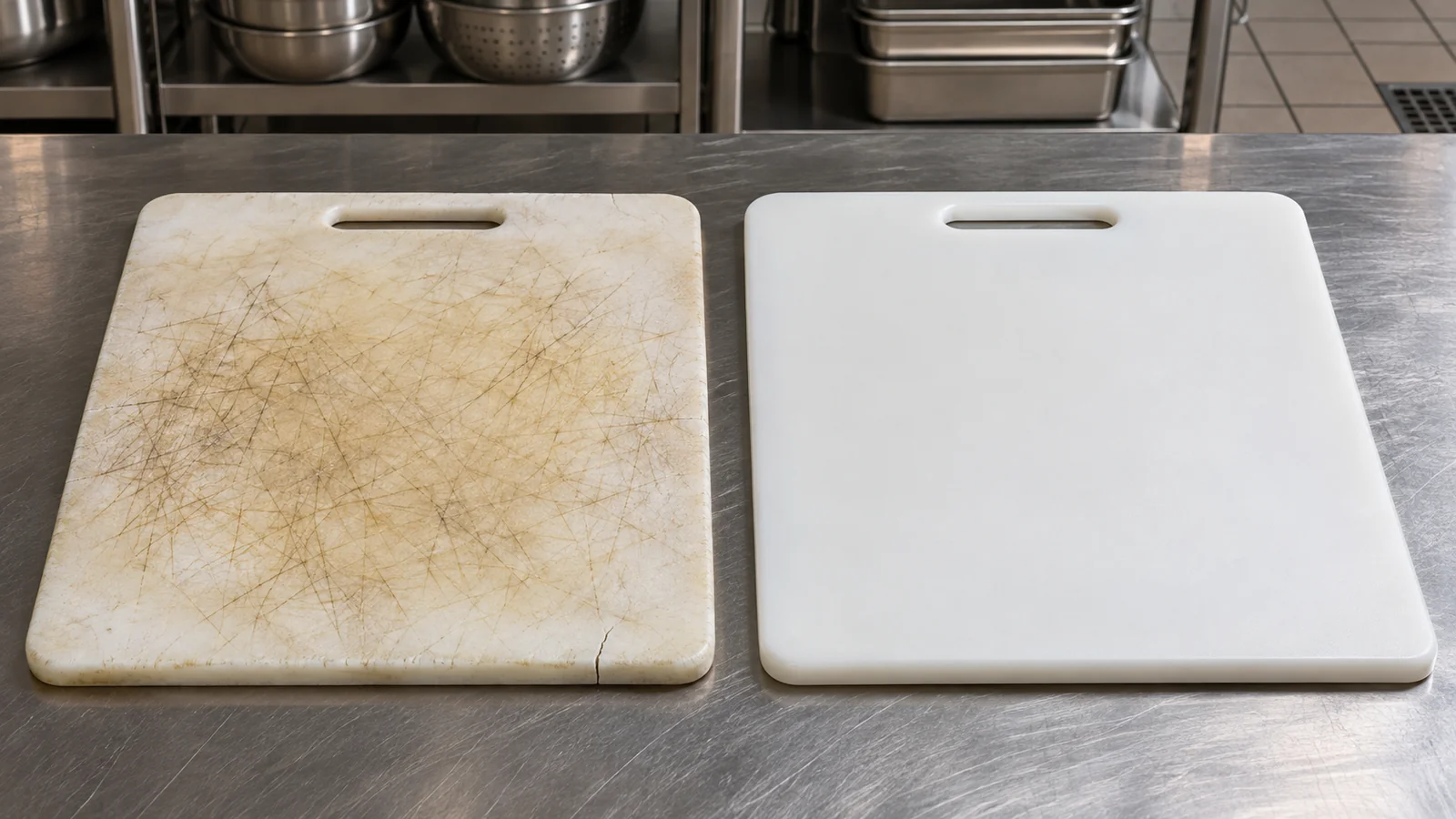
| Chopping boards | Deep scoring, cracks, pits or trapped residue | Remove from use and replace with a suitable sound board |
| Worktops | Lifting laminate, open seams or exposed absorbent core | Stop affected use and arrange a suitable repair or replacement |
| Containers and dishes | Cracks, chips or flaking surfaces | Remove damaged items and assess possible fragments |
| Utensils | Split heads, loose handles or peeling coatings | Withdraw the item and check whether material is missing |
| Food-processing equipment | Pitting, loose parts or damaged food-contact components | Stop affected use and arrange competent assessment |
A stain isn’t automatically structural damage. Equally, a surface can look bright and clean while having a crack that makes it unsuitable. Make the decision from its condition, cleanability and contamination risk, rather than colour alone.
Build the check into the kitchen routine
Give someone responsibility for checking the equipment they’re about to use. A quick condition check before preparation can identify a damaged board or container before food touches it. Staff should also report new damage during work, including anything dropped, cracked or loosened during cleaning.
Add a more detailed condition review at an interval suited to your business. Check less visible components and review defects already reported. This doesn’t replace checks during use.
Keep suitable spare boards, containers and utensils where practical. If the only spare board is allocated to raw meat, don’t quietly move it into ready-to-eat preparation. Preserve your separation arrangements and use a suitable replacement.
Tell staff what happens after they report a defect. They need to know who can withdraw equipment, where it goes and who decides it’s fit to return. Our guide to food safety decisions during equipment breakdowns covers wider restrictions when safe alternatives aren’t available.
What should you do when you find damage?
Stop affected use and identify the item
Remove a portable item from the working stock so nobody retrieves it by mistake. Restrict access to a damaged fixed surface and tell the shift what work has stopped. Follow safe isolation arrangements for machinery.
Don’t put a loose cover over damage and assume the problem is solved. Any temporary arrangement needs to prevent contamination, allow effective cleaning and remain stable during use. If you can’t establish that, use another suitable area or stop the affected activity.
Check whether food has been exposed
Establish when the damage was noticed, what food touched the item and whether material could be missing. Keep potentially affected food out of service while the responsible person assesses it.
Don’t assume removing one visible fragment makes a batch safe. If food safety can’t be established, don’t serve it. Seek local authority advice where the decision is uncertain, particularly if potentially unsafe food has already left the business.
Repair or replace, then check again
Use a suitable replacement or arrange a competent repair that restores a durable, cleanable food-contact surface. Ordinary tape, household filler or an improvised coating isn’t a reliable answer to a damaged preparation surface.
Before reuse, check the repair is complete, the item is suitable for its intended work and any repair debris has been removed. Clean and, where necessary, disinfect it using the appropriate method. Record who checked it and authorised its return.
For help structuring the response, see our guide to recording HACCP corrective actions.
What should your HACCP records show?
Record enough detail for the next manager to understand the problem and its outcome. Useful details include:
- Date, time, location and the item’s identifier.
- Actual damage found and who found it.
- Immediate restrictions and the decision about exposed food.
- Repair or replacement action, responsible person and outstanding work.
- Follow-up result and authorisation to return to use.
An illustrative entry could read:
Sandwich preparation board B2: deep scoring and residue found after washing. Board withdrawn before preparation started. Sound replacement issued. No food prepared on B2 during this shift. Manager to confirm disposal and check remaining boards.
Use the facts from your own check. If you don’t know when damage occurred, say so. Don’t copy an example or backfill an inspection that didn’t happen.
The record format should suit your food safety system. Food Standards Scotland’s CookSafe recording guidance allows paper or electronic records containing equivalent information, with checks appropriate to the business. A separate daily form for every utensil isn’t the aim.
Common mistakes that leave damage unresolved
Repeated cleaning without a condition decision. If damage prevents effective cleaning, another wash doesn’t restore the surface. Withdraw the item and address the damage.
Keeping defective items among usable stock. A board left beside the sink can return to preparation on the next shift. Separate it clearly and communicate the restriction.
Treating a repair booking as completion. Keep the issue open until the work and follow-up check are finished. Give outstanding actions to a named person.
Replacing equipment without checking the cause. Review handling, storage and cleaning instructions if the same damage returns. Unsuitable use may damage the replacement too.
Keep digital food safety records together
HACCP Records lets you enter relevant checks digitally, keep them with other food safety records and retrieve previous entries. That makes it easier to review an earlier defect without searching separate paper folders.
For example, looking back through records can help a manager establish whether the same preparation area has been reported before. The record still needs accurate observations and a completed follow-up. Software doesn’t decide whether a repair is suitable.
Our guide to keeping accurate digital food safety records during service explains how to build recording into the task. Create your HACCP Records account to make relevant checks easier to complete, organise and retrieve.
A short surface-condition checklist
Before the next preparation session
- Inspect food-contact surfaces, including edges, joints and less visible parts.
- Withdraw items with damage that prevents effective cleaning or risks contamination.
- Assess any food already exposed and record the decision.
- Use a suitable alternative while repair or replacement is outstanding.
- Record the defect, action and person responsible for follow-up.
- Check suitability and cleanliness before authorising return to use.